AI Accolade Generator — Free Preview, Then Train Your Model
See a Free Preview in Seconds, Before You Commit
Train Your Model Once, Render Accolade in About Ten Seconds
Studio-Quality Results Without a Studio Visit
Narcis generates a free preview of your accolade from one uploaded photo. The preview streams in seconds — a quick sketch, close but not you yet. If you like it, train your model once — 12 to 20 photos, we email you when it's ready — and the full pack of nine is €9,99, rendered from your model in about ten seconds a portrait. No signup before the preview, and no waiting for an email until you choose to train.
The pack is nine professional accolade rendered in portrait aspect ratio (2:3) — the shape LinkedIn banners, CVs, and print profiles actually use. Each image shows varied crops, expressions, and light angles so you have real choices, not nine identical files.
Photos are processed on European servers. We use your photo to generate your headshots; we do not share it with third parties.
/accolade · photo · 3 scenes
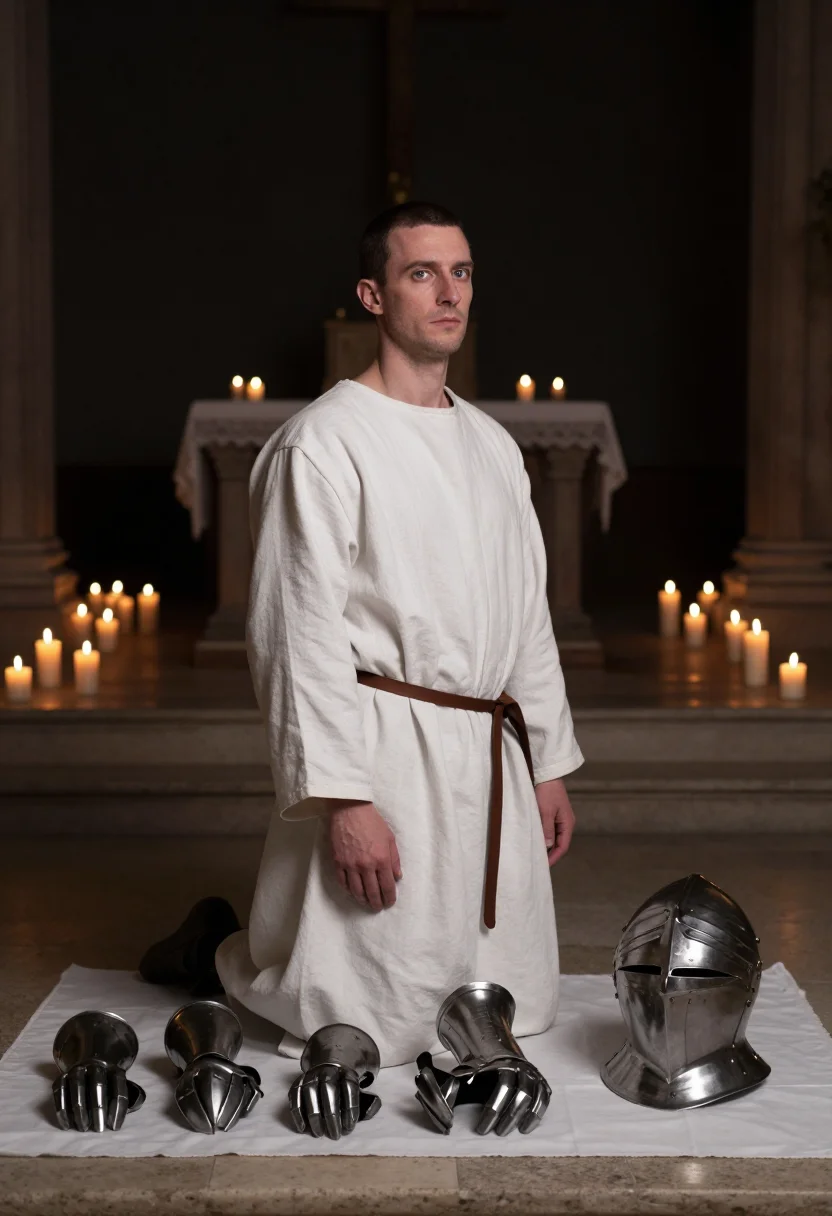
A Knighting Ceremony Photoshoot, the Accolade
no account · ~15s · the first shot is free
The making of a knight
one model wears them all →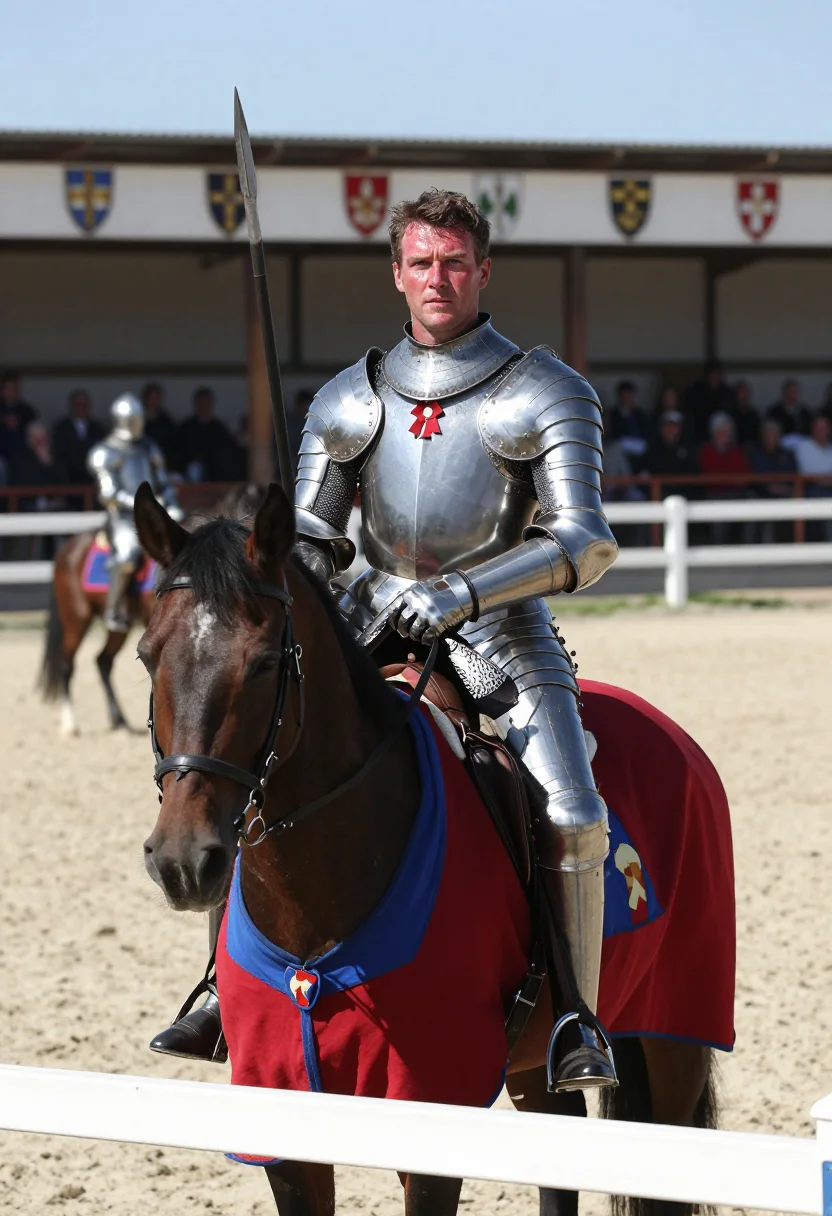
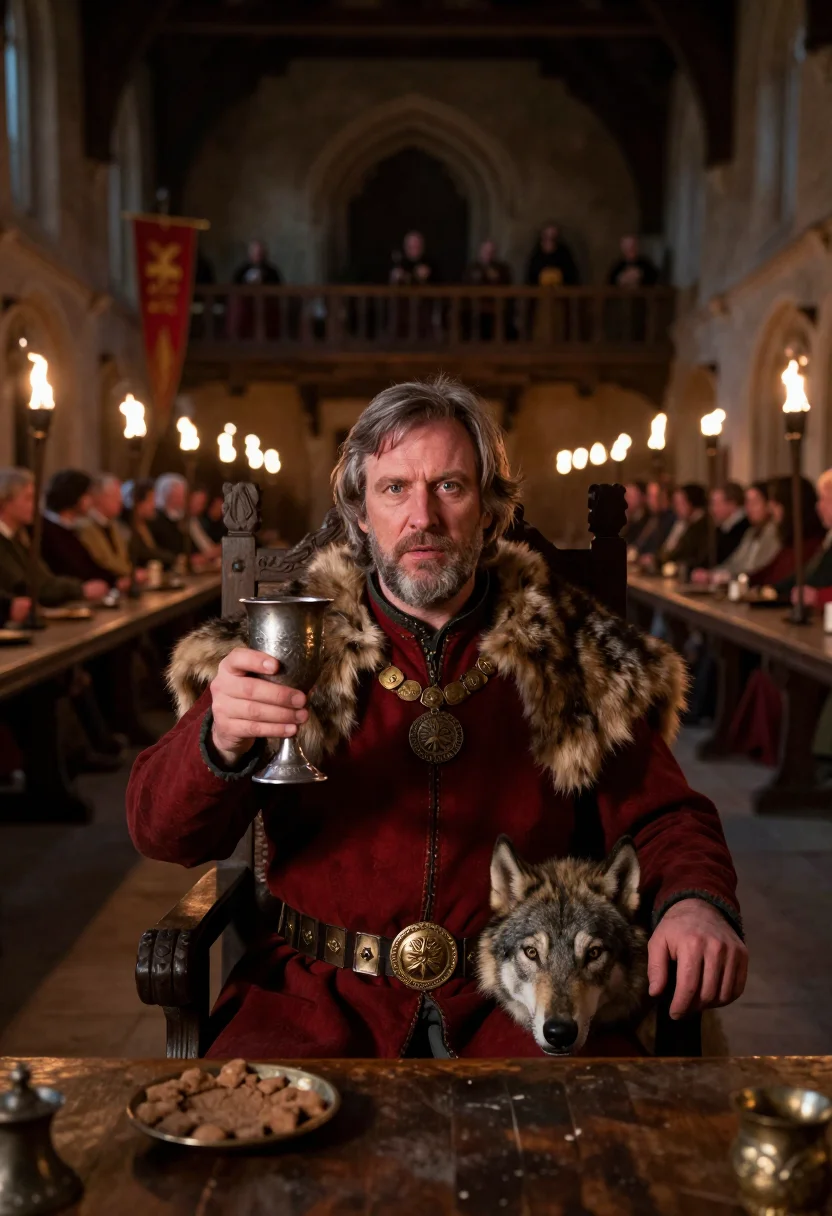
all 9 looks — from one photo ↓
How it works
Three steps. Upload, preview, deliver.
1
Upload 1 to 5 selfies
One is enough for the free preview. More angles sharpen the likeness.
2
See a free preview
A quick sketch of your likeness streams in seconds — close, not you yet, before you pay.
3
Train your model, then unlock 9
€9,99 one-time. Train your model once — 12 to 20 photos, we email you when it's ready — and all nine render in about ten seconds each. Every future pack and Studio portrait render the same way, no repeat training.
The Accolade register
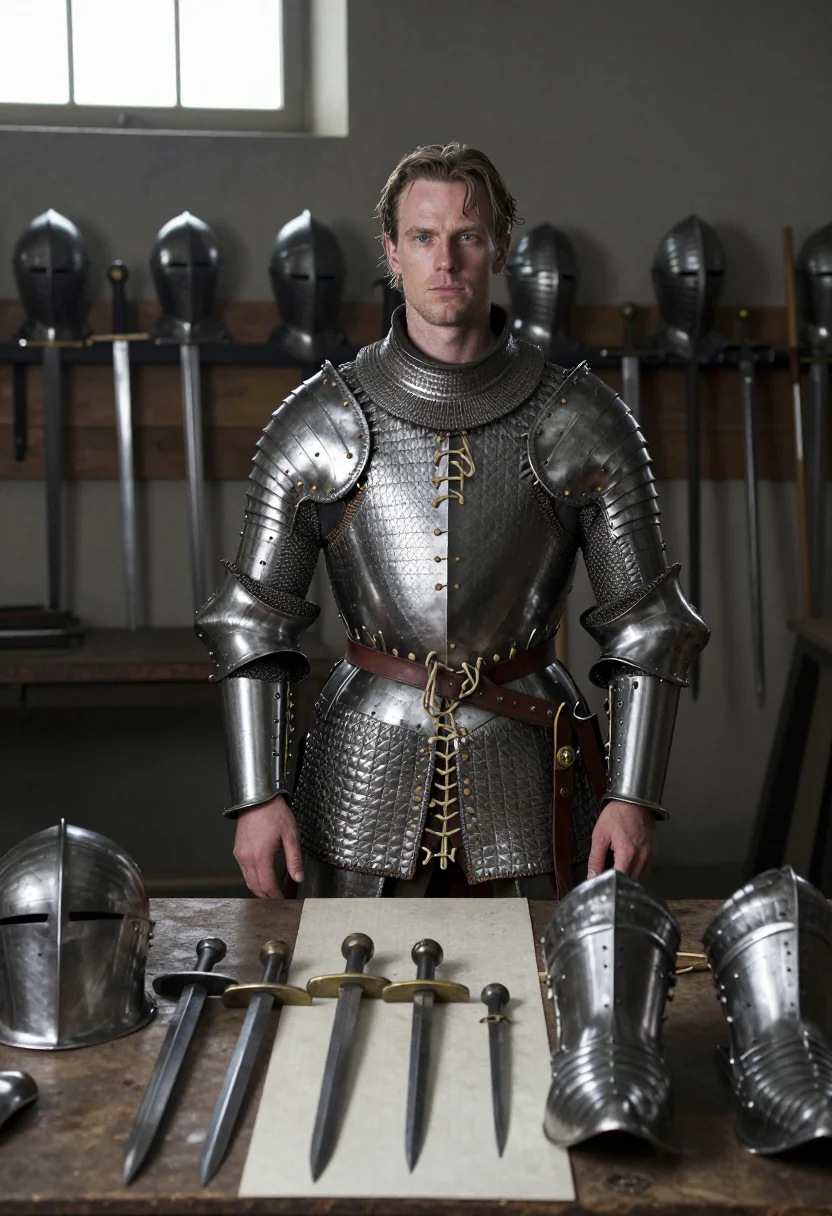
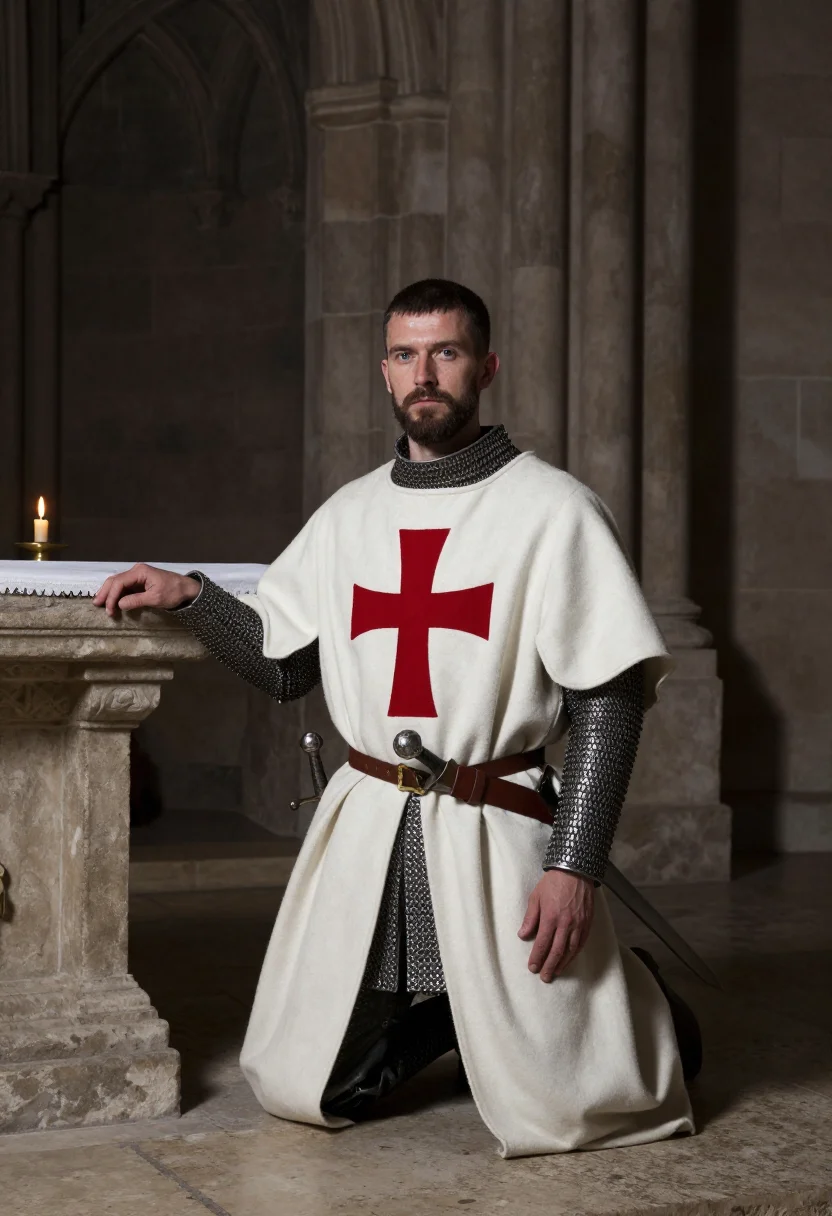
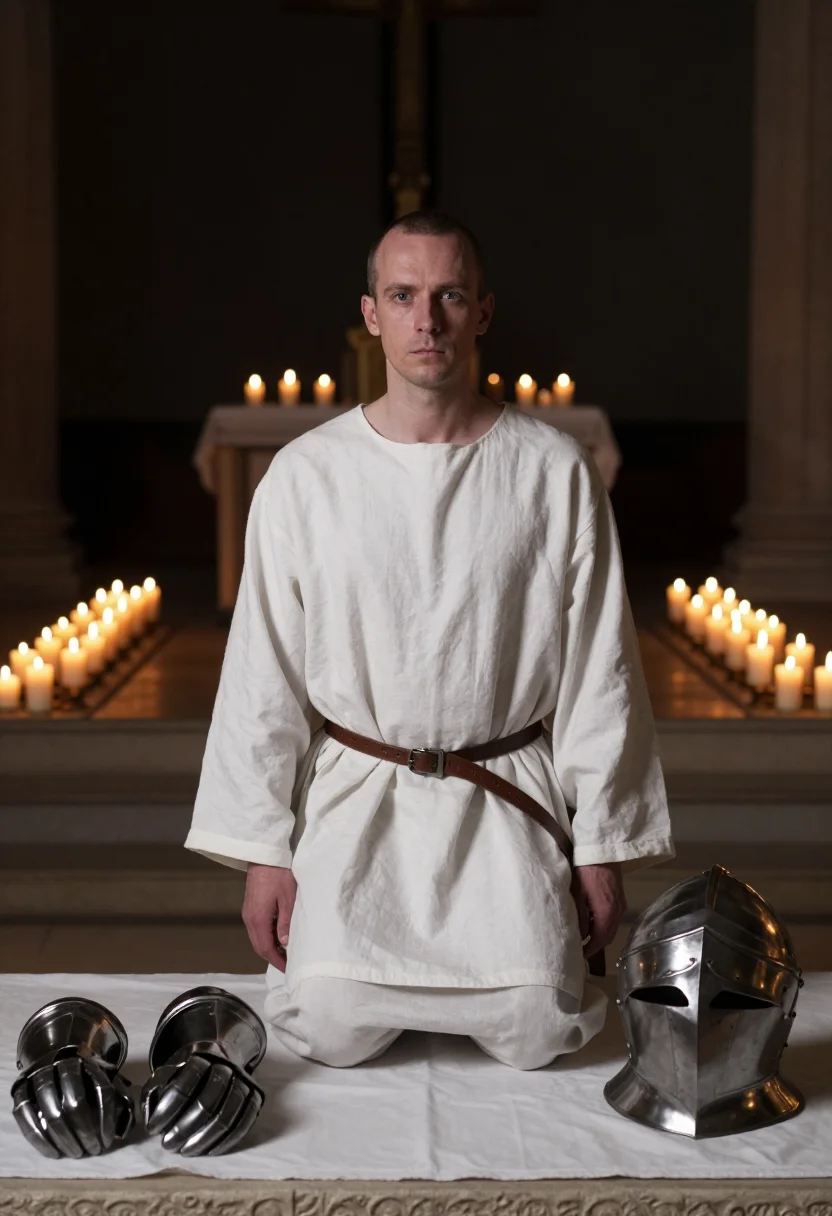
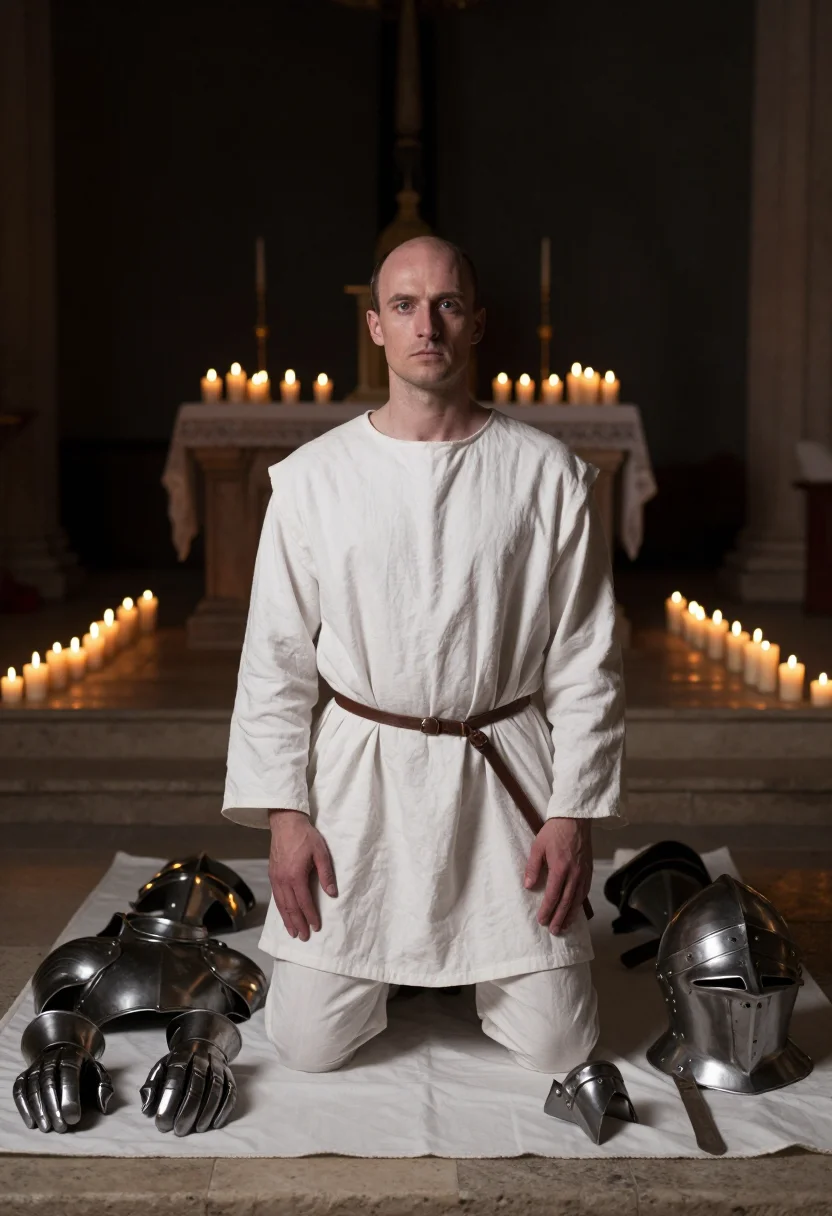
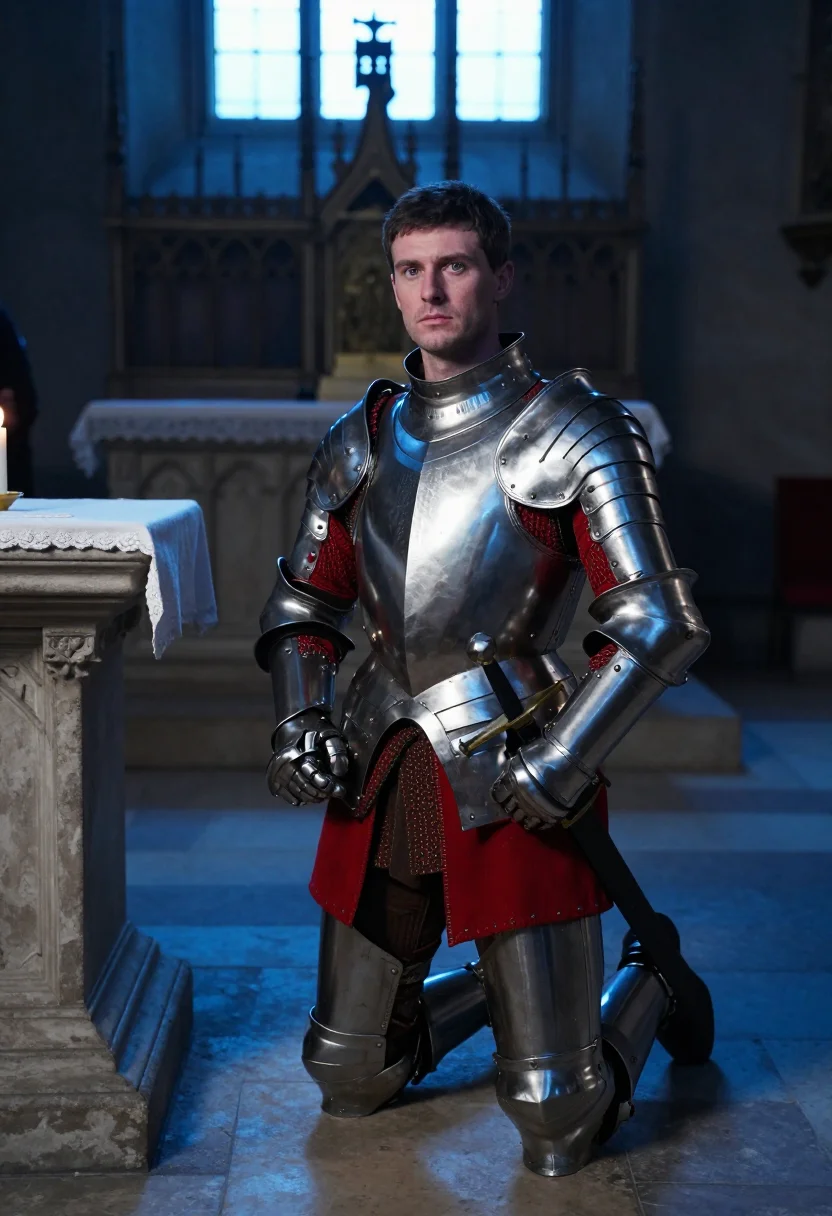
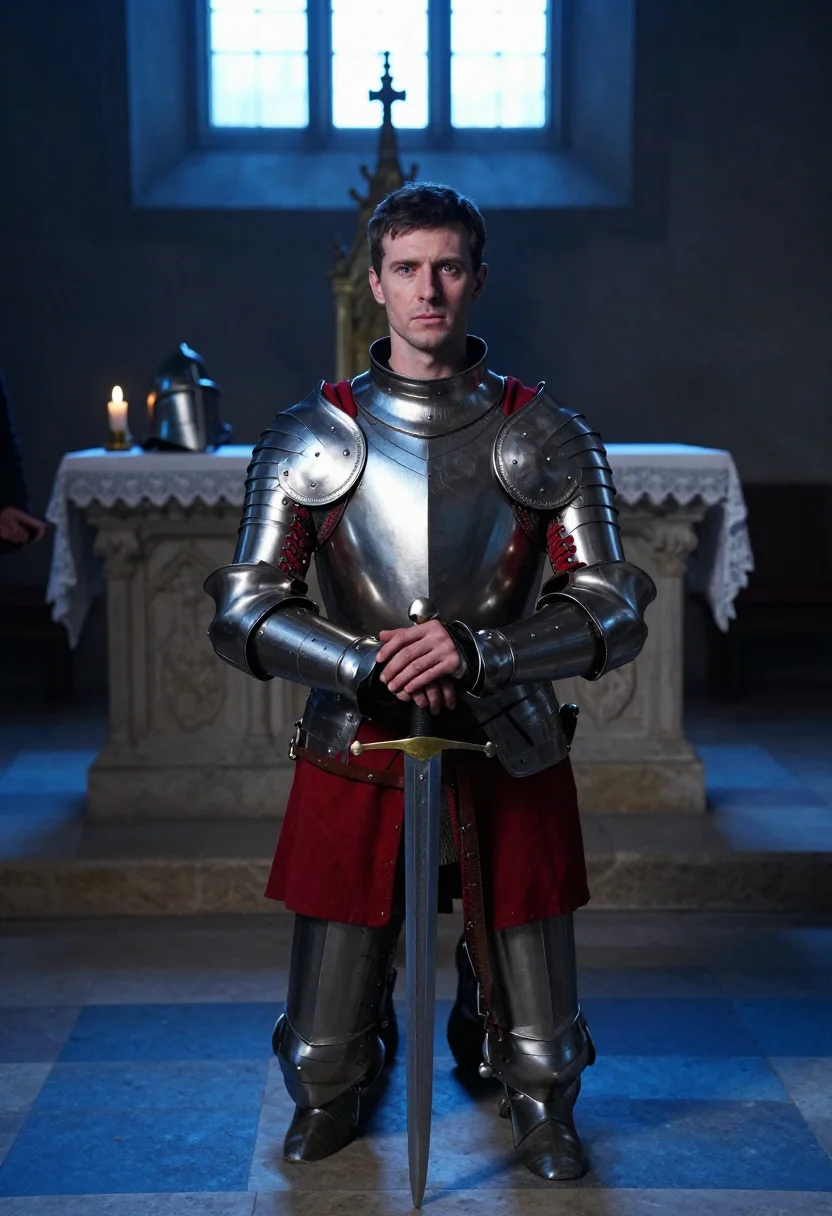
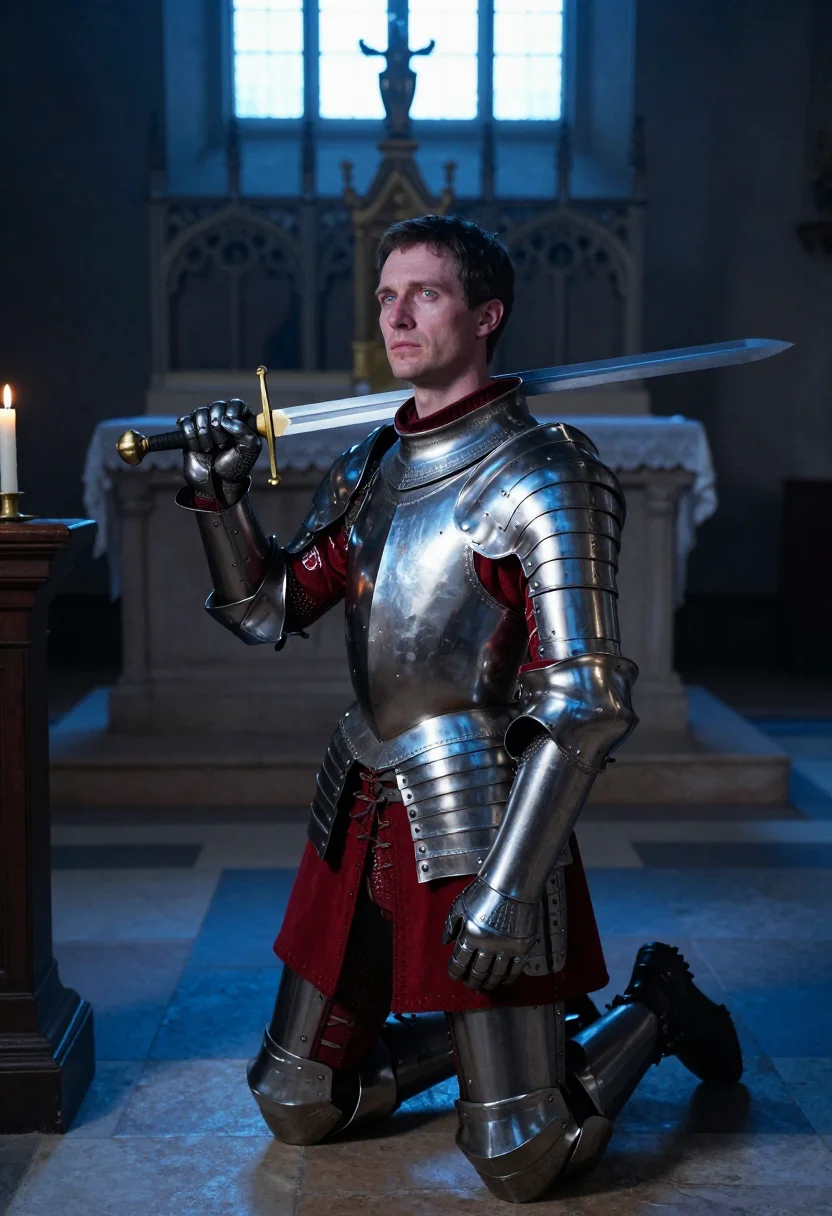
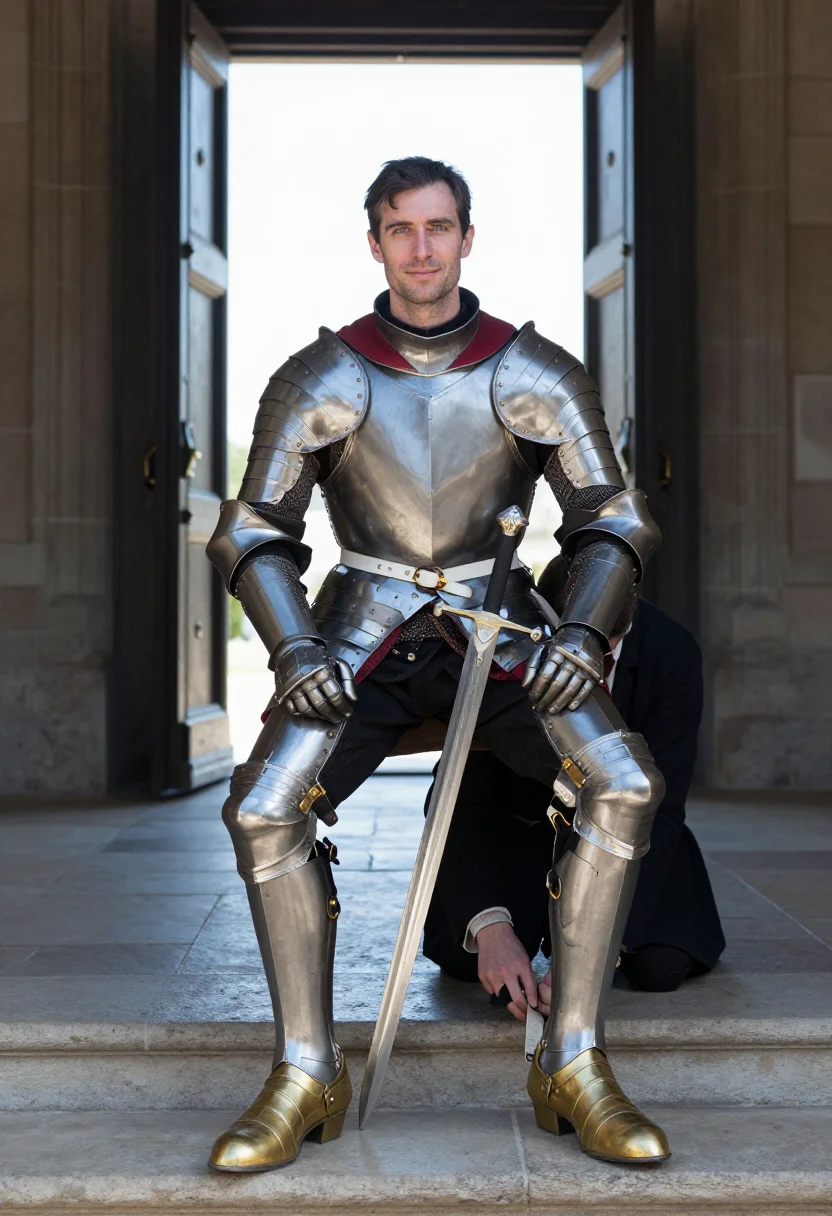
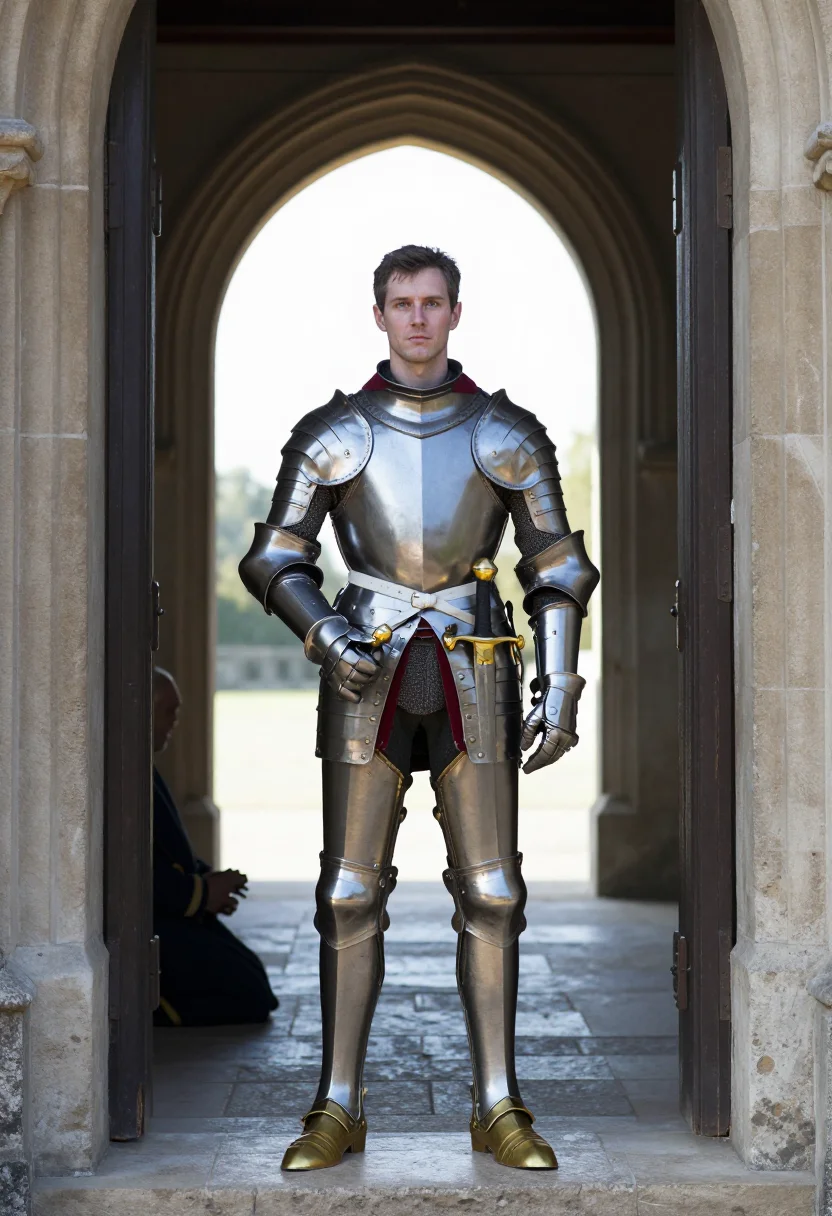
Knighthood had one passage that outranked every other ceremony the medieval world owned: the accolade. This pack is built around its three hours — the candidate in a plain white arming tunic through the night vigil, full harness assembled piece by piece for the dawn, the flat of the blade laid at the shoulder. The register is ceremonial and liturgical, candle gold against altar white against dawn blue, weight carried in stillness rather than motion.
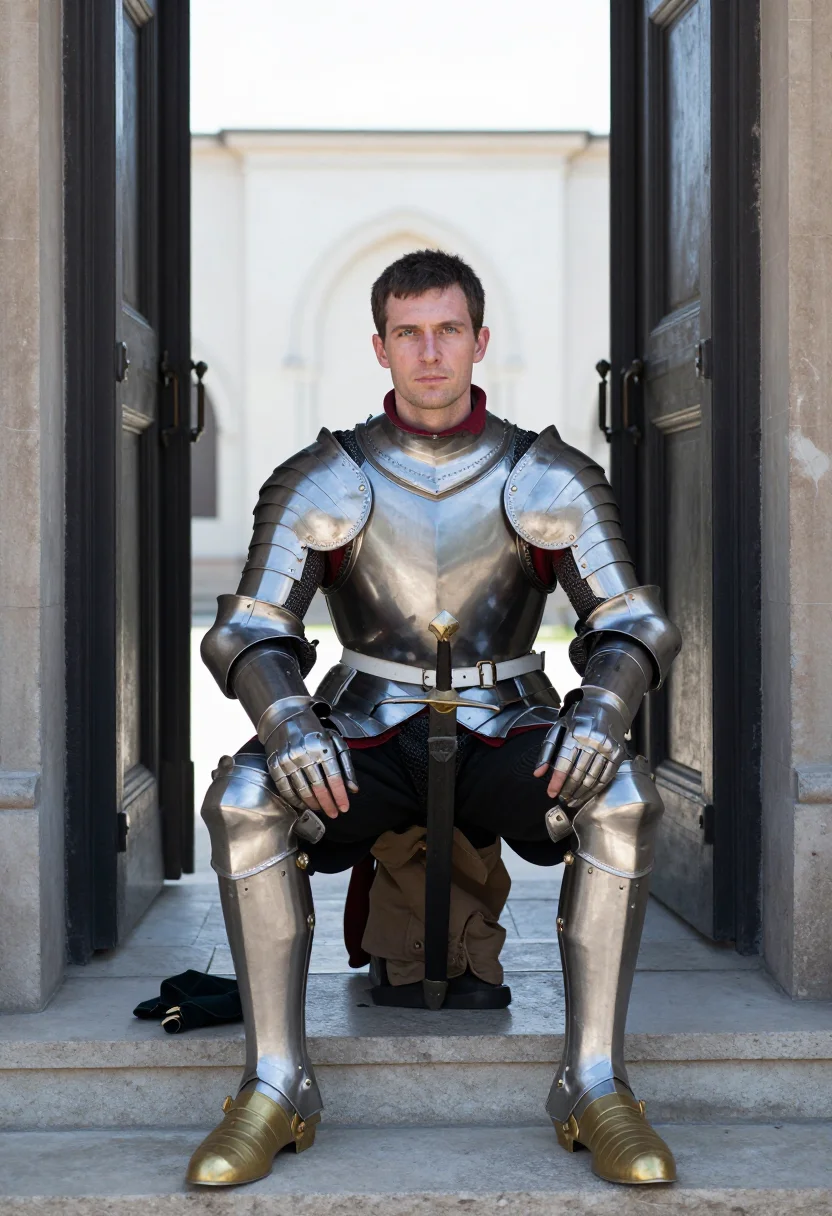
Three settings move through that passage. The vigil: kneeling alone at night before an altar where the harness is laid out like a body of steel, banks of candles burning, eyes open. The dubbing: on one knee in the dawn-lit chapel as the sword's flat touches the shoulder, the lord's arm entering the frame from shadow. The spurs: seated on the chapel steps as gold spurs are buckled at the heel, the sword now at his own hip, the doors open behind onto full morning.
What comes back is a photoreal portrait — a real-looking photograph of you at your own accolade, not a painting or an illustration. The register is drawn from documented chivalric ceremony; the output is a photograph of that ceremony, breathing.
How to photograph yourself for a knighting ceremony photoshoot
Better source photos make better portraits. The pack works with an ordinary phone selfie — the free preview tells you in seconds — but a few things sharpen the likeness under the vigil's candlelit stillness.
- Even, soft lightStand near a window with indirect daylight on your face. Avoid overhead bulbs and phone flash — both flatten the face and are the usual reason an AI portrait misses your likeness.
- Front or three-quarter angleCamera at eye level, facing it or turned slightly to three-quarter. No selfie-stick uplook, no shot from below.
- Face fully clearHair off the forehead, no headwear in the source photo — the pack builds the harness and tunic around your face itself.
- A steady, resolute expressionThe register is stillness under weight — an open, unhurried gaze reads truer than a grin at the altar or the dubbing.
- Plain background is fineDon't worry about your own backdrop — the chapel and altar replace it. A plain wall behind you helps the model focus on your face.
Frequently asked questions
- Will it actually look like a knighting ceremony, and like a real photo?
- Yes on both. The arming tunic, the assembled harness, the gold spurs come back detailed, and the output is photoreal — a real-looking photograph of you, not a painting or a cartoon.
- Is the accolade ceremony itself historically accurate?
- Yes — the night vigil, the dubbing by sword-flat, and the buckling of gold spurs are the documented three stages of the medieval knighting rite, not an invented sequence for the pack.
- Which scenes does it cover?
- Three: the solitary vigil before the altar, the dawn dubbing by the sword's flat, and the buckling of the gold spurs on the chapel steps.
- How is this different from renting a real knight's harness?
- A real shoot means sourcing an accurate arming tunic, full plate harness, and a chapel or altar-scale location. This gives you all three settings, from a selfie, in under a minute.
- Is there a women's version of this pack?
- This pack is cut for a man's silhouette in the arming tunic and harness. The Lady's Favor pack covers the women's side of this same chivalric world — the tournament seen from the stands.
- Does it look like me — I don't want a generic model kneeling at the altar?
- It's built to. Whichever face you upload drives the output, so the nine come back looking like you at the vigil and the dubbing, not a stranger.
- How is this different from Midjourney or a generic AI-art app?
- Text-to-image tools generate a man in armor who matches a description; this pack anchors every render to your uploaded face and keeps it photoreal, so the output is recognizably you across all nine frames.
- What if my photo isn't great quality?
- The free preview tells you in seconds whether your photo works. Even an ordinary phone selfie in decent light is usually enough — you don't need a studio shot.
- What happens to the photo I upload?
- Your photo is processed on European servers to generate your preview and, if you continue, your pack of nine. It is not sold or shared with third parties.
- Does this work as a gift for someone into medieval history?
- Yes — it's a common use. A ceremonial portrait built around a real historical rite, not a generic costume shot.
When the Accolade pack fits
- For a social feed post that carries genuine chivalric ceremony
- For a profile picture with steady, altar-lit authority
- For a portrait gift for a friend who loves medieval history
- For a phone or desktop wallpaper built around the candlelit vigil
- For a print or framed portrait in dawn-lit chapel harness
- For a renaissance faire costume preview before committing to real armor
- For a dating profile photo with commanding, historical presence, kept honest about what it is
- For medieval reenactment and HEMA communities sharing the knighting rite
- For anyone drawn to the accolade who doesn't own or want to rent the harness
About narcis
Most AI portrait tools ship every pose, profession, era, and aesthetic in one giant catalog. The output looks like every other AI photo on the internet — a glaze over a stock face. Narcis goes the other way. One tool, one job: turn photos of you into portraits worth keeping. Drop a selfie and your free preview streams in seconds — a quick sketch: close, not you yet. For portraits that are truly you, train your own model on 12 to 20 photos; it trains in the background, and we email you when it is ready. Train once, render everywhere — this pack, every other pack, and the Studio all come out of that one model, about ten seconds a portrait, and it stays yours to retrain or delete. Each pack is hand-curated against actual references — paintings, photographers, registers — and tested on real faces before it ships. See a free preview before you pay, not after. Packs are one-time — no subscription to buy one; Studio, the unlimited composer, is optional at €12/month and every pack includes 30 days of it. No template generator. Built and run by one team, on our own infrastructure.
All images are AI-generated. By using this service, you confirm you are 18+, that any face photo you upload is your own or used with explicit consent. Full Terms