AI Charlemagne Generator — Free Preview, Then Train Your Model
See a Free Preview in Seconds, Before You Commit
Train Your Model Once, Render Charlemagne in About Ten Seconds
Studio-Quality Results Without a Studio Visit
Narcis generates a free preview of your charlemagne from one uploaded photo. The preview streams in seconds — a quick sketch, close but not you yet. If you like it, train your model once — 12 to 20 photos, we email you when it's ready — and the full pack of nine is €9,99, rendered from your model in about ten seconds a portrait. No signup before the preview, and no waiting for an email until you choose to train.
The pack is nine professional charlemagne rendered in portrait aspect ratio (2:3) — the shape LinkedIn banners, CVs, and print profiles actually use. Each image shows varied crops, expressions, and light angles so you have real choices, not nine identical files.
Photos are processed on European servers. We use your photo to generate your headshots; we do not share it with third parties.
/charlemagne · photo · 3 scenes
A Charlemagne Photoshoot, the Aachen Throne
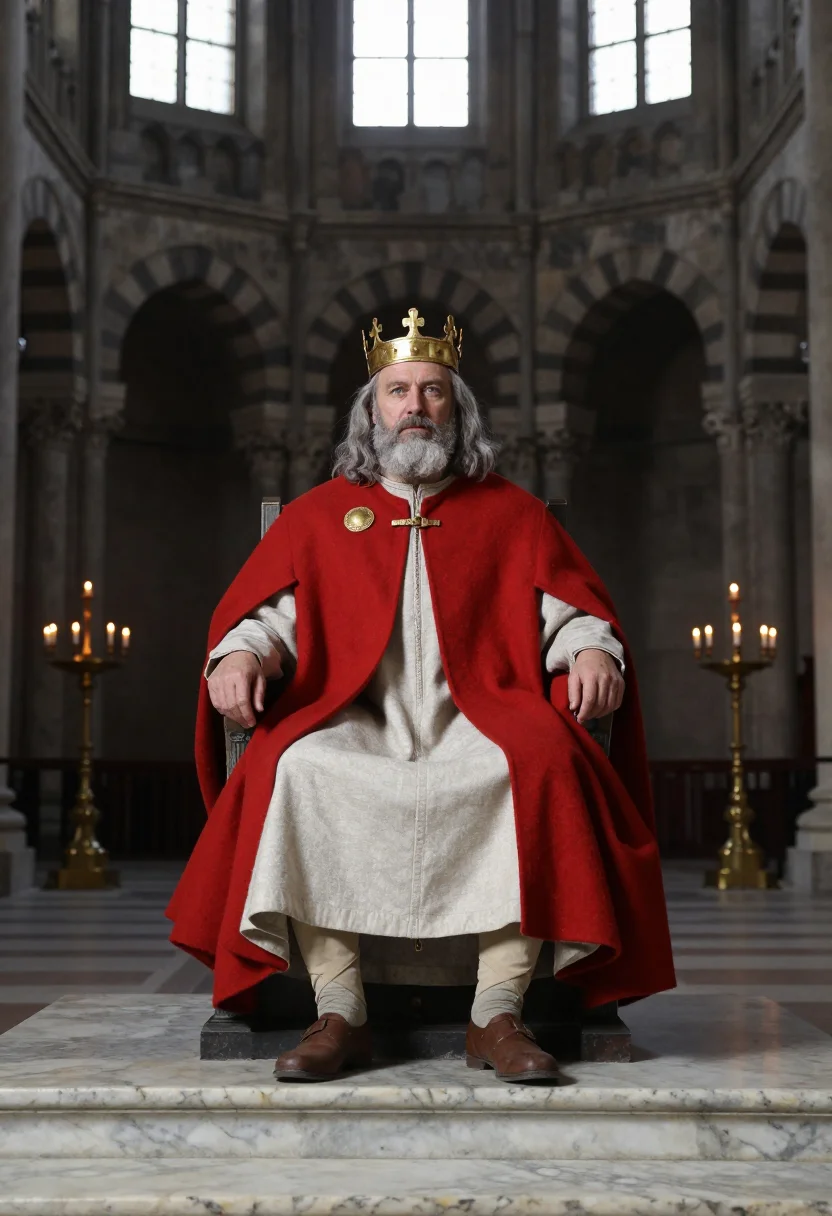
no account · ~15s · the first shot is free
The Empire's crowns
one model wears them all →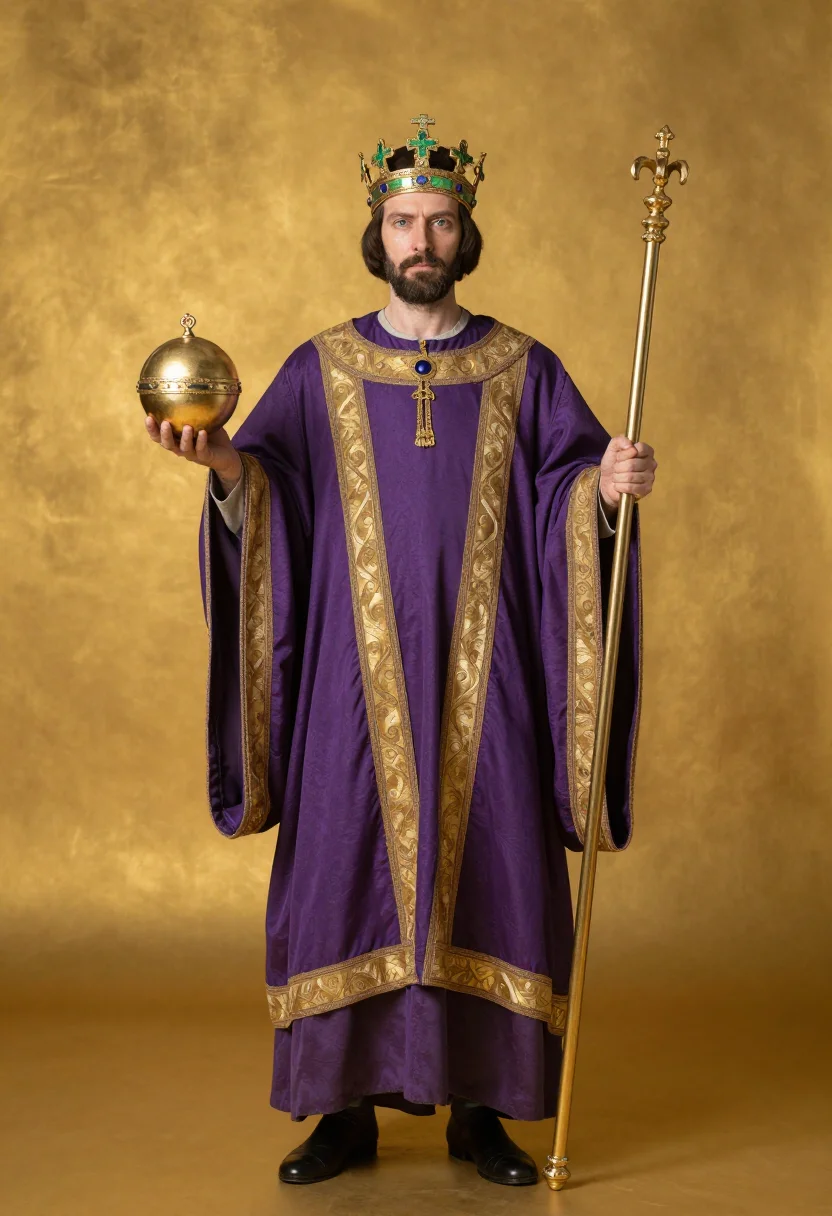
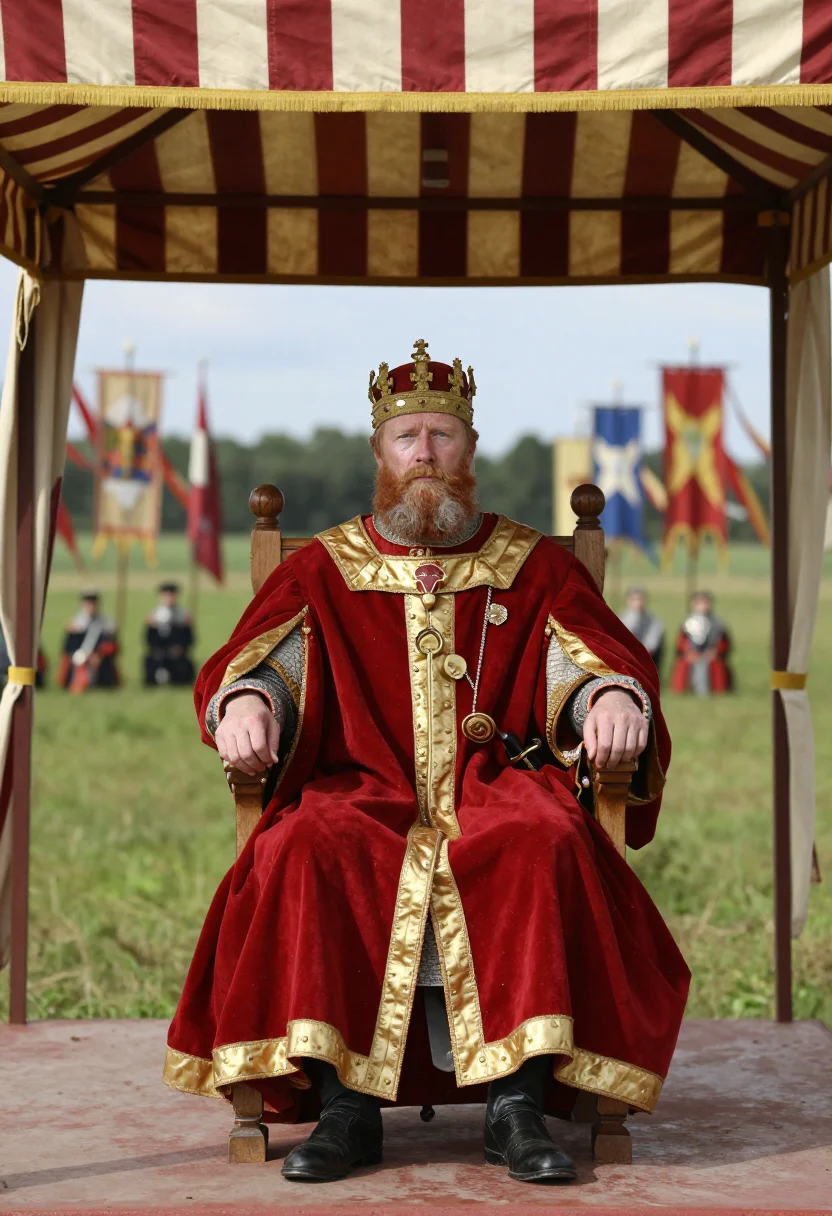
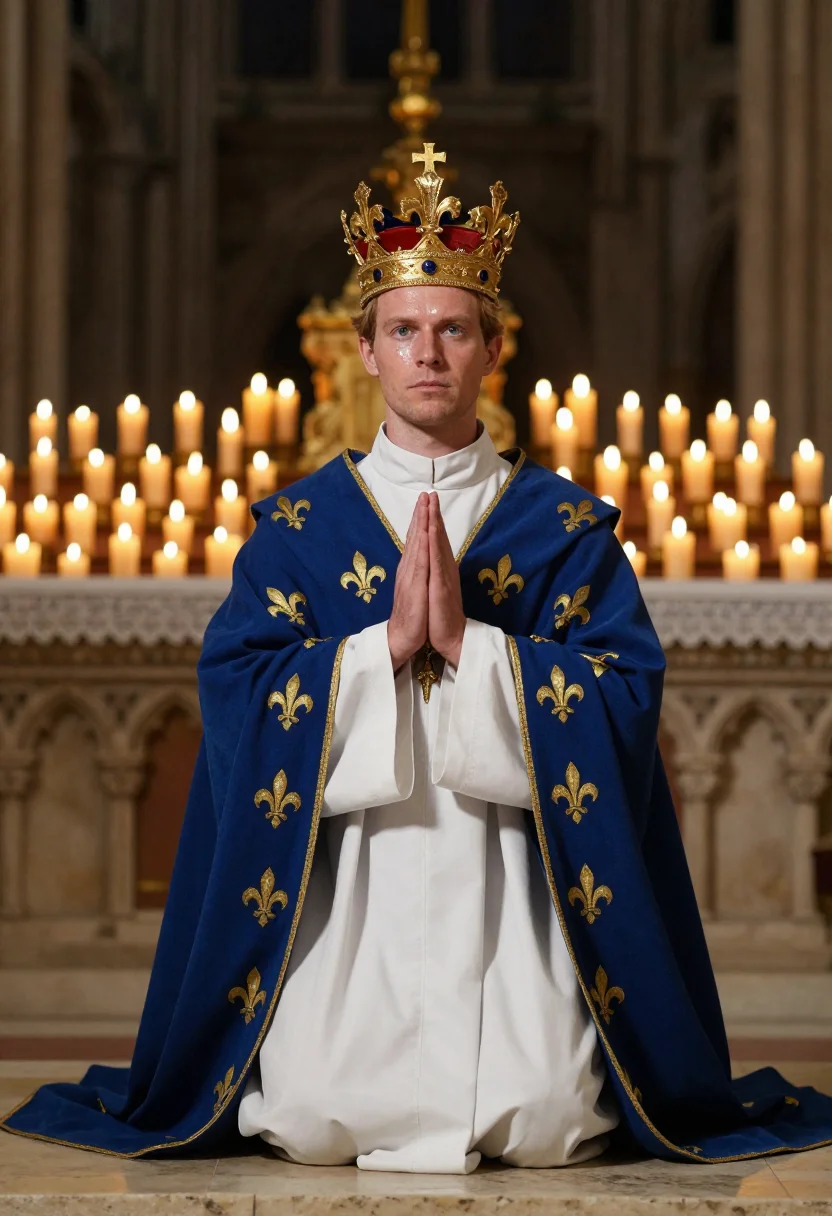
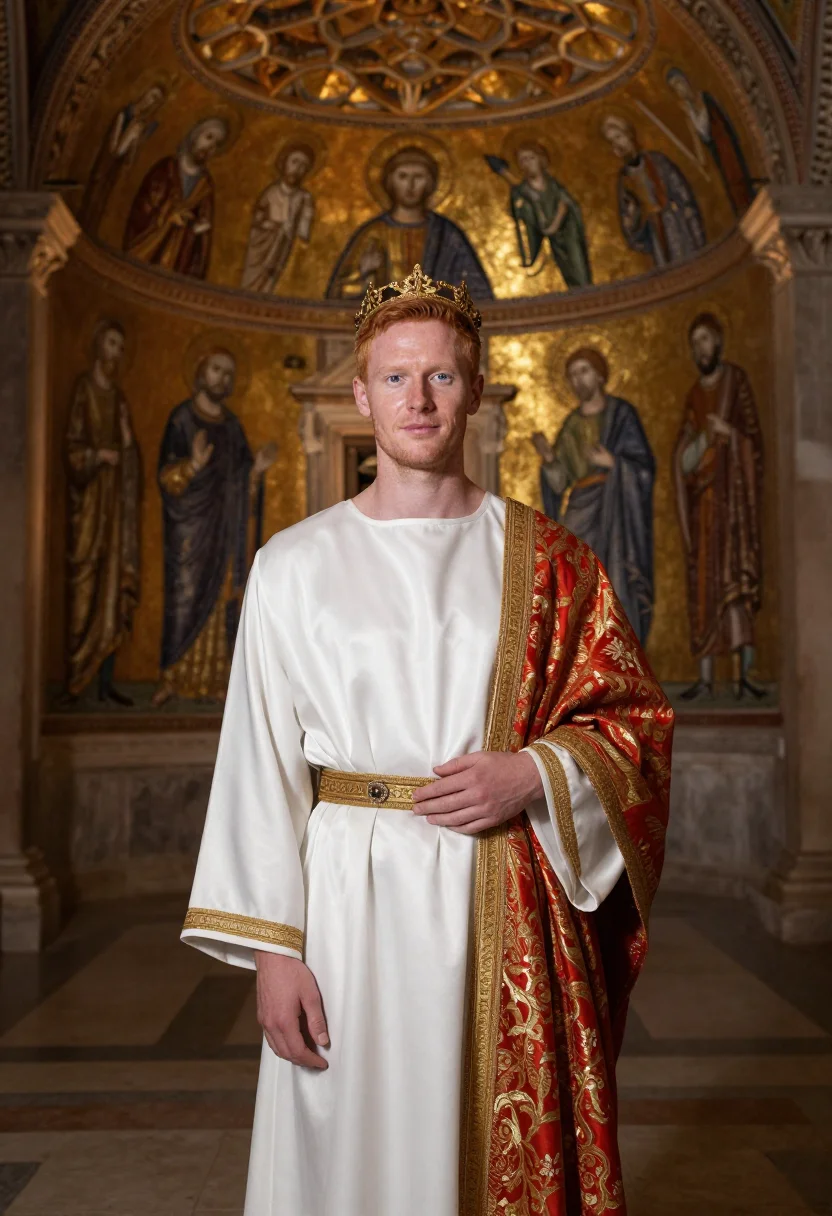
all 9 looks — from one photo ↓
How it works
Three steps. Upload, preview, deliver.
1
Upload 1 to 5 selfies
One is enough for the free preview. More angles sharpen the likeness.
2
See a free preview
A quick sketch of your likeness streams in seconds — close, not you yet, before you pay.
3
Train your model, then unlock 9
€9,99 one-time. Train your model once — 12 to 20 photos, we email you when it's ready — and all nine render in about ten seconds each. Every future pack and Studio portrait render the same way, no repeat training.
The Carolingian register
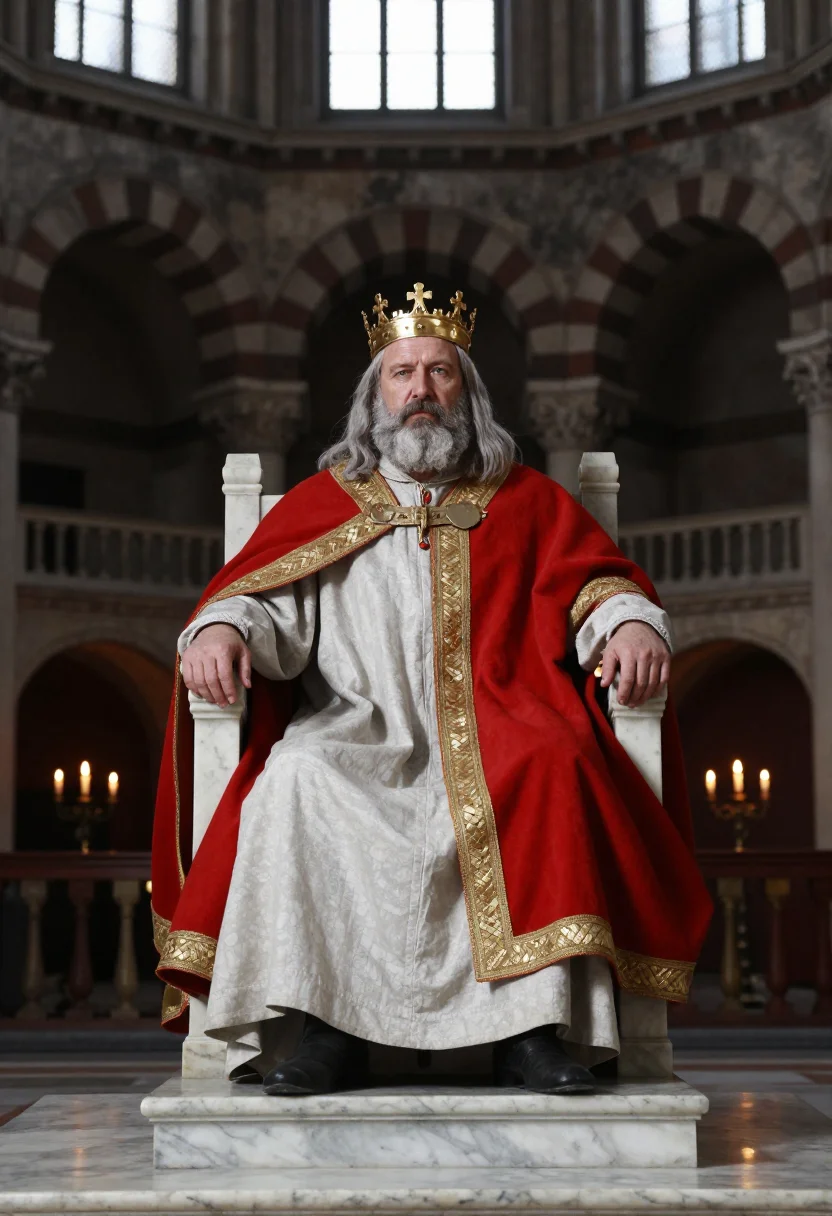
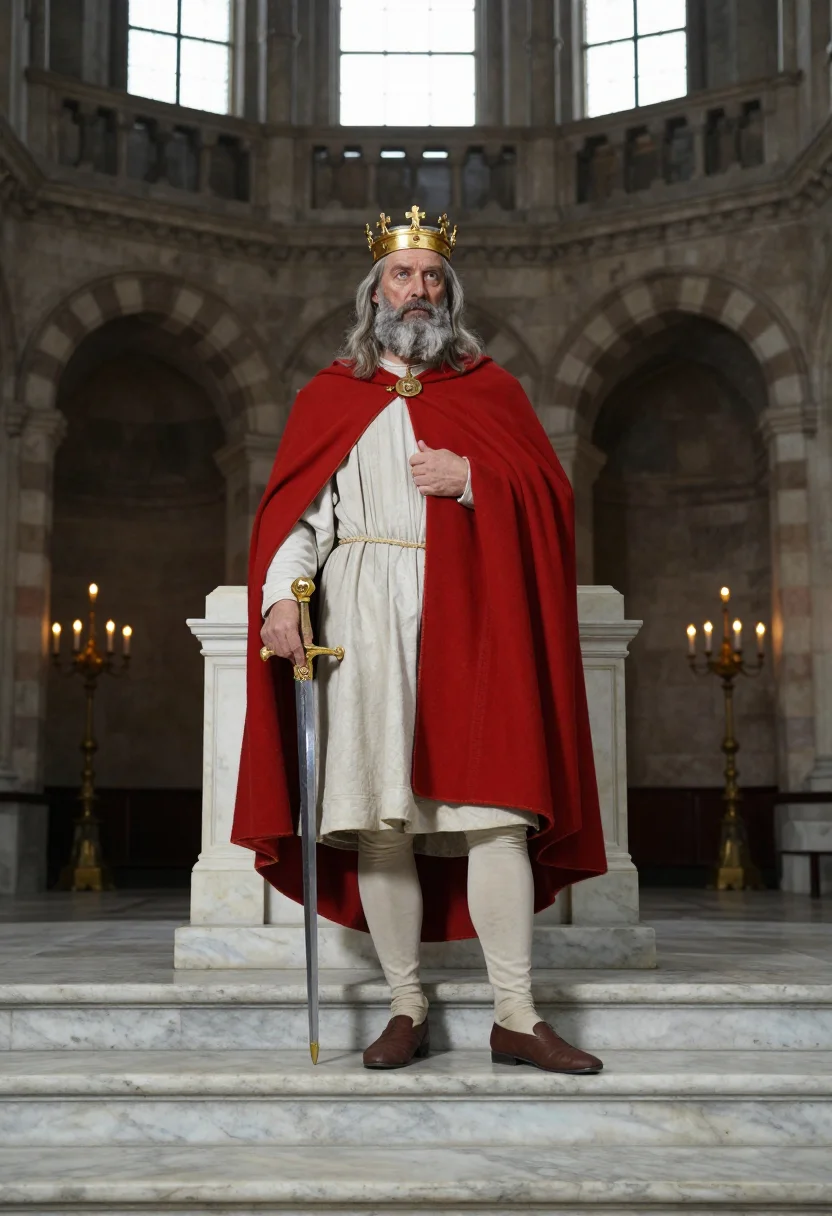
Charlemagne belongs at Aachen: the Palatine chapel's octagon, a plain marble throne reached by six steps, a Christmas coronation held in Rome, Joyeuse worn at his hip. He inherited a Frankish kingdom already large and, by the time of the Aachen coronation, had folded most of western Europe under one crown — an empire built as much by decree and by the sword as by the school he founded to hold it together. He is claimed by France and by the Empire both, and this pack doesn't settle the quarrel — it seats him at Aachen and lets it run. The register is Carolingian, massive simplicity over ornament: a Frankish tunic and cross-gartered leggings under a great square mantle pinned at the shoulder, the octagonal chapel's bronze and marble around him, a crown plain gold and heavy, Joyeuse with its reliquary hilt at his side. The palette is bronze, marble white, imperial red, and candle gold.
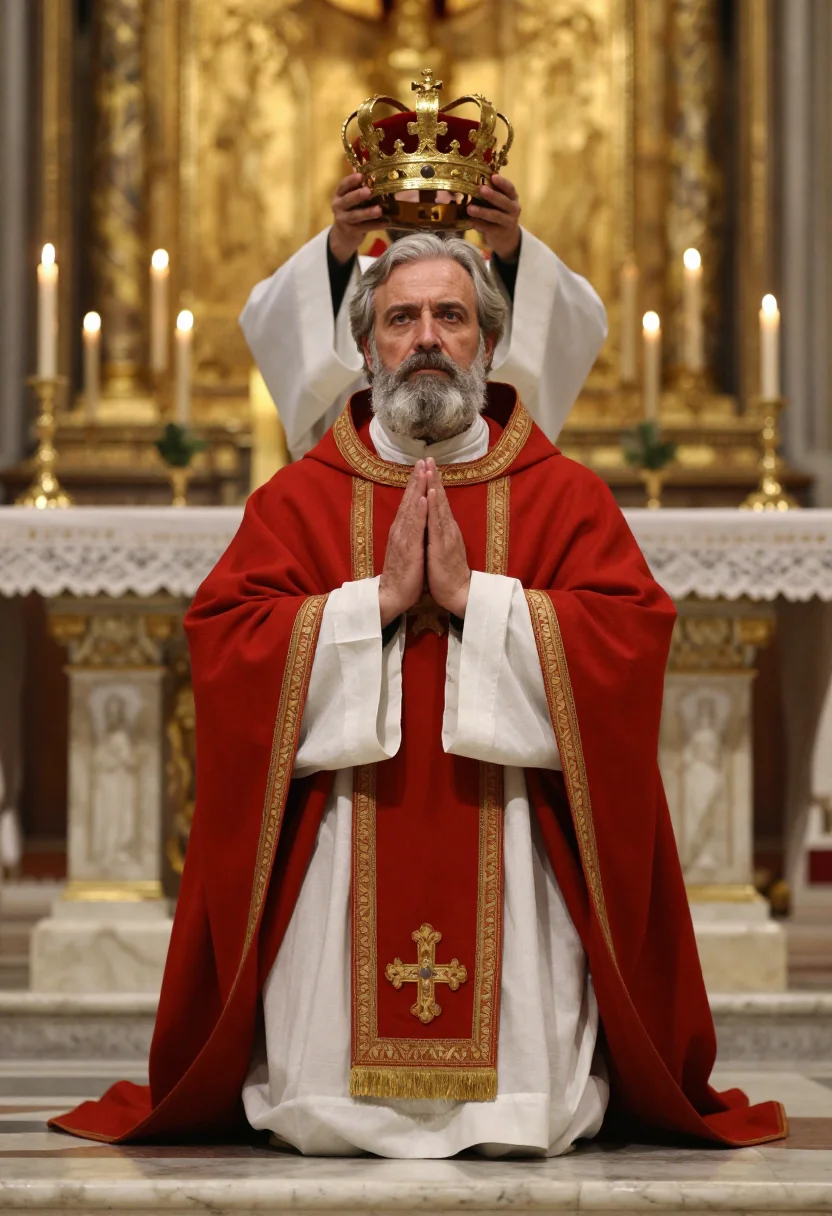
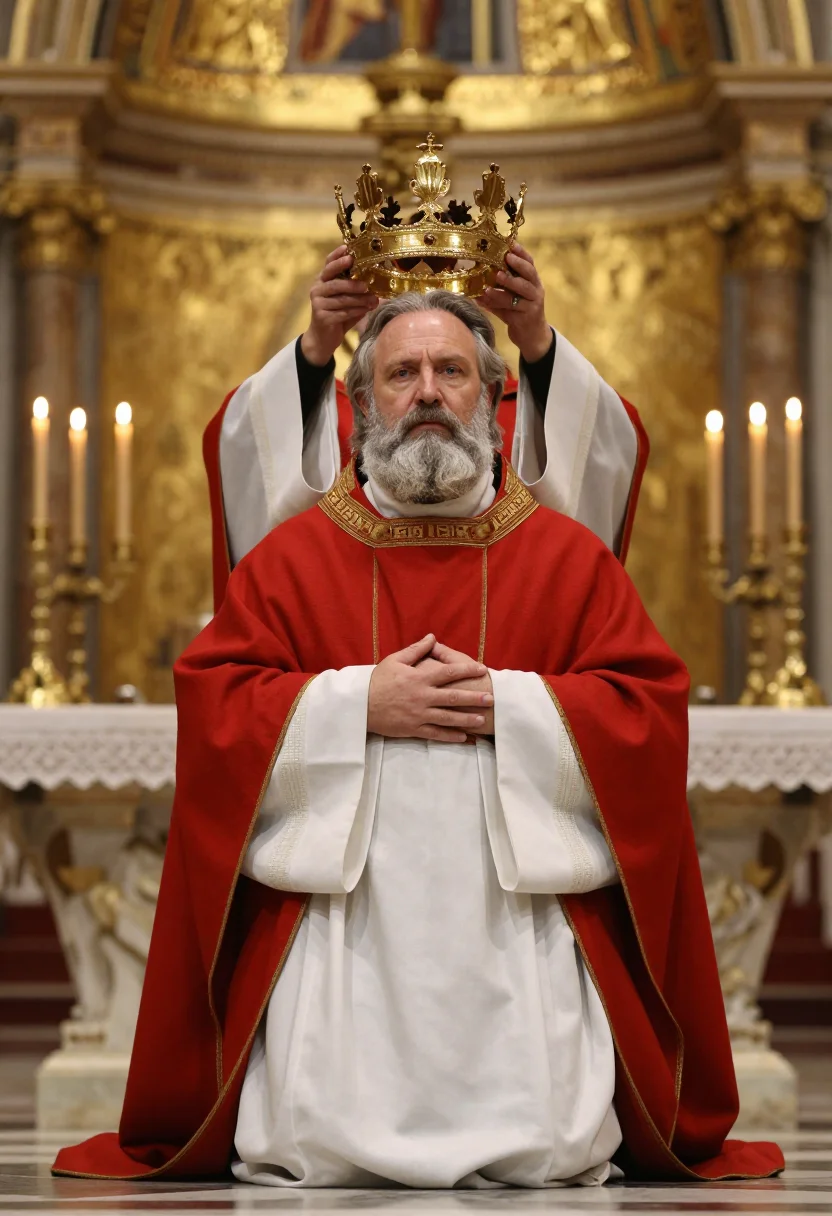
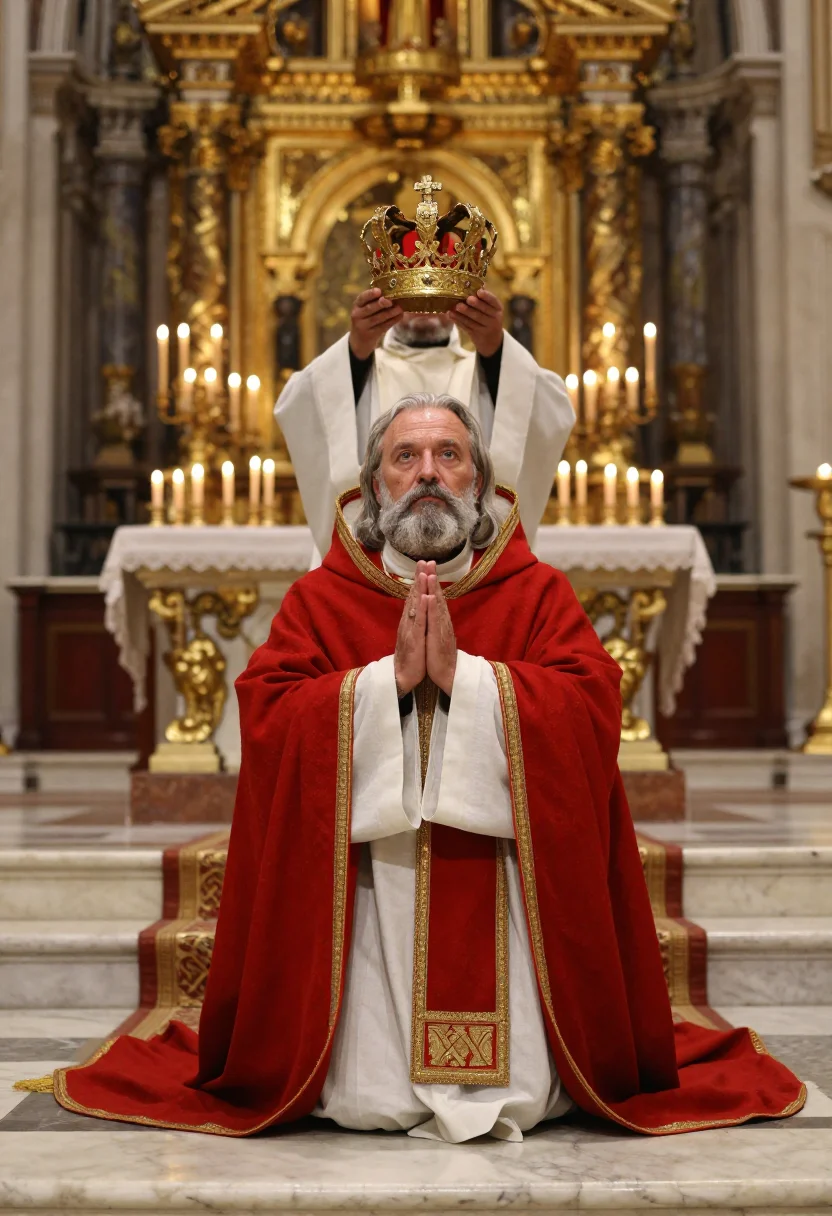
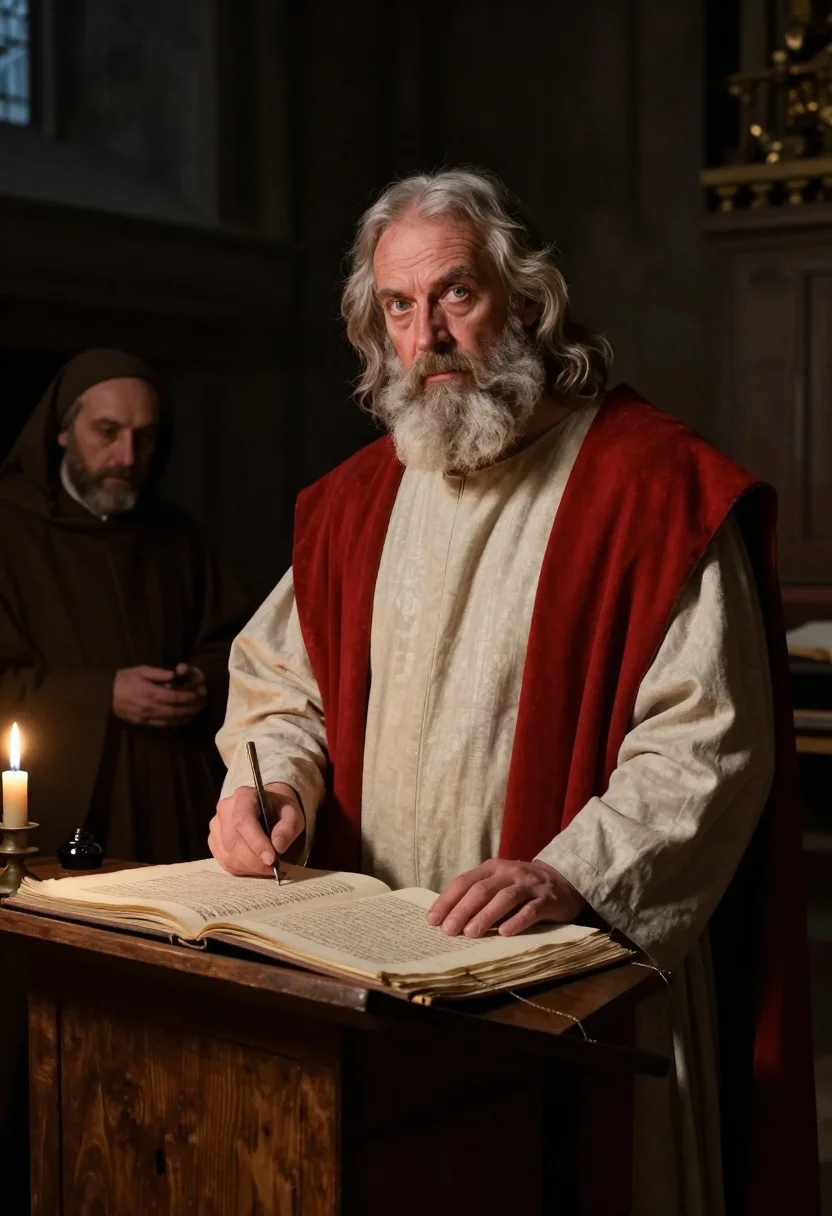
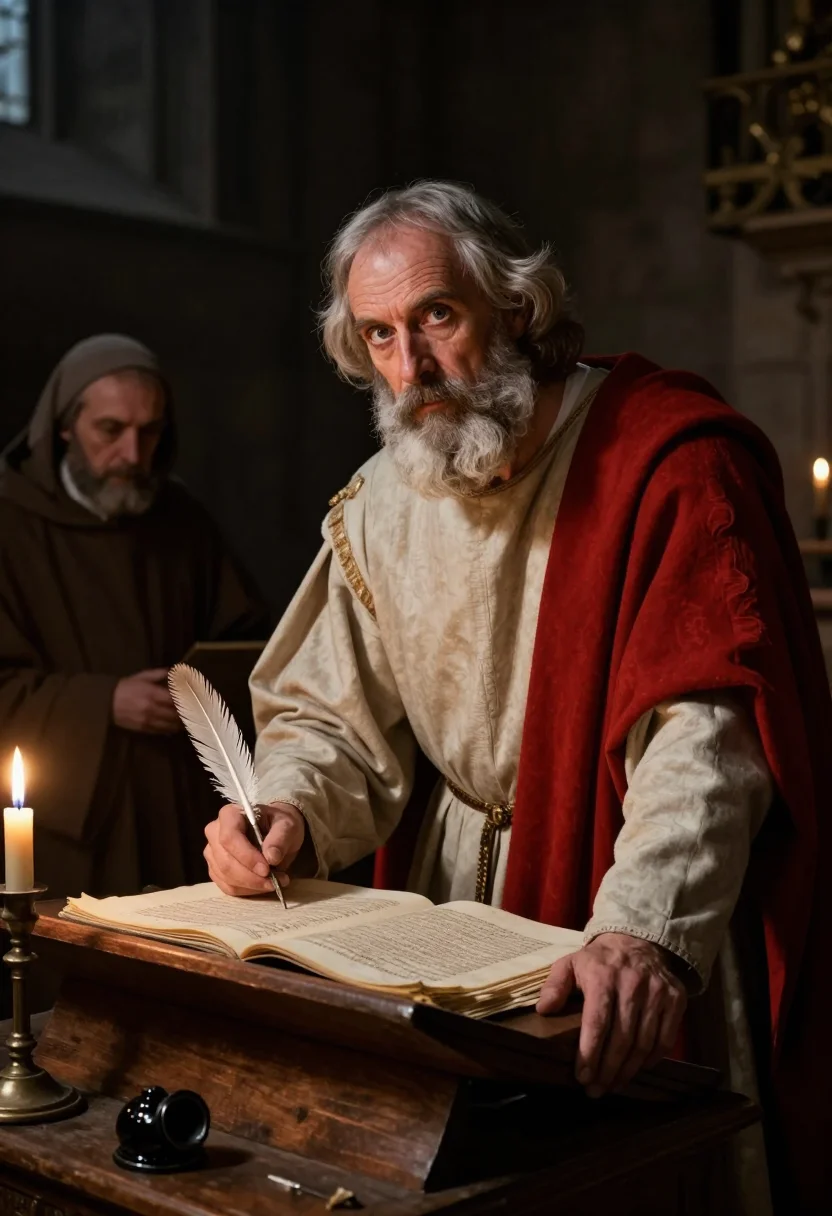
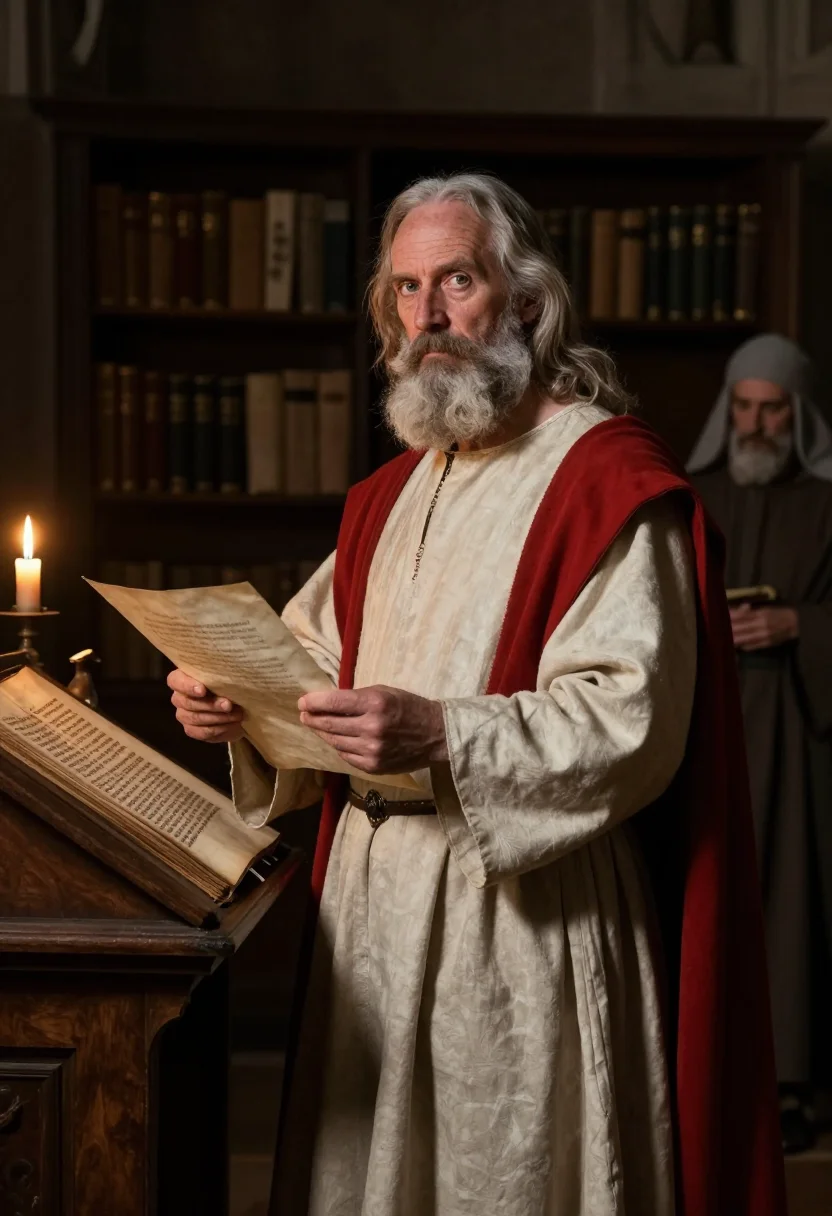
Three situations carry that weight. The throne: seated on the plain marble throne in the octagon's gallery, hands on his knees, the chapel's bronze lamps burning in tiers below — monumental frontality, no ornament wasted. The coronation: kneeling at an altar as the crown is set from behind and above, a red mantle spread down the steps, basilica gold filling every direction. The school: standing at a lectern of manuscripts with a scholar at his elbow, tracing letters he was never taught as a young man, candlelight on vellum and a grey beard — an old king still correcting his own hand, in a court that had begun collecting the classical texts his empire would later be remembered for saving.
What comes back is a photograph — a real-looking photoreal portrait of you as Charlemagne, not a painting, an illuminated-manuscript miniature, or an illustration, even though so much of his surviving image comes from exactly those sources. The Aachen throne and the Rome coronation are documented history; the output is that history breathing, shot as if a camera had actually stood in the octagon or the basilica. The plain throne, Joyeuse, and the Carolingian court's manuscript culture are documented history rather than legend dressed as fact; what changes here is only the medium — that history rendered as a photograph, not as a later medieval illumination.
How to photograph yourself for a Charlemagne photoshoot
Better source photos make better portraits. The pack works with an ordinary phone selfie — the free preview tells you in seconds — but a few things sharpen the likeness under this register's frontal, weighted light.
- Even, soft lightStand near a window with indirect daylight on your face. Avoid overhead bulbs and phone flash — both flatten the face and are the usual reason an AI portrait misses your likeness.
- Front or three-quarter angleCamera at eye level, facing it or turned slightly to three-quarter. No selfie-stick uplook, no shot from below.
- Face fully clearHair off the forehead, no hat in the source photo — the pack adds the plain gold crown and the great mantle itself.
- A monumental, unhurried expressionThe register is massive simplicity, no ornament wasted — a still, grounded gaze reads truer here than an animated one.
- Plain background is fineDon't worry about your own backdrop — the Aachen octagon, the Roman basilica, and the scholar's lectern replace it. A plain wall behind you helps the model focus on your face.
Frequently asked questions
- Will it actually look like Charlemagne, and like a real photo?
- Yes on both. The plain gold crown, the great pinned mantle, Joyeuse at the hip come back detailed, and the output is photoreal — a real-looking photograph of you, not a painting or a cartoon.
- Is it accurate to call Charlemagne French or the Holy Roman Emperor — isn't that a contested claim?
- Both France and the Holy Roman Empire have genuinely claimed him across history, and that's not settled here — the pack seats him at Aachen, in the Palatine chapel he actually built, and lets the wider claim stand as it is.
- Which scenes does it cover?
- Three: enthroned on the plain marble throne at Aachen, kneeling for the coronation in Rome, and standing at a manuscript lectern in the palace school.
- Is Joyeuse a real detail or an invented prop?
- Joyeuse is Charlemagne's documented sword, later used in French coronation ceremonies for centuries — a real historical object, not an invented prop for the pack.
- How is this different from renting a real emperor costume and location?
- A real shoot means sourcing an accurate Frankish mantle and crown, plus access to a chapel or basilica-scale location. This gives you all three settings, from a selfie, in under a minute.
- Does it look like me — I don't want a generic model on the throne?
- It's built to. Whichever face you upload drives the output, so the nine come back looking like you at Aachen and at the coronation, not a stranger.
- How is this different from Midjourney or a generic AI-art app?
- Text-to-image tools generate a man in a crown who matches a description; this pack anchors every render to your uploaded face and keeps it photoreal, so the output is recognizably you across all nine frames.
- What if my photo isn't great?
- One clear selfie is enough to start. The free preview shows the likeness in seconds — if it's off, the prep tips above are the fastest fix, usually lighting.
- What happens to the photo I upload?
- Your photo is processed on European servers to generate your preview and, if you continue, your pack of nine. It is not sold or shared with third parties.
- Does this work for a costume party or medieval reenactment reference?
- It's built for portraits, not for costume patterning — but it's an honest, documented look at the Carolingian register if you want a reference before sourcing the real thing.
When the Charlemagne pack fits
- For a social feed post that carries genuine Carolingian, imperial weight
- For a profile picture with monumental, still authority in it
- For a portrait gift for a friend who loves early medieval history
- For a phone or desktop wallpaper built around the Aachen octagon's bronze and marble
- For a print or framed portrait in imperial red and candle gold
- For medieval and early-Empire history shares — documented Aachen and Rome, not an invented court
- For a dating profile photo with commanding historical presence, kept honest about what it is
- For a renaissance faire or costume-party reference shot
- For anyone drawn to Carolingian or Holy Roman history who doesn't own or want to rent regalia
About narcis
Most AI portrait tools ship every pose, profession, era, and aesthetic in one giant catalog. The output looks like every other AI photo on the internet — a glaze over a stock face. Narcis goes the other way. One tool, one job: turn photos of you into portraits worth keeping. Drop a selfie and your free preview streams in seconds — a quick sketch: close, not you yet. For portraits that are truly you, train your own model on 12 to 20 photos; it trains in the background, and we email you when it is ready. Train once, render everywhere — this pack, every other pack, and the Studio all come out of that one model, about ten seconds a portrait, and it stays yours to retrain or delete. Each pack is hand-curated against actual references — paintings, photographers, registers — and tested on real faces before it ships. See a free preview before you pay, not after. Packs are one-time — no subscription to buy one; Studio, the unlimited composer, is optional at €12/month and every pack includes 30 days of it. No template generator. Built and run by one team, on our own infrastructure.
All images are AI-generated. By using this service, you confirm you are 18+, that any face photo you upload is your own or used with explicit consent. Full Terms