Tibetan Dress Photoshoot
Nine photos of you in one setting
How your model is created from your photos
Every pack on Narcis, made with your face
Nine photographs of you in one setting: one pack of the Narcis catalogue.
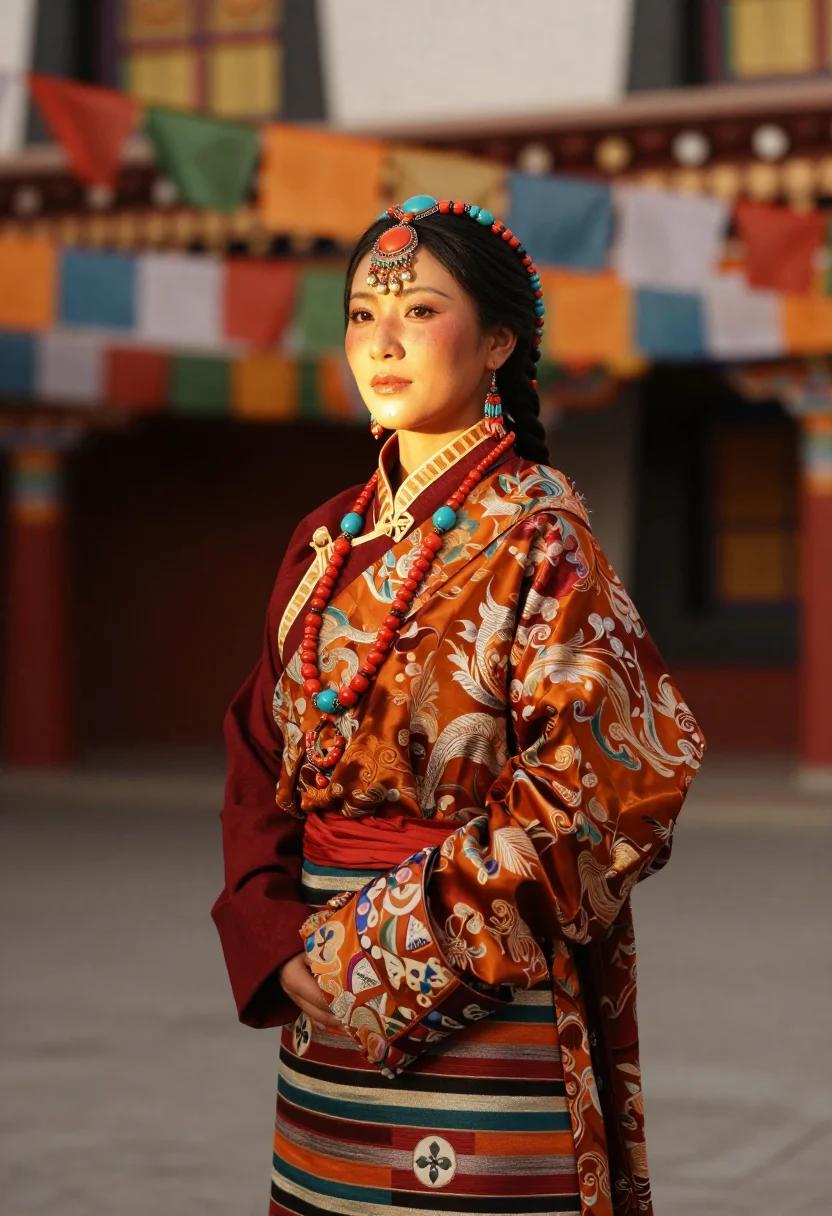
A tibetan chuba photoshoot. Nine photographs of you, in portrait format. The nine vary in crop, expression and light, so there are real choices, not nine identical files.
/tibetan-chuba · photo · 3 scenes
Tibetan Dress Photoshoot
no account · ~15s · try it on with one selfie
More like this
one model wears them all →
all 9 photos in this pack ↓


How it works
Three steps.
1
Add your photos
Add photos of yourself. We check each one when you add it.
2
We create your model
We create your AI model from your photos. Your photos are ready in a few hours.
3
Every pack, with your face
This pack and every other pack on Narcis can then be made with your face, and single photos too.
The Tibetan chuba register
The chuba is the robe the Tibetan plateau dresses up in — silk brocade in saffron and crimson, a striped pangden apron tied at the waist, and the unmistakable coral-and-turquoise jewellery layered at the throat and crowning the head. This pack puts you in that frame. Three looks carry it: a saffron-and-crimson brocade chuba with a pangden apron and beaded headpiece in a monastery courtyard strung with prayer flags, a chuba beneath a heavy coral-amber-turquoise headdress and layered necklaces against a painted-wood temple wall, and a deep-red fur-trimmed chuba against a Himalayan mountain plateau. Each look is shot three ways, so the nine portraits read like a real shoot rather than the same frame nine times.
These are photographs, not paintings and not stickers. The output is photoreal — your face, your features, your warm complexion and your dark eyes — dressed and lit the way a Himalayan photographer would frame a Losar or festival portrait: warm directional daylight wrapping the face, the brocade and coral raised and legible, the monastery soft behind you in shallow focus. The pack borrows the robe and the jewellery; it keeps the dress named and worn the way it is actually worn, and it does not turn you into a cartoon.
The palette moves with the look. Saffron, crimson and turquoise against warm ochre for the brocade chuba; coral, turquoise and amber against painted wood for the headdress look; deep red, turquoise and warm earth against snow-lit grey for the fur-trimmed editorial frame. A festive monastery register for the celebration, a jewellery-forward frame for the headdress, a highland-editorial light for the plateau. You get all nine and choose what suits you, instead of committing to one colourway and hoping it lands.
Nothing here is generic: it is a Tibetan portrait of you, correctly named and rendered with respect for the chuba and the coral-and-turquoise jewellery it borrows. The register sits close to neighbouring Himalayan dress — Ladakhi and Bhutanese looks share much of its grammar — but it is built and named as Tibetan.
How to photograph yourself for Tibetan chuba portraits
Good input, sharp portrait.
- Soft, even lightFace a window with indirect daylight on you. Skip the overhead bulb and hard noon sun — both flatten the face and kill the warm directional modelling the monastery light is built around.
- Front or three-quarter, at eye levelHold the camera level with your eyes. No selfie up-angle, no looking down — the festive register wants you square to the lens.
- Hairline and jaw clearThe pack adds the beaded headpiece, the heavy headdress and the layered necklaces and keeps them off your face. Keep hair off your forehead and jaw so your hairline reads cleanly in the source photo.
- Plain wall behind youLet the pack build the prayer-flag courtyard, the painted temple wall and the Himalayan plateau. A clean backdrop means the whole likeness budget goes to your face.
- Relaxed, composed expressionA soft, settled look reads better than a wide grin in festive dress. Look at the lens the way you would at someone listening to you.
Frequently asked questions
- Is this a real Tibetan look or a costume filter?
- It's built to read as a real festive portrait, not a costume. A silk-brocade chuba, a striped pangden apron, genuine coral-and-turquoise jewellery, a prayer-flag courtyard behind — the way the dress is actually worn for Losar and festivals.
- Is this Tibetan, Ladakhi, or Bhutanese?
- It's built and named as Tibetan — the chuba, the pangden apron, the coral-and-turquoise jewellery and the monastery setting. Neighbouring Himalayan dress shares a lot of that grammar, so if your own register is Ladakhi or Bhutanese the look will land close, but we describe it honestly as the Tibetan one rather than claiming all three.
- Can men use this pack?
- The looks here are women's Tibetan festive dress — the chuba, the pangden apron, the headdress and the coral-and-turquoise jewellery — so the styling reads feminine. For men's formal occasion dress in other registers, the Highland Kilt and Agbada packs are the closest fits.
- Can I choose the colours?
- You get all nine. The looks span saffron, crimson and turquoise for the brocade chuba, coral and amber for the headdress, and deep red against snow-lit grey for the fur-trimmed editorial. Rather than picking one and hoping, you see the whole spread and decide what suits you.
- Is it good for Losar or a festival portrait?
- It is made for exactly that. The brocade chuba and the coral-and-turquoise jewellery are the dress of Losar and the monastery festivals — and a portrait of you in it is ready — no studio and no sourcing the jewellery.
- Will the photos look like me?
- Every photo looks like you, well photographed. If one is nearly right, say what to change, in your own words.
- Do I have to write a prompt?
- No. There is nothing to write: you pick a pack, and it is ready in seconds.
- How many photos of myself do I add?
- Between six and twenty, from different days and in different light, with your face clear. We check each one when you add it.
- What happens to the photos I add?
- They are used only to create your model, on our own servers in the European Union. They are not shared and not sold.
When the Tibetan chuba pack fits
- A Losar (Tibetan New Year) portrait in a brocade chuba, without booking a studio.
- A festival or wedding keepsake in full coral-and-turquoise jewellery.
- Diaspora heritage, picturing the plateau from a flat in Dharamshala, Toronto, or Zurich.
- A festive profile picture for Losar or a monastery festival.
- Trying Tibetan looks — brocade chuba, heavy headdress, fur-trimmed editorial — before a real shoot.
- A gift for the mother or grandmother who keeps the jewellery and the dress.
- A prayer-flag or monastery-courtyard portrait when the real shoot never happens.
- A genealogy or family-history portrait connecting you to Himalayan roots.
- A respectful, correctly named cultural portrait for a school or community page.
- The family-chat festive portrait, ready before the celebration starts.
About narcis
Most AI photo tools put every pose, job, era, and style in one giant catalog. The photos all look like every other AI photo on the internet — a glaze over a stock face. Narcis goes the other way. One job: photos of you that look like photographs. You add at least 6 photos of yourself, and we create your AI model from them. Your photos are ready in a few hours, and we email you when they are. Then this pack and every other pack on Narcis can be made with your face. Each pack is curated against real references — paintings, photographers, places — and tested on real faces before it goes live. Built and run by one small team, on our own servers.
All images are AI-generated. By using this service, you confirm you are 18+, that any face photo you upload is your own or used with explicit consent. Full Terms