Bharatanatyam Portraits
Nine photos of you in one setting
How your model is created from your photos
Every pack on Narcis, made with your face
Nine photographs of you in one setting: one pack of the Narcis catalogue.
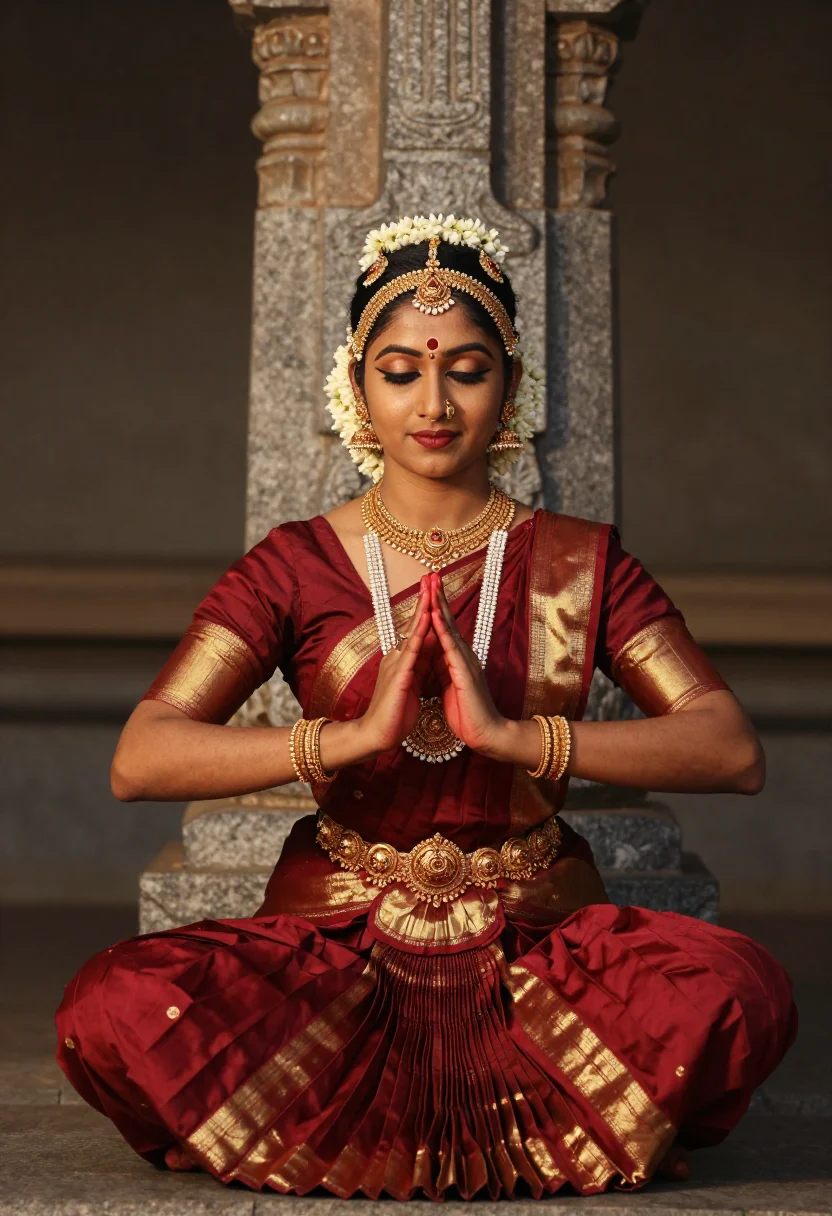
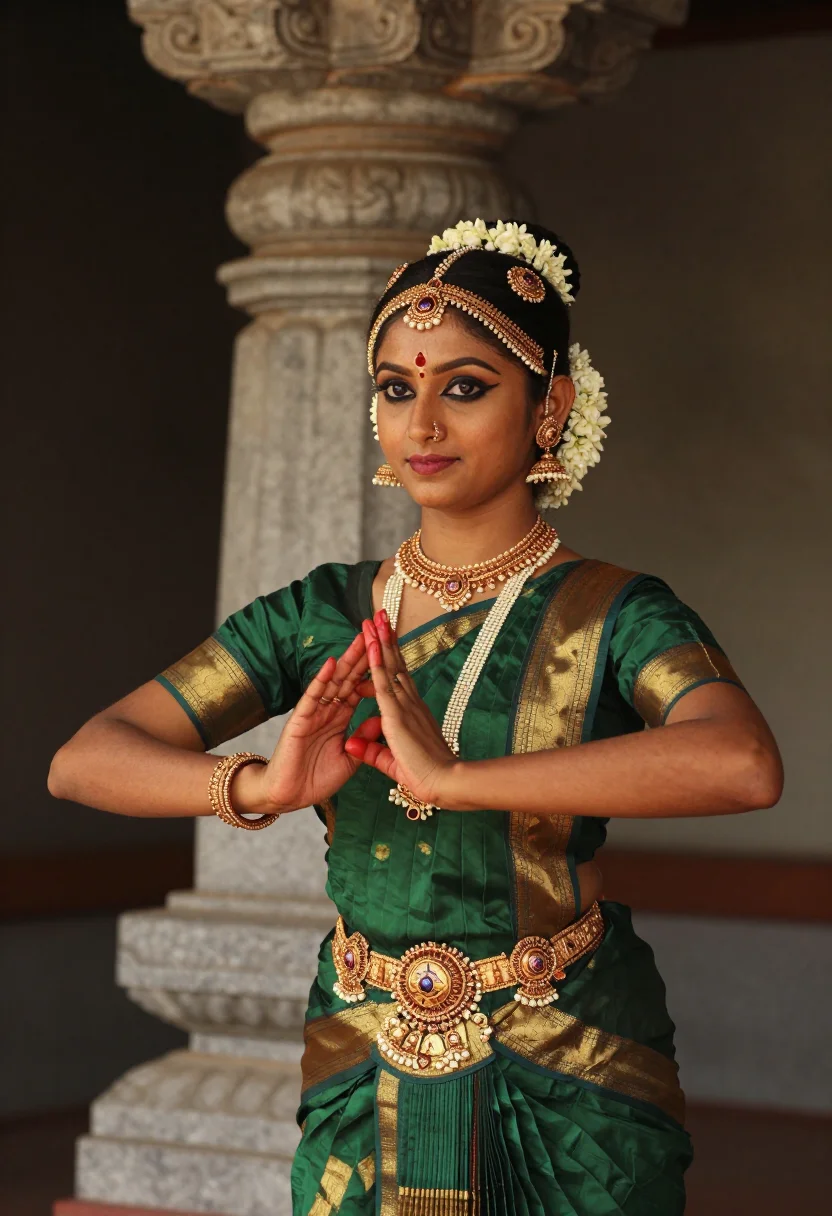
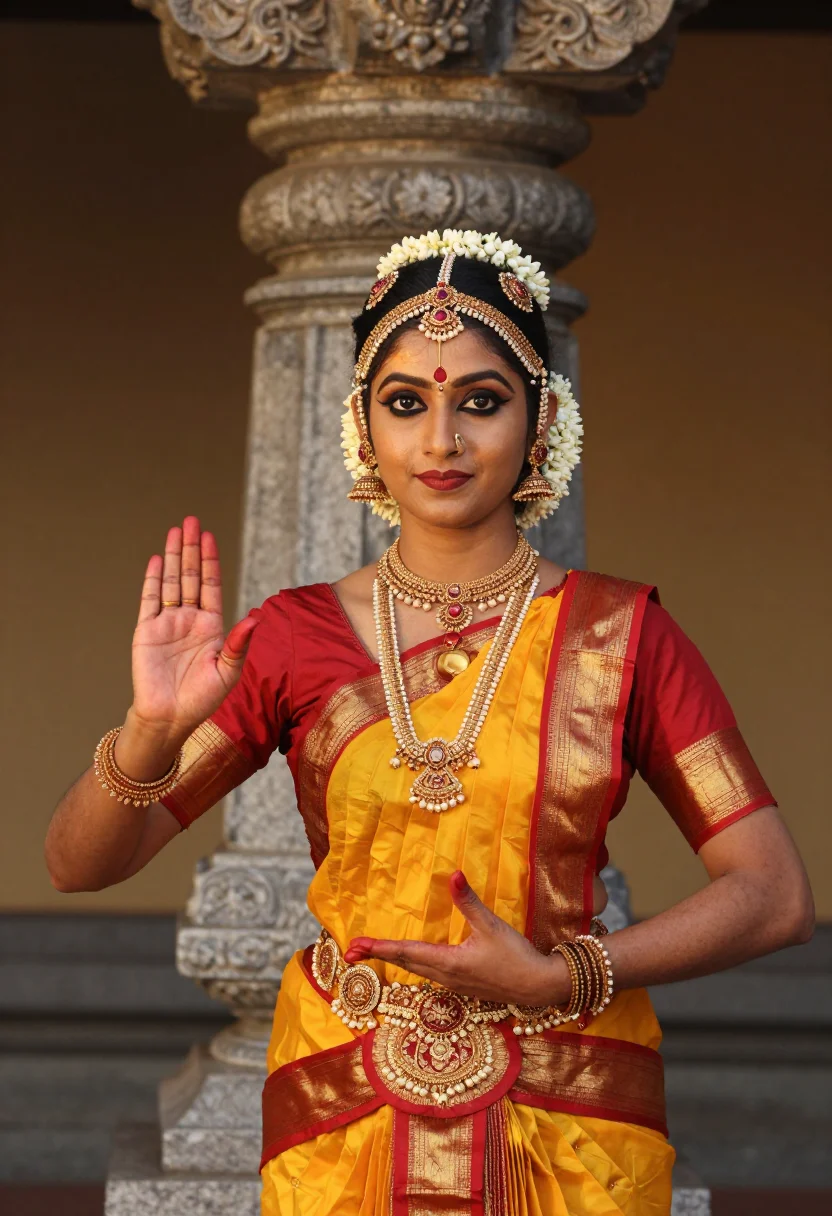
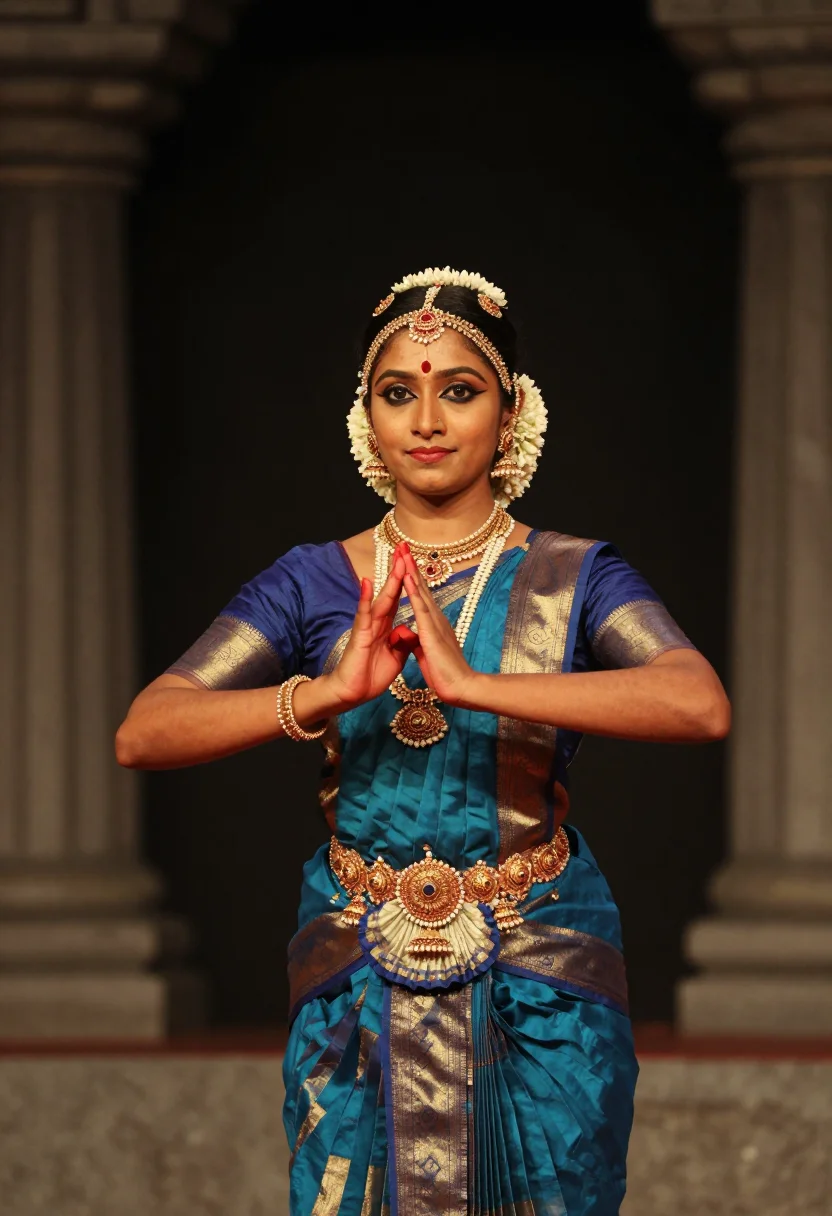
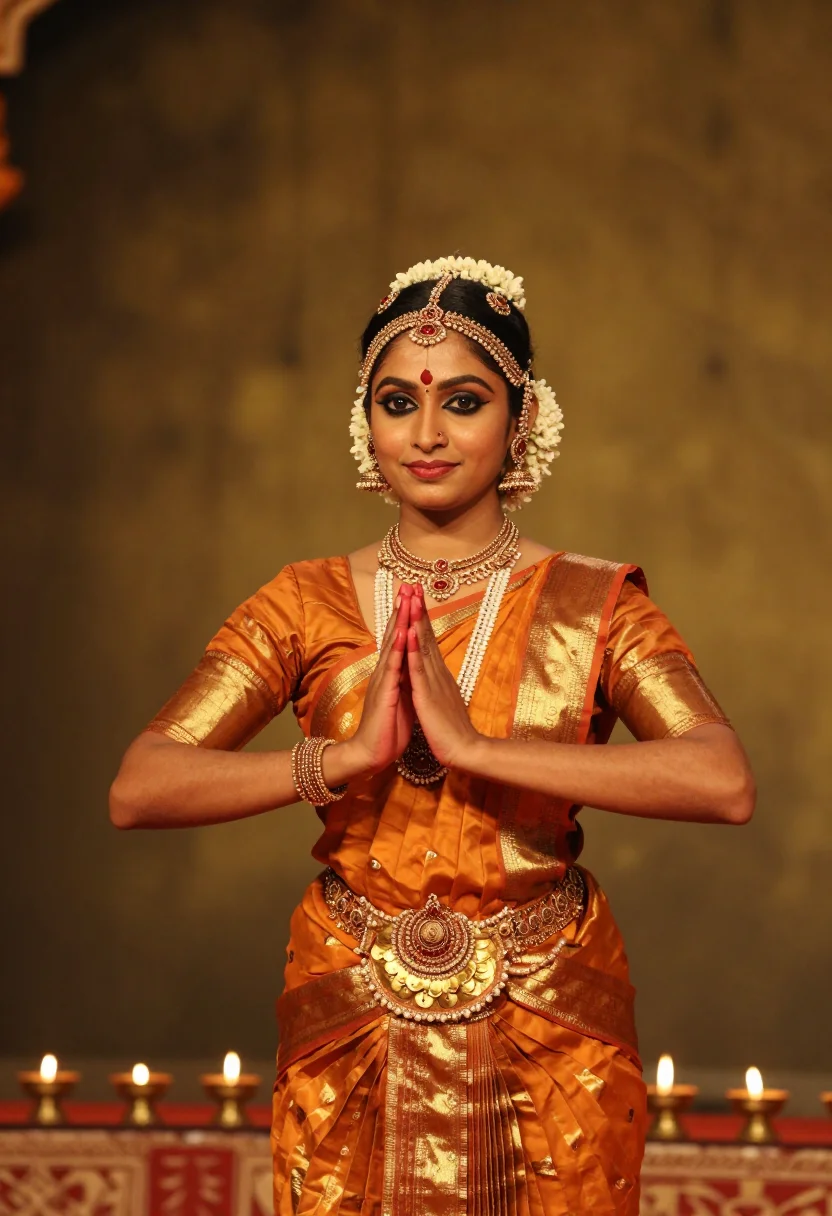
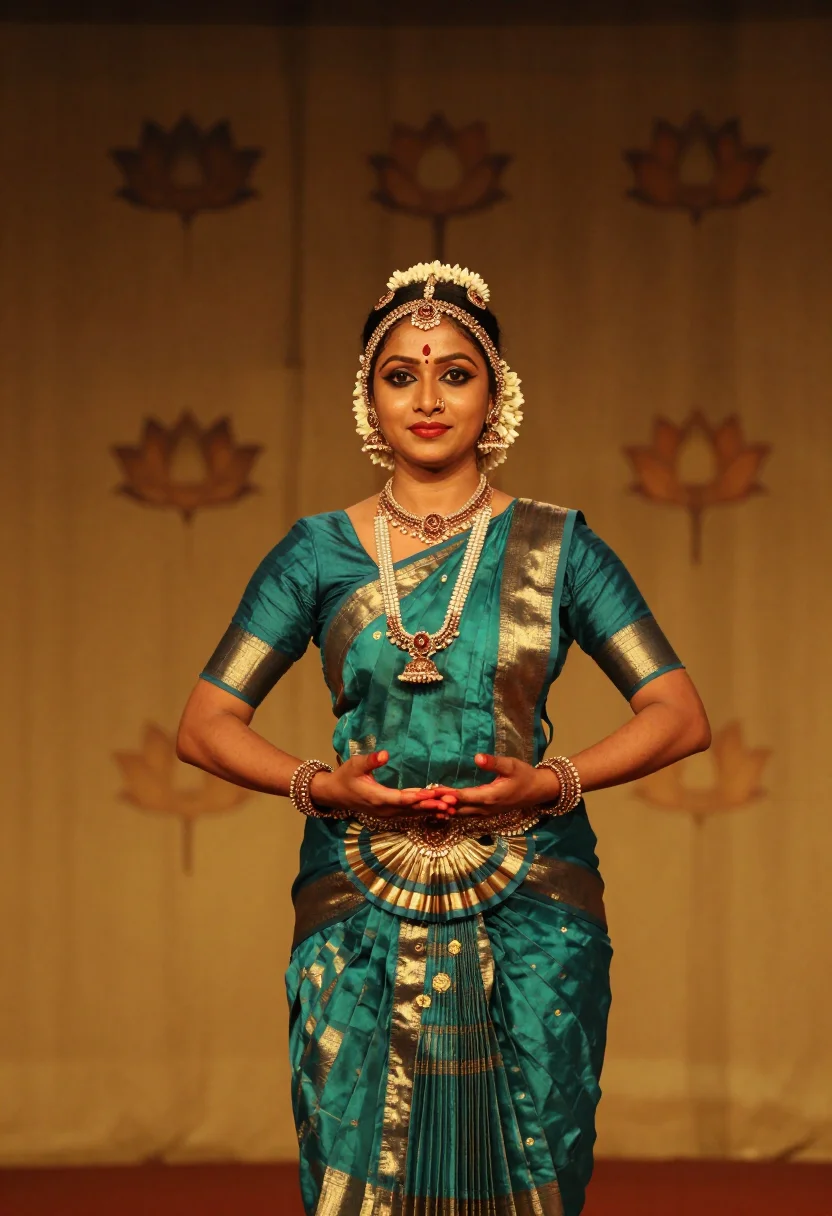
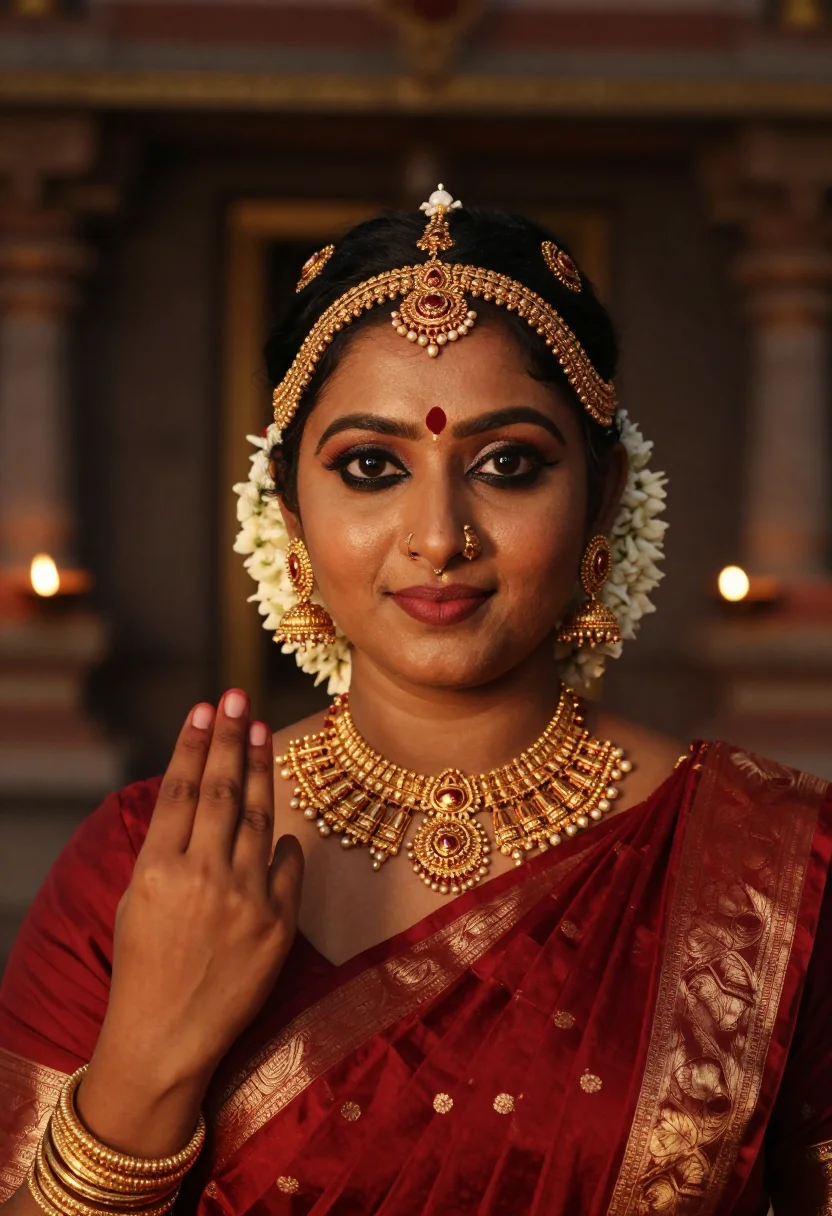
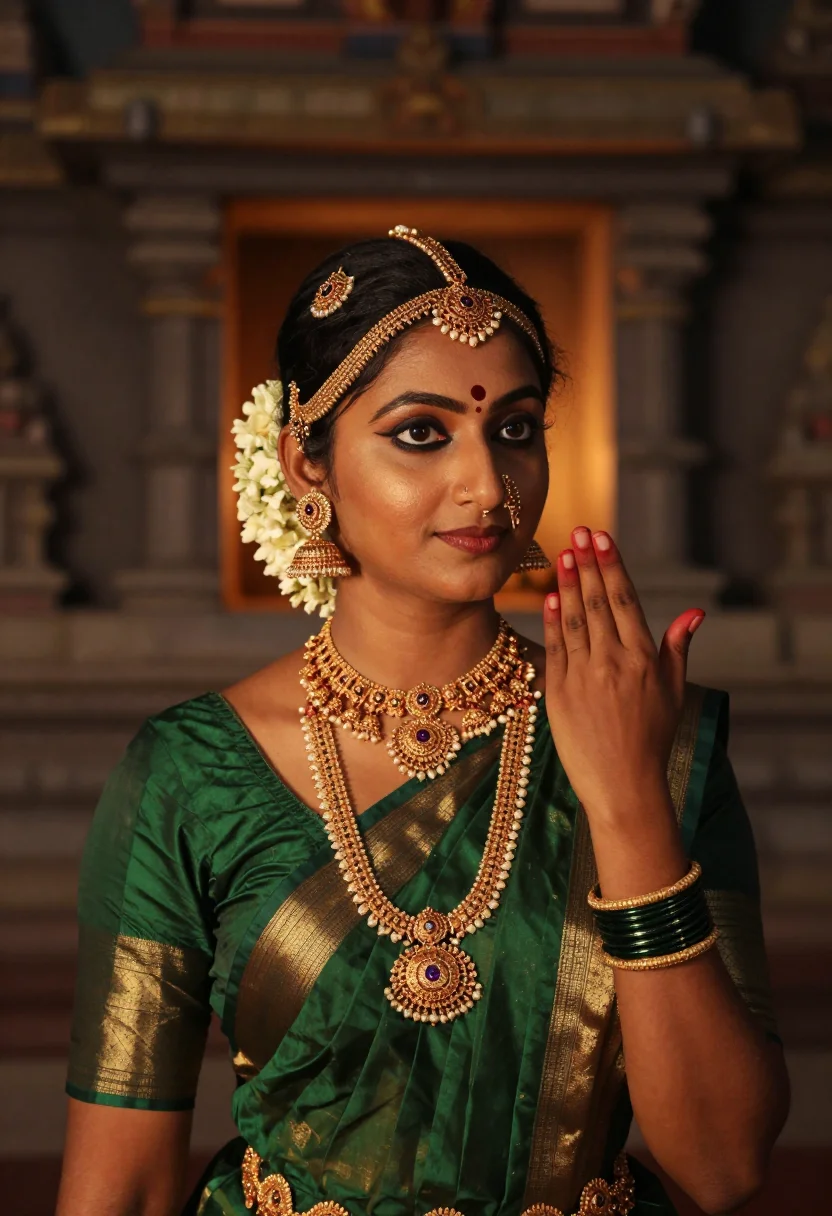
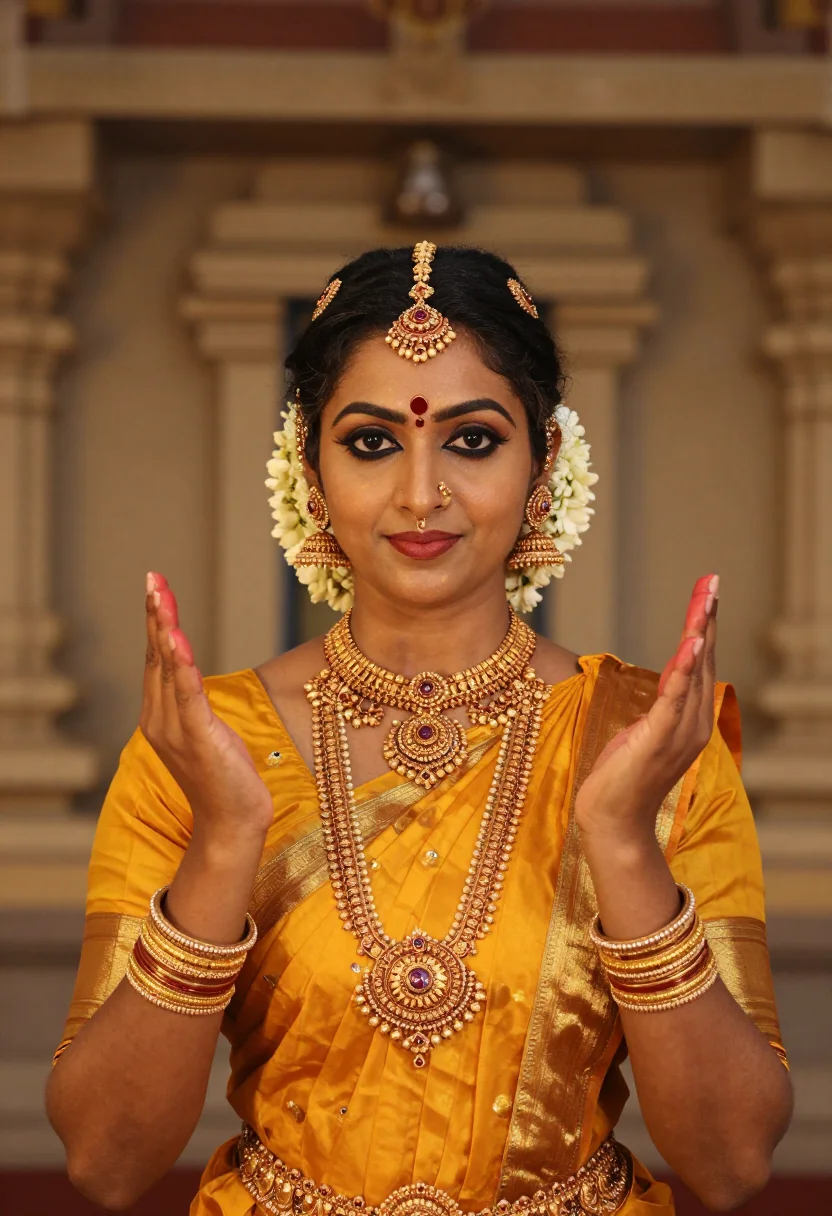
A complete Bharatanatyam photoshoot — AI classical dance portraits in a Kanchipuram silk costume, a temple-gold set, arangetram-ready. Nine photographs of you, in portrait format. The nine vary in crop, expression and light, so there are real choices, not nine identical files.
/bharatanatyam · photo · 3 scenes
Bharatanatyam Portraits
no account · ~15s · try it on with one selfie
More like this
one model wears them all →
all 9 photos in this pack ↓
How it works
Three steps.
1
Add your photos
Add photos of yourself. We check each one when you add it.
2
We create your model
We create your AI model from your photos. Your photos are ready in a few hours.
3
Every pack, with your face
This pack and every other pack on Narcis can then be made with your face, and single photos too.
The Bharatanatyam register
Bharatanatyam is one of the oldest classical dance forms still danced, and its visual grammar is exact: the Kanchipuram-silk costume with its stitched fan-pleat drape, the temple-gold set — nethichutti and maang tikka tracing the hairline, layered haar, jhumka, the bell-set oddiyanam at the waist — the jasmine gajra, the kohl-lined eyes, the half-seated araimandi stance. This pack puts you in that frame. Three looks carry it: the full arangetram-debut costume by a carved granite temple column, a stage register with the mudras held at face level under raked footlights, and a jewellery-forward close where the temple gold is the hero against a lamp-lit interior. Each look is shot three ways — colourway, mudra, framing — so the nine portraits read like a real recital gallery rather than the same photo nine times.
These are photographs, not paintings. The output is photoreal: your face and your features, dressed and lit in the register of the form — soft devotional light or a warm footlight glow, the zari border legible, the temple gold catching a clean specular, the granite or the scrim soft behind you. It honours the costume, the jewellery and the stance of Bharatanatyam, the grammar of the light and the line of the pose; it does not turn you into a cartoon, a painting, or a costume-shop cutout.
How to photograph yourself for Bharatanatyam portraits
Good input, good portrait.
- Soft, even lightFace a window with indirect daylight on you. Skip the overhead bulb and the hard noon sun — both flatten the face and kill the modeling the pack is built around.
- Front or three-quarter, at eye levelHold the camera level with your eyes. No selfie up-angle, no looking down — the classical register wants you square to the lens.
- Hair back from your faceThe pack sets the nethichutti and the maang tikka at your hairline. Hair pulled back a little lets the headpiece and the temple jewellery read cleanly.
- Plain wall, everyday faceLet the pack build the temple column and the costume styling. A clean backdrop and a natural, lightly-made-up face mean the whole likeness budget goes to you.
Frequently asked questions
- Is this a genuine classical look or a costume filter?
- It's built to read as a recital editorial, not a fancy-dress photo — a real Kanchipuram-silk costume with the fan-pleat drape, a full temple-gold set, the araimandi stance, real devotional and stage light. It treats the form with care; it doesn't claim to copy one specific guru's costume or to stand in for the years of training the dance asks.
- Do I need to be a trained dancer to use this?
- No. The pack renders the costume, the jewellery and the stance as a portrait — it's as fitting for a student before an arangetram as for anyone who loves the form and wants the look honoured. It's a celebration of the register, not a claim about your training.
- Can I use these for an arangetram programme, invitation, or profile?
- Yes. The portraits are yours to post, print, and send — a recital programme, an invitation, a school bio, a profile picture, or a framed keepsake.
- Will the photos look like me?
- Every photo looks like you, well photographed. If one is nearly right, say what to change, in your own words.
- Do I have to write a prompt?
- No. There is nothing to write: you pick a pack, and it is ready in seconds.
- How many photos of myself do I add?
- Between six and twenty, from different days and in different light, with your face clear. We check each one when you add it.
- What happens to the photos I add?
- They are used only to create your model, on our own servers in the European Union. They are not shared and not sold.
When the Bharatanatyam pack fits
- Arangetram invitations, programmes, and the debut keepsake — the costume portrait before the recital day arrives.
- A dancer's profile picture or bio photo for a school, a festival listing, or a performance page.
- Trying costume colourways before you commit — deep red, peacock green, mango-yellow — without the full jewellery setup.
- A recital memento for the student who finished a year of training and wants the look captured once.
- Diaspora students of the form picturing the temple register from a flat in London, Chennai, or Toronto.
- A gift for a dancer — the daughter, the teacher, the friend — who lives the art but rarely sits for a portrait.
About narcis
Most AI photo tools put every pose, job, era, and style in one giant catalog. The photos all look like every other AI photo on the internet — a glaze over a stock face. Narcis goes the other way. One job: photos of you that look like photographs. You add at least 6 photos of yourself, and we create your AI model from them. Your photos are ready in a few hours, and we email you when they are. Then this pack and every other pack on Narcis can be made with your face. Each pack is curated against real references — paintings, photographers, places — and tested on real faces before it goes live. Built and run by one small team, on our own servers.
All images are AI-generated. By using this service, you confirm you are 18+, that any face photo you upload is your own or used with explicit consent. Full Terms