A Yakuza Boss Photoshoot in the Formal Showa Register
Nine photos of you in one setting
How your model is created from your photos
Every pack on Narcis, made with your face
Nine photographs of you in one setting: one pack of the Narcis catalogue.
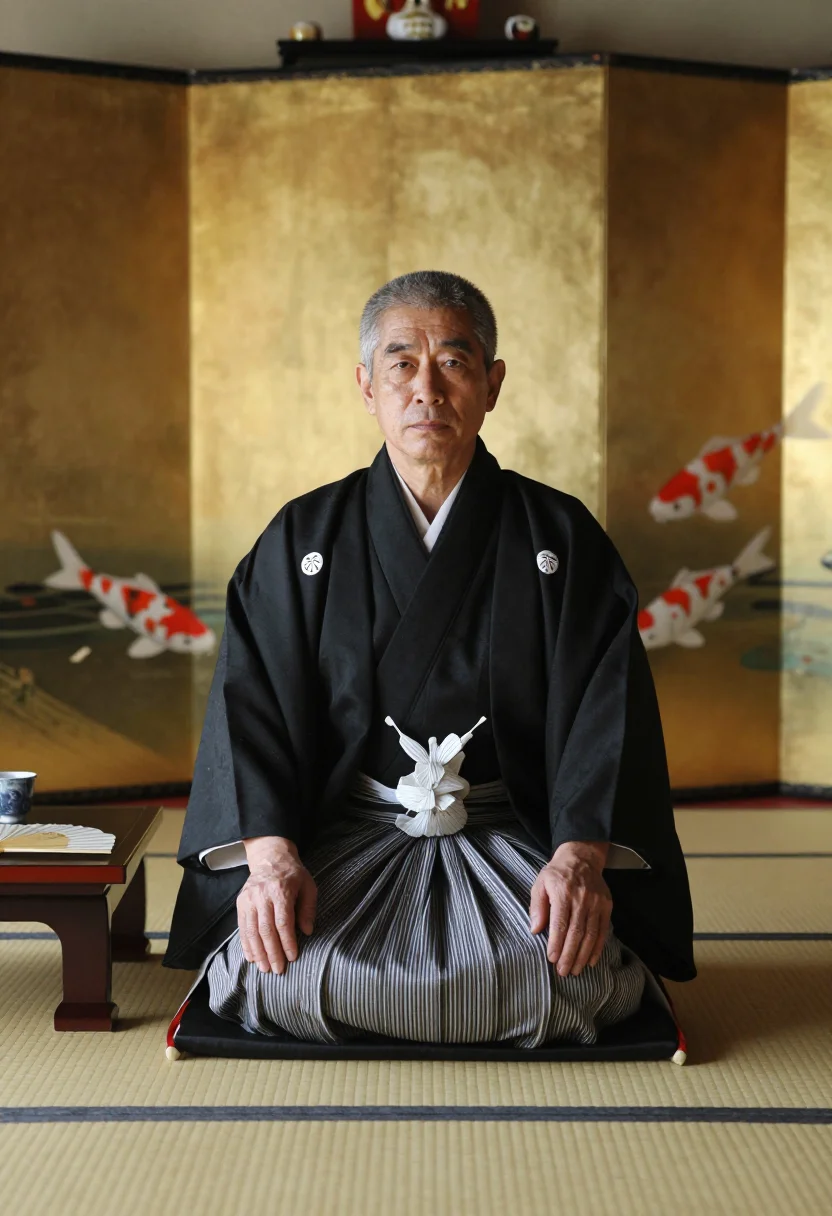
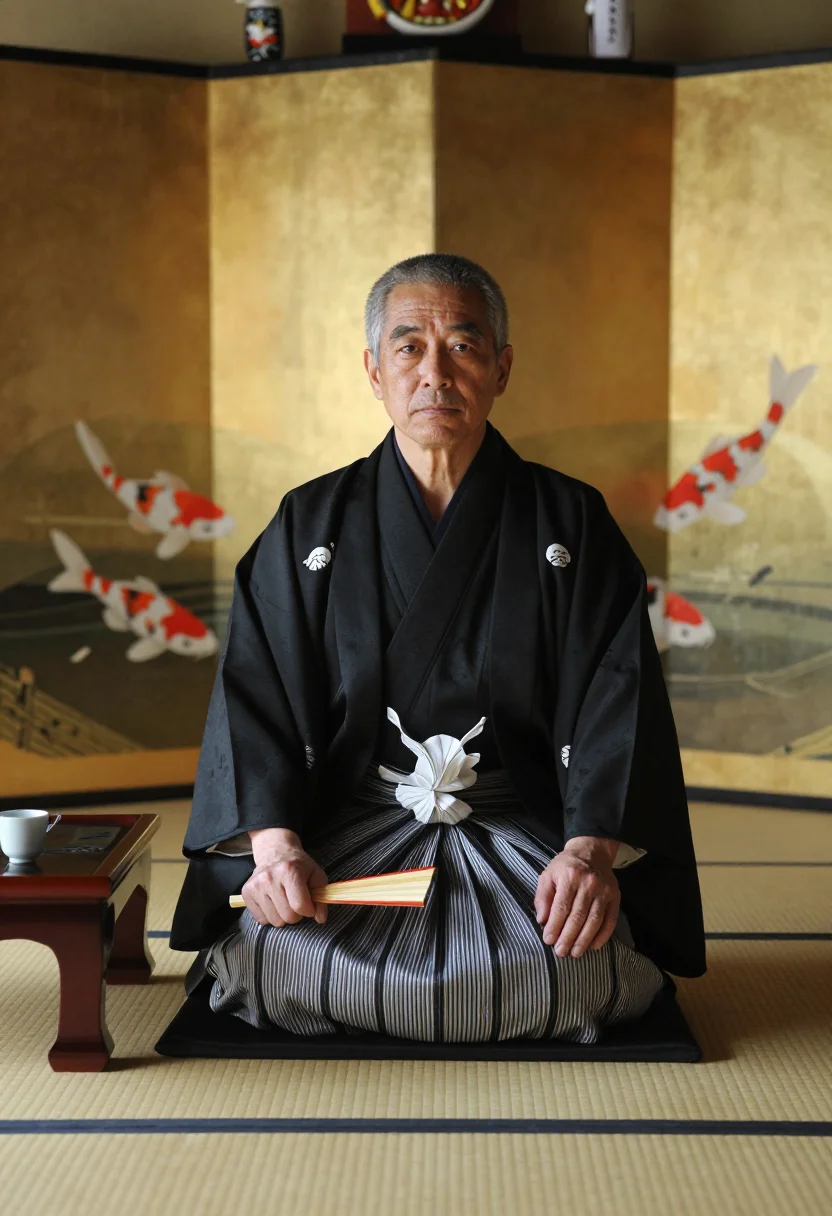
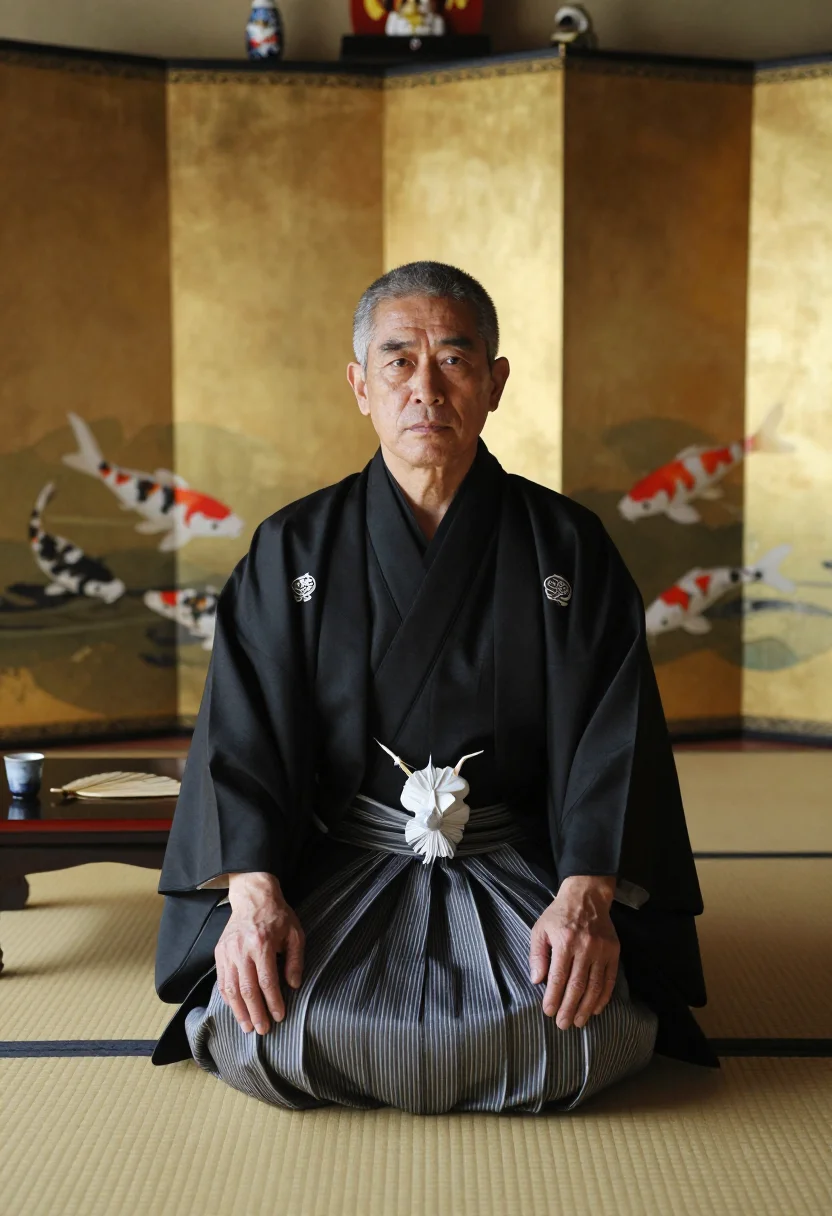
An AI costume photoshoot of a japanese kimono gangster - black montsuki against a gold-leaf screen, a japanese gangster portrait held in formal Showa stillness. Nine photographs of you, in portrait format. The nine vary in crop, expression and light, so there are real choices, not nine identical files.
/oyabun · lifestyle · 3 scenes
A Yakuza Boss Photoshoot in the Formal Showa Register
6–20 photos of yourself · we email you when your model is ready
Deeper into the neon districts
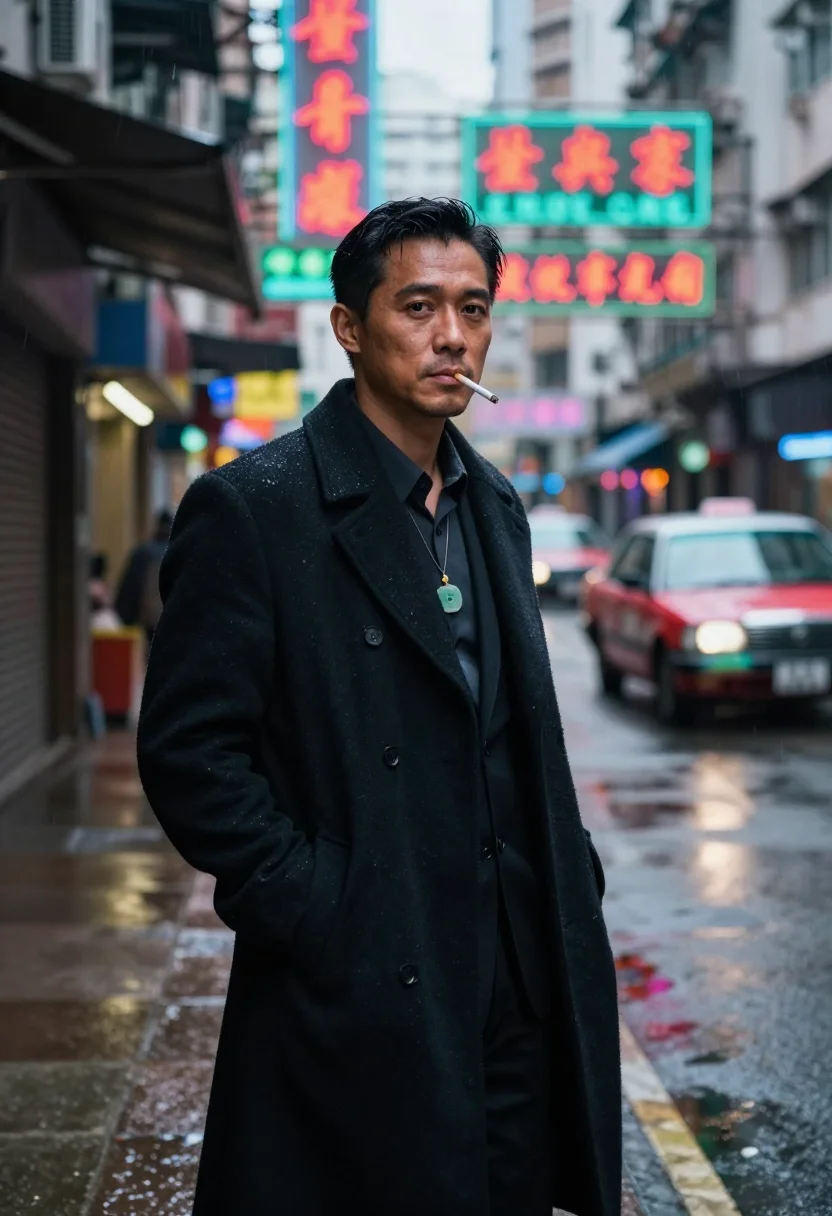
one model wears them all →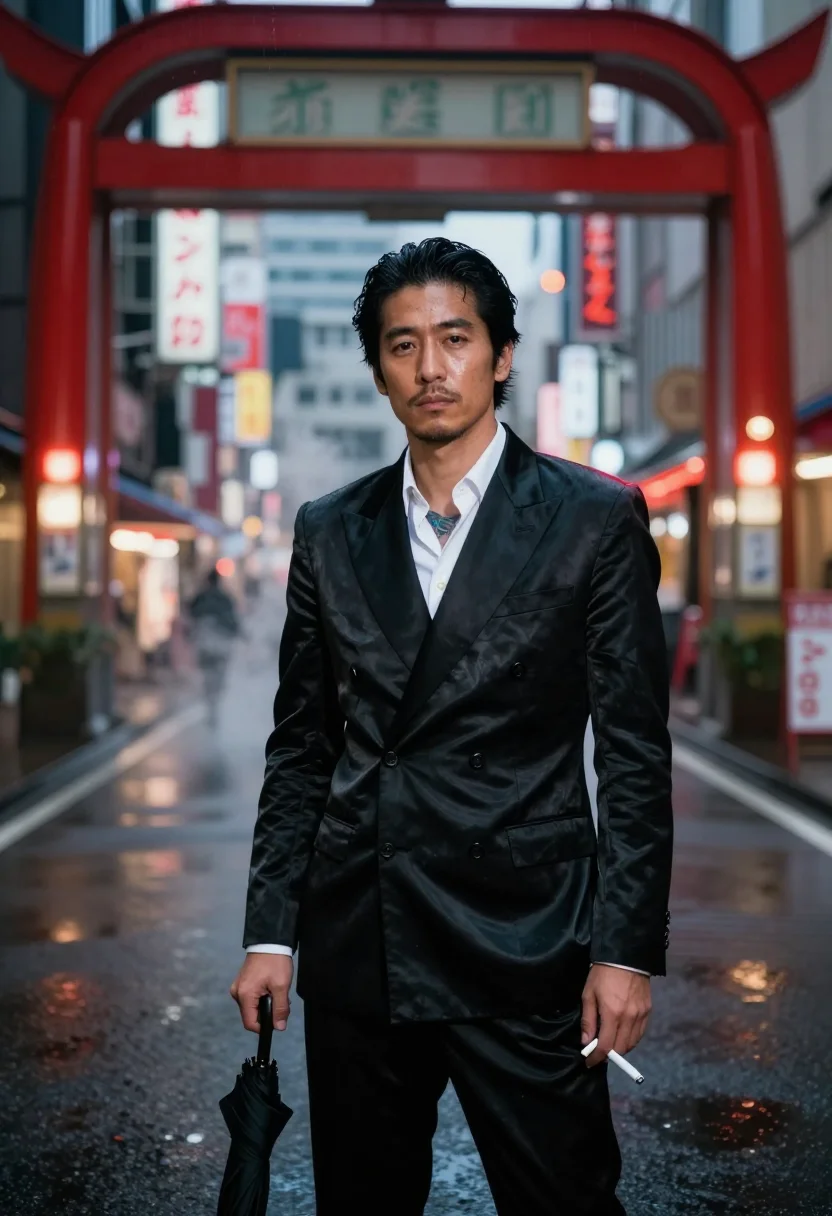
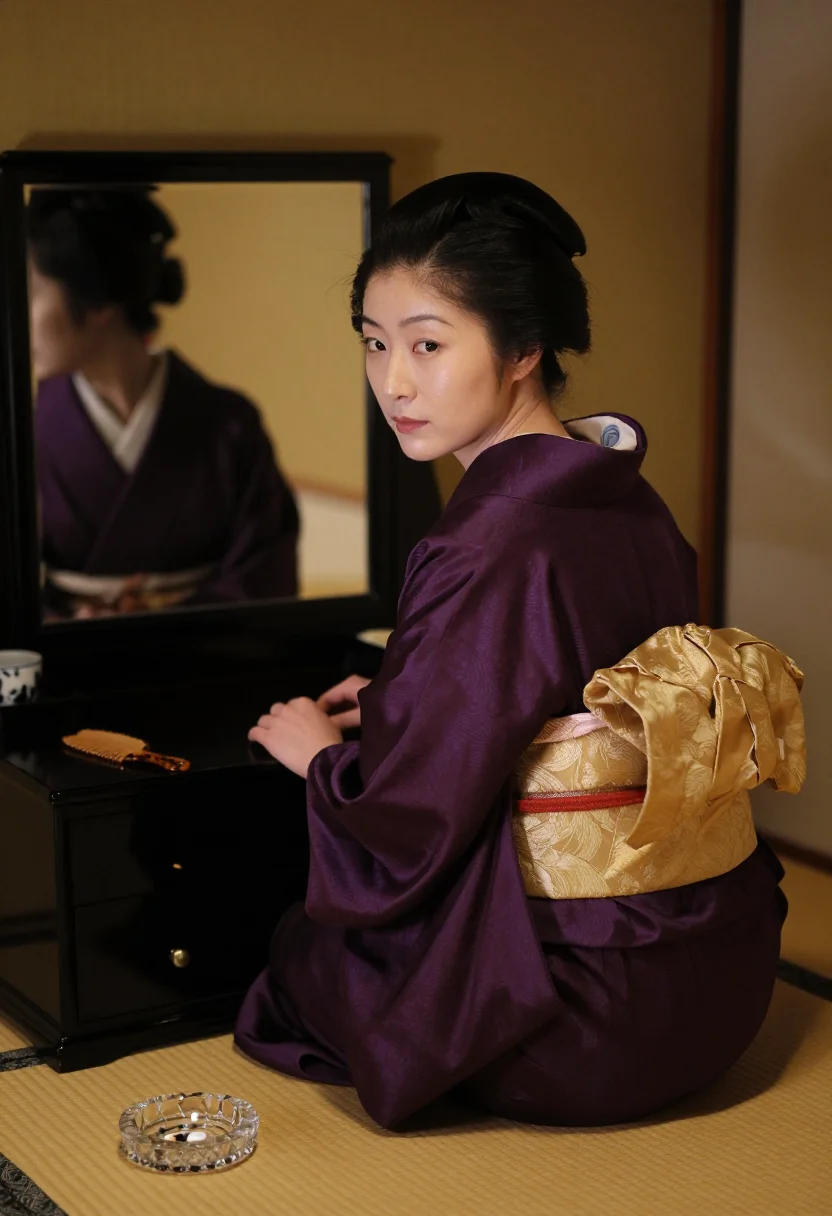
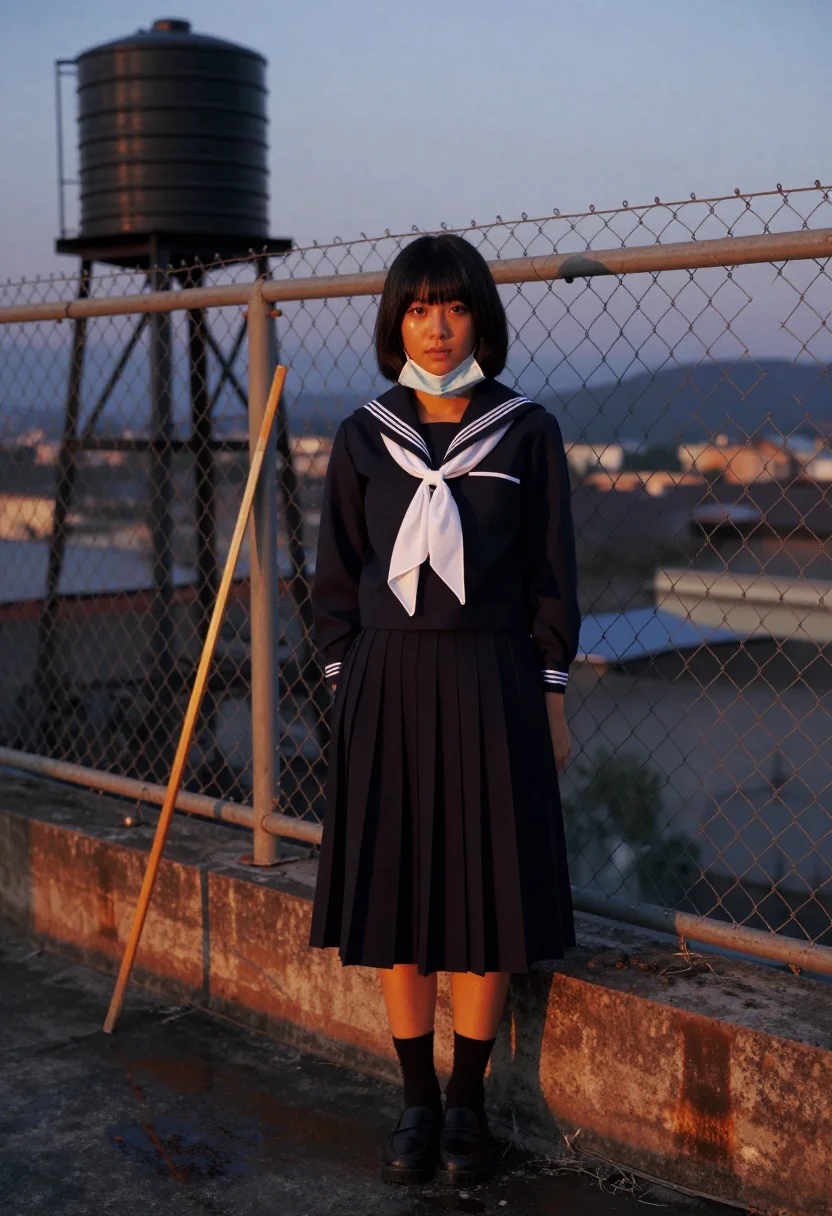
all 9 photos in this pack ↓
How it works
Three steps.
1
Add your photos
Add photos of yourself. We check each one when you add it.
2
We create your model
We create your AI model from your photos. Your photos are ready in a few hours.
3
Every pack, with your face
This pack and every other pack on Narcis can then be made with your face, and single photos too.
The formal Showa register
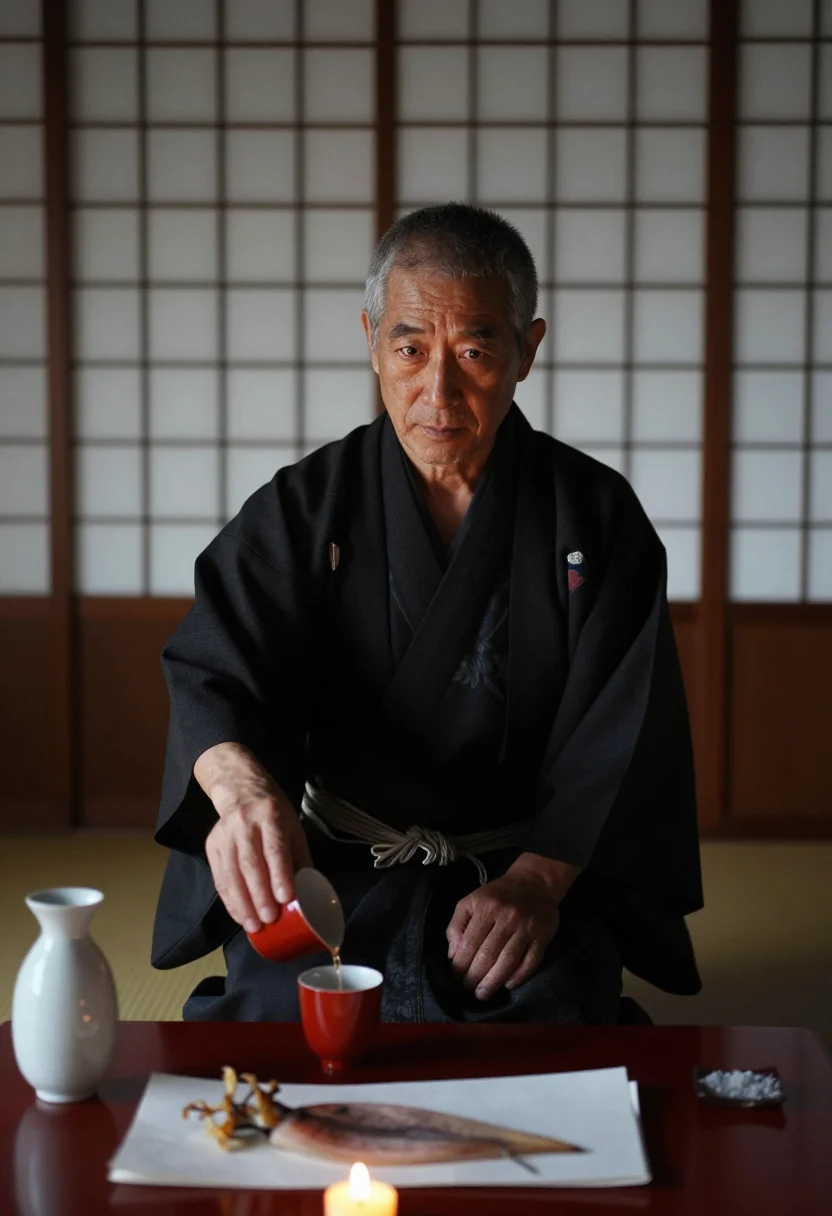
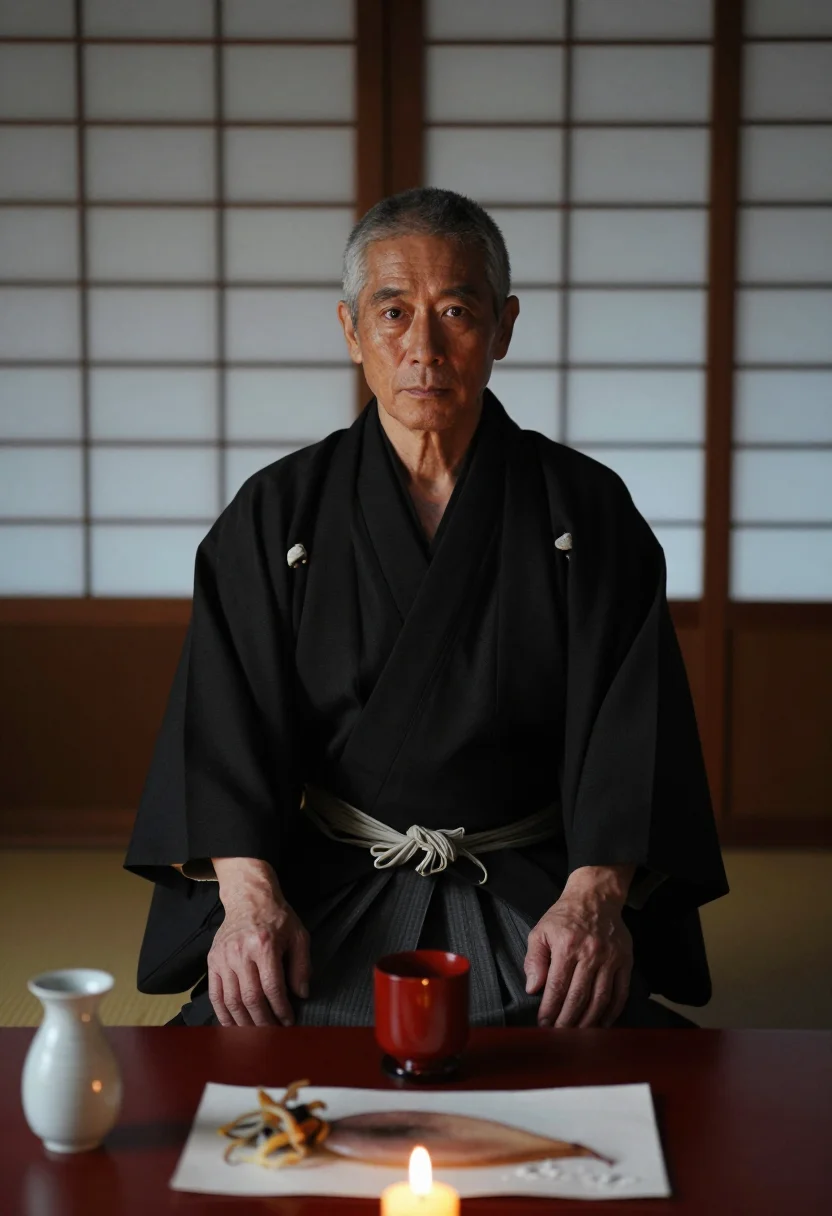
This pack draws on formal Japanese portraiture of the Showa era - the studio and household portrait tradition where a man is photographed seated, frontal, and entirely still, and where the room does as much work as the sitter. The setting is a kumi headquarters on a quiet Kobe backstreet: a paper-screened reception room, tatami edged in black silk, a gold-leaf byobu of koi turning in dark water, a kamidana shelf set with rice and salt. Polished shoes line the genkan in pairs. A wooden nameplate hangs by the door. A sheathed katana rests on its lacquered stand in the tokonoma. Spare, formal, and heavy with protocol.
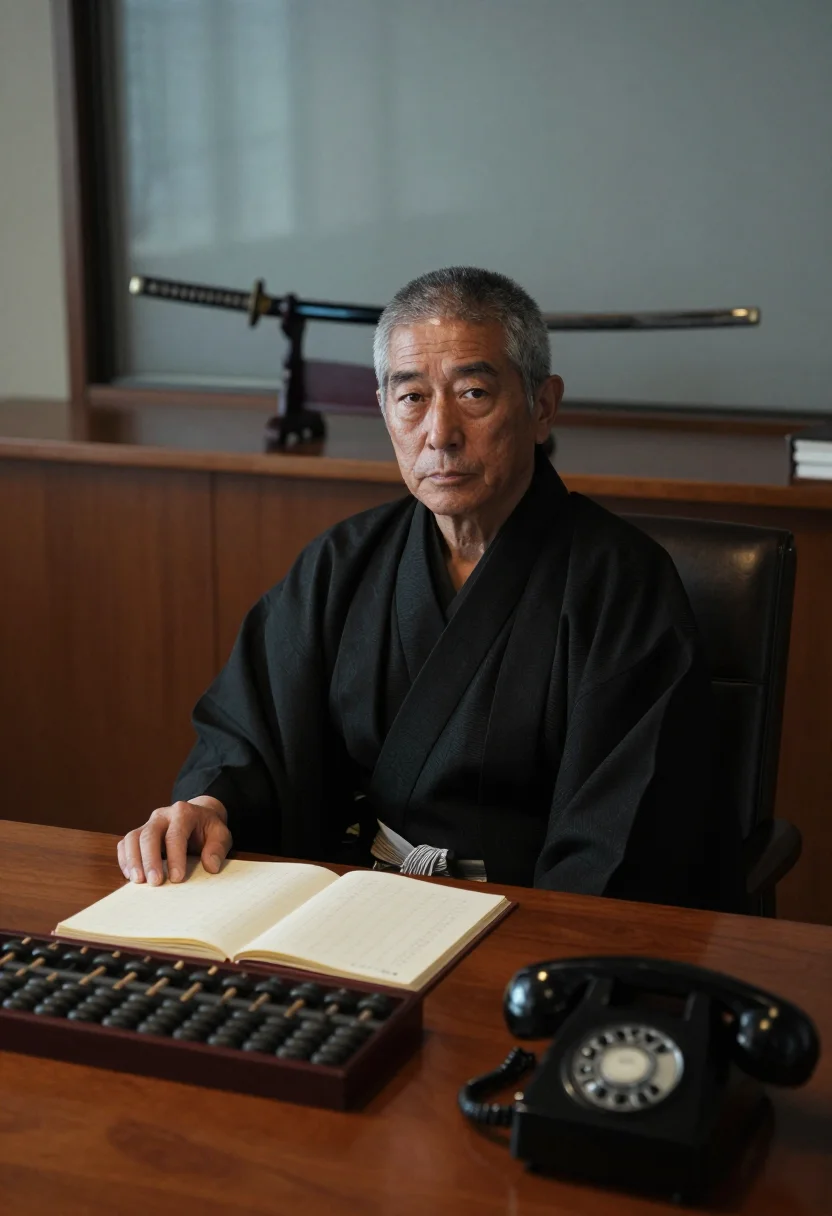
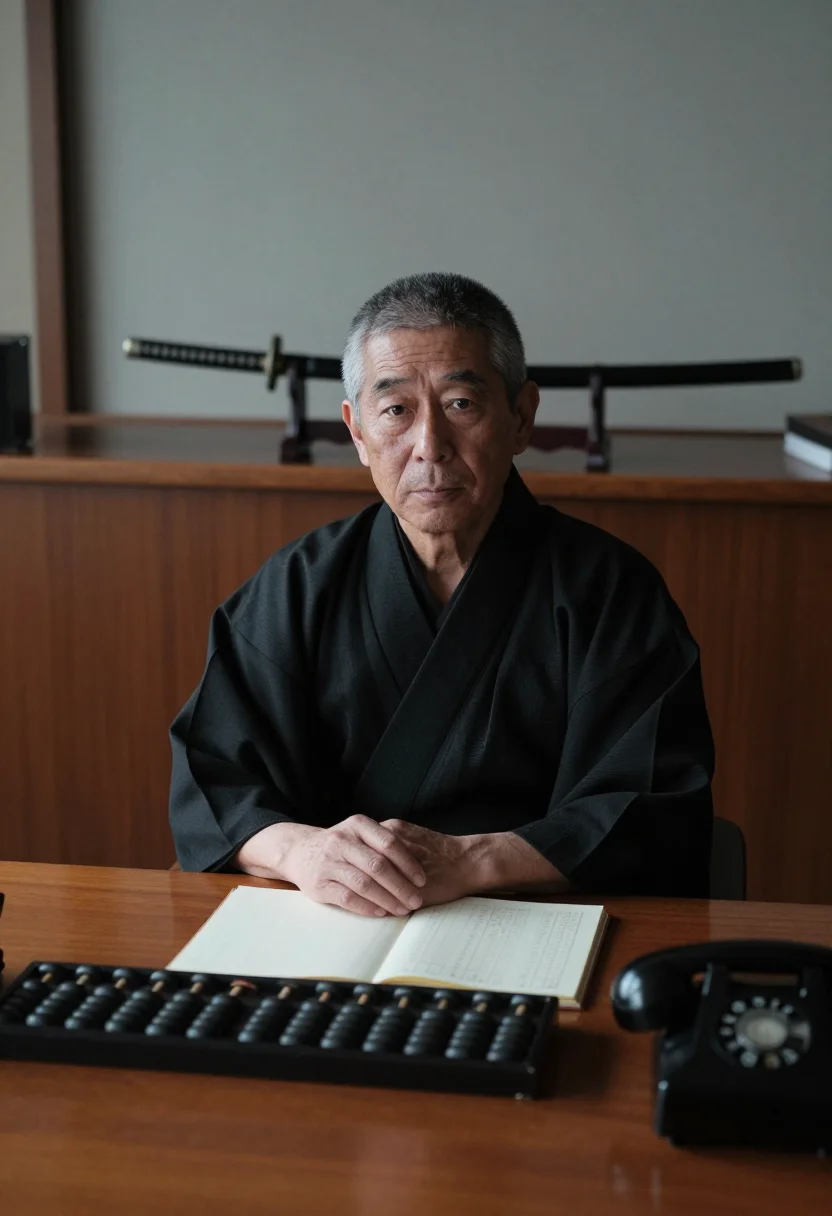
The dress is the most formal register Japanese menswear has: a black montsuki haori carrying five white family crests, striped hakama, a black kimono beneath. Where the collar falls open, indigo and vermilion irezumi shows at the collarbone - glimpsed, never displayed. The whole idea of this pack is dignity carried ahead of menace. Nothing in the frame is aggressive; everything in it is unarguable.
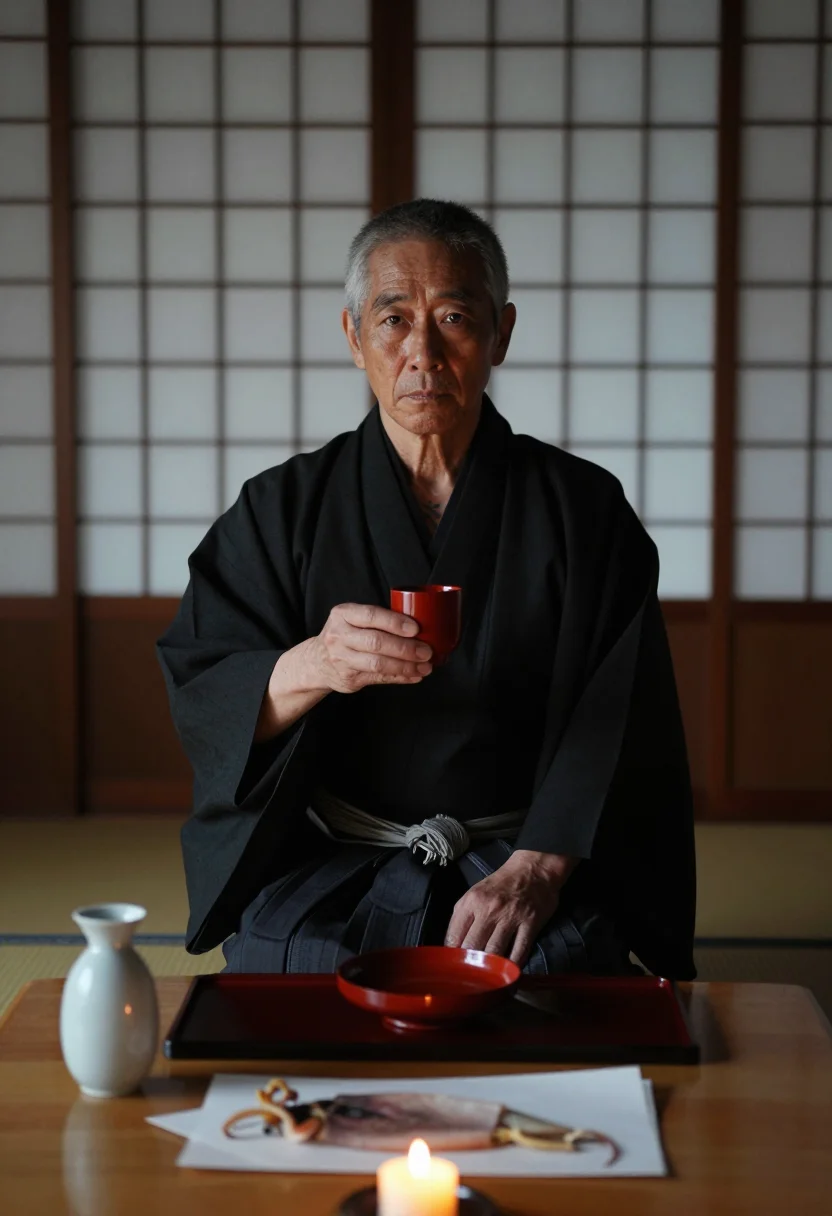
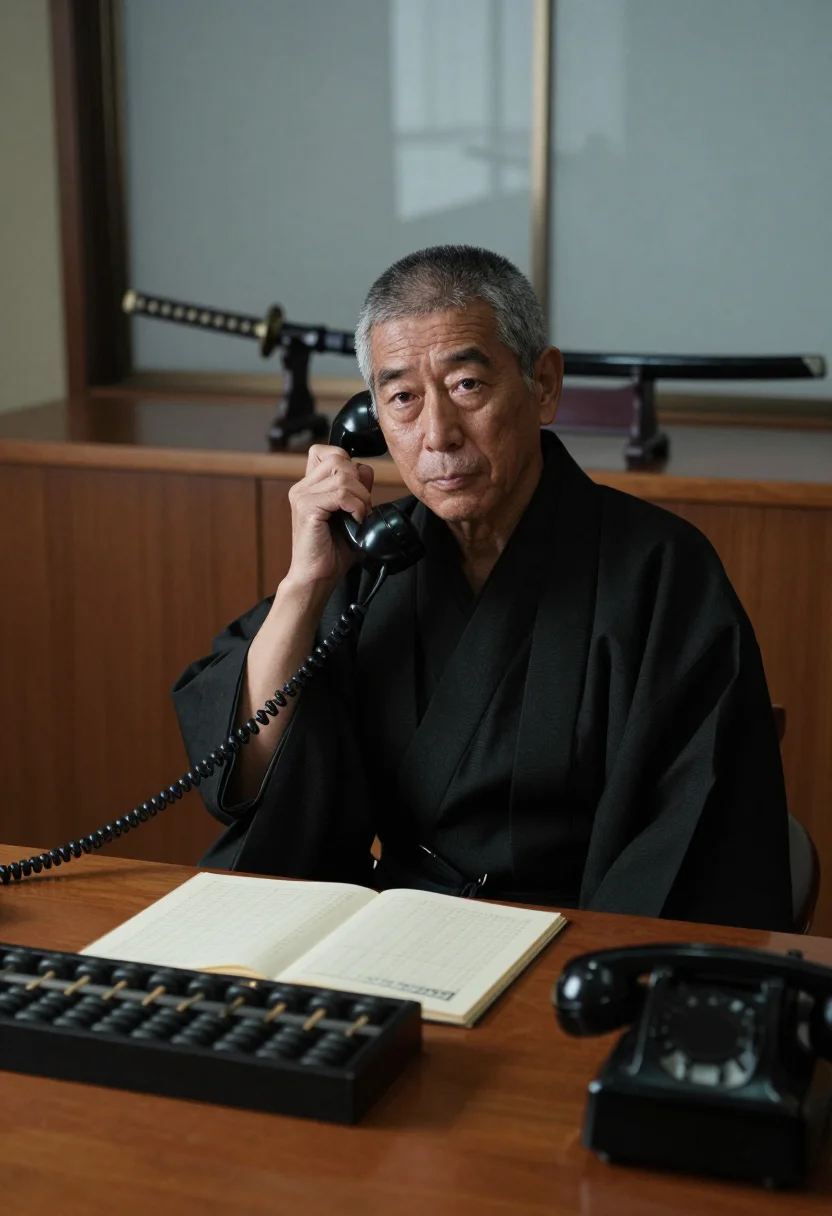
Three situations carry the nine frames. Seated on a zabuton on tatami with the gold-leaf koi screen behind and soft north light coming through shoji. The sake ceremony, kneeling at a low cedar table with a flat red lacquer cup and a white porcelain tokkuri, lit by candle and shoji together. And the office behind the reception room - leather chair, rosewood desk, black kimono under an open haori, an abacus, a ledger and a black rotary telephone.
Photographically the register is quiet and even: diffused north light through paper, which is the softest light a room can give, warmed in the ceremony frame by candle. The palette is indigo and black lacquer against gold leaf and the pale straw of tatami, with the red lacquer cup as the one hot accent. Framing is frontal and symmetrical, seated or kneeling, at the height the tradition uses - eye level with the sitter, not above. What the pack renders is photoreal: real-looking photographs of you in formal Showa dress, not paintings, not woodblock prints, not illustration. Your face carries all nine frames.
How to photograph yourself for a formal Japanese portrait
Better source photos make better portraits.
- Even, soft lightStand near a window with indirect daylight on your face. This pack is lit by diffused north light through paper screens, so a soft window-lit source photo maps onto it almost directly.
- Straight on, eye levelThe register is frontal and symmetrical. Face the camera square, at eye level - this is the one pack where a three-quarter turn helps less than a straight-on shot.
- Face fully clearHair back, glasses and sunglasses off. The frames are close and unforgiving, and a clear front-facing photo is the best photo to give an AI portrait.
- A composed, unmoving expressionDignity ahead of menace: level gaze, closed mouth, no motion. Formal Showa portraiture photographs stillness, and a broad smile falls straight out of register.
- Plain background is fineDo not worry about your own backdrop. The tatami room, the cedar table and the rosewood office replace it; a plain wall just helps the model concentrate on your face.
Frequently asked questions
- What does the output actually look like?
- Nine photoreal portraits of you in formal Showa dress, three in each situation: seated on tatami before a gold-leaf koi screen, kneeling at the sake ceremony with a red lacquer cup, and at the rosewood desk in the office behind the reception room. Black montsuki with five crests, striped hakama, irezumi glimpsed at the collarbone. Photographs, not prints or paintings.
- Is this a real organisation, or a real person?
- No. This is an inspired-by aesthetic drawn from Showa-era formal portraiture and Japanese crime cinema. No real organisation, member or individual is named or depicted, and the only face in the nine frames is yours.
- Can women use this pack?
- The sample and the styling are built for men - the montsuki haori with five crests, the striped hakama, the seated posture.
- How is this different from the Kabukicho pack?
- Opposite temperature, same world. Kabukicho is black suits, neon and wet asphalt after midnight. This one is daylight through paper screens, tatami, gold leaf and a sake cup - formal, still, and quiet. Buy this one if what you want is authority rather than menace.
- Is it respectful to Japanese formal dress?
- It is drawn carefully: montsuki haori with the five family crests, striped hakama, the flat lacquer cup and porcelain tokkuri of a formal sake ceremony, worn as the tradition wears them. It is a cinematic register rather than a documentary one, and we would rather say that plainly than pretend otherwise.
- Can I use it as a profile picture, a print, or a gift?
- All three. The frontal tatami frame makes a composed avatar; the gold-leaf screen behind it prints unusually well at size; and it is a natural gift for anyone who loves Japanese cinema, design or formal dress.
- Will the photos look like me?
- Every photo looks like you, well photographed. If one is nearly right, say what to change, in your own words.
- Do I have to write a prompt?
- No. There is nothing to write: you pick a pack, and it is ready in seconds.
- How many photos of myself do I add?
- Between six and twenty, from different days and in different light, with your face clear. We check each one when you add it.
- What happens to the photos I add?
- They are used only to create your model, on our own servers in the European Union. They are not shared and not sold.
When the oyabun pack fits
- For a profile picture that carries composure rather than energy
- For a social post in formal Japanese dress that is not a stock photo
- For a print or framed portrait - gold leaf and tatami hang well at size
- For a portrait gift - a birthday, or someone who loves Japanese cinema and design
- For a phone or desktop wallpaper you actually enjoy looking at
- For a costume party or Halloween in a japanese kimono gangster register
- For an author photo, a podcast cover, or a speaker bio that wants stillness
- For a martial arts, tea, or Japanese-culture account that wants a formal portrait of itself
- For a dating profile that wants one composed, well-lit frame - kept honest as a styled portrait
- For anyone who has always wanted to see themselves in montsuki and hakama
- For a tattoo-culture account that wants irezumi glimpsed rather than displayed
- For a traveller who loves Showa-era interiors and never gets to be photographed in one
About narcis
Most AI photo tools put every pose, job, era, and style in one giant catalog. The photos all look like every other AI photo on the internet — a glaze over a stock face. Narcis goes the other way. One job: photos of you that look like photographs. You add at least 6 photos of yourself, and we create your AI model from them. Your photos are ready in a few hours, and we email you when they are. Then this pack and every other pack on Narcis can be made with your face. Each pack is curated against real references — paintings, photographers, places — and tested on real faces before it goes live. Built and run by one small team, on our own servers.
All images are AI-generated. By using this service, you confirm you are 18+, that any face photo you upload is your own or used with explicit consent. Full Terms