Abacost State Portraits — The Leopard-Skin Toque
Nine photos of you in one setting
How your model is created from your photos
Every pack on Narcis, made with your face
Nine photographs of you in one setting: one pack of the Narcis catalogue.
Nine photographs of you, staged in the Central African state-portrait register — the abacost, a collarless tunic suit worn without shirt or tie, with a leopard-skin toque, a carved ebony staff and a plain watered-silk sash of state carrying no medals or braid. The nine vary in crop, expression and light, so there are real choices, not nine identical files.
/leopard-toque · lifestyle · 3 scenes
Abacost State Portraits — The Leopard-Skin Toque
no account · ~15s · try it on with one selfie
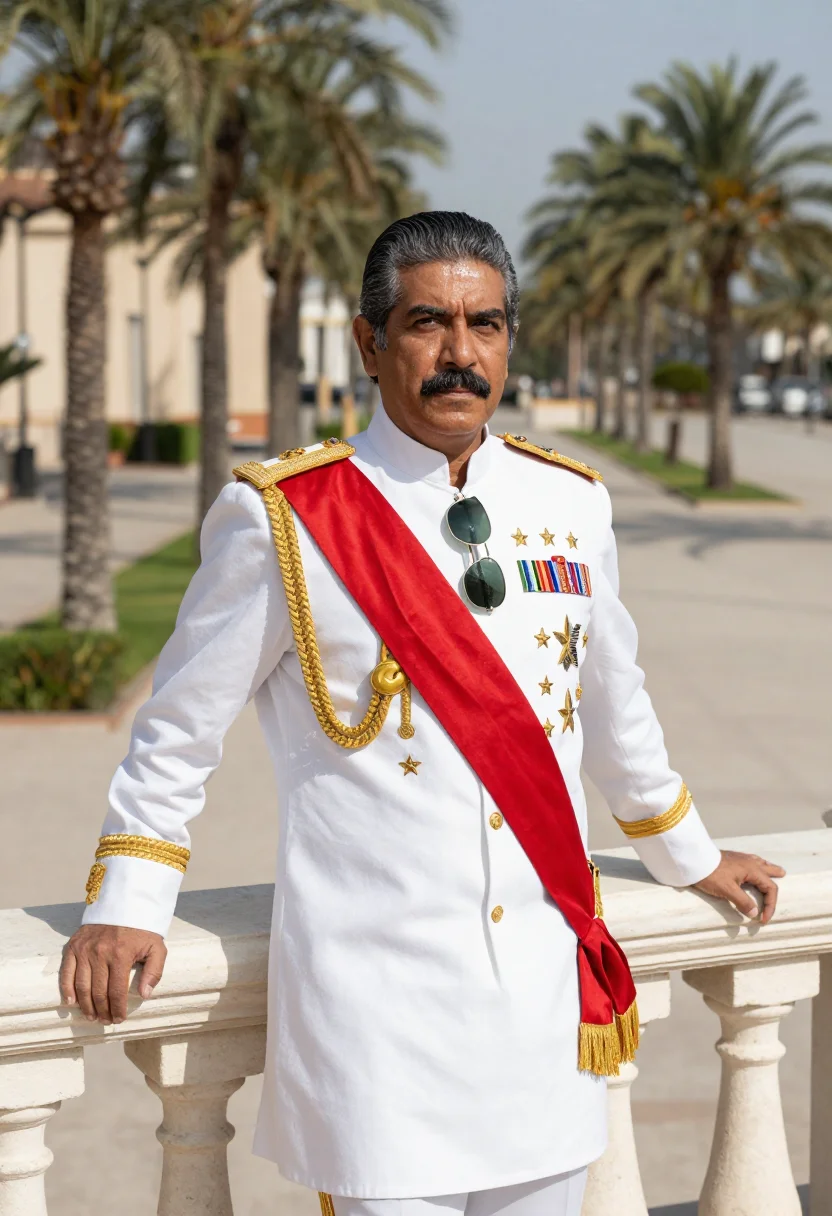
Other men in full regalia
one model wears them all →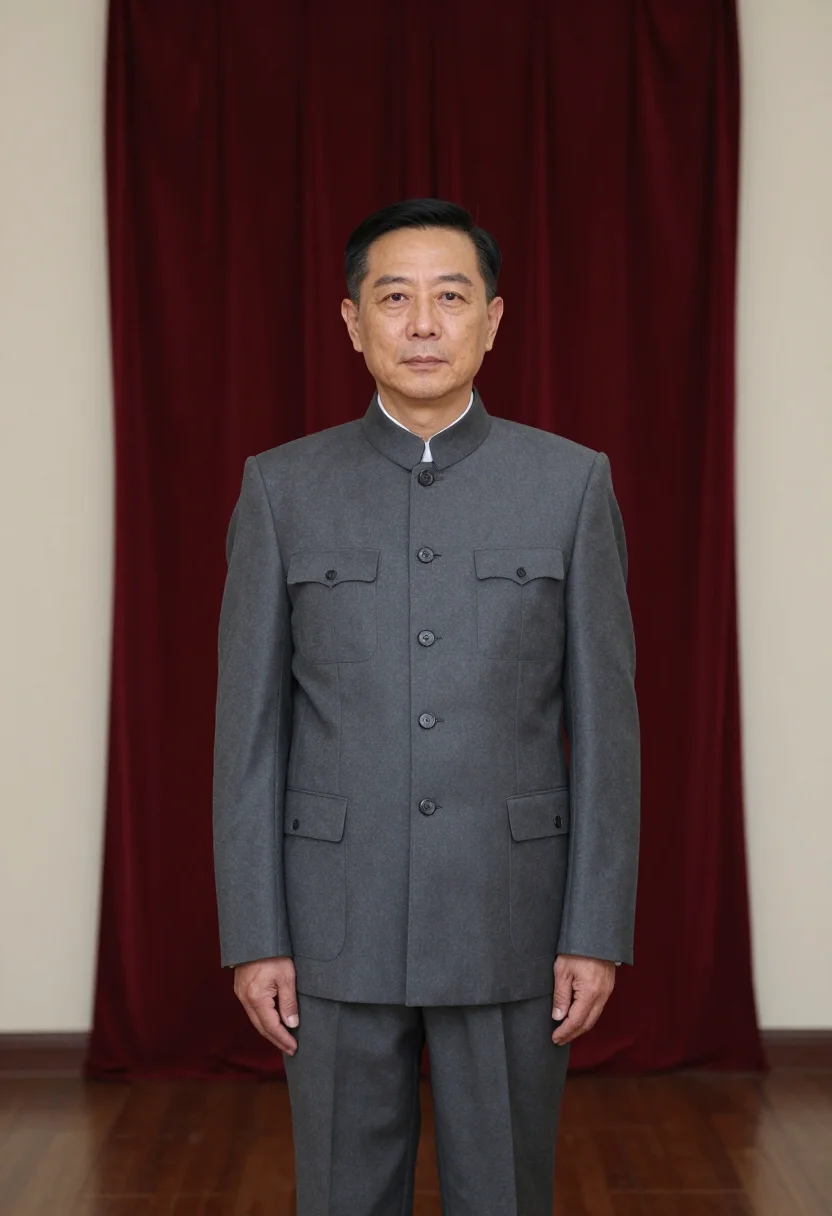


all 9 photos in this pack ↓


How it works
Three steps.
1
Add your photos
Add photos of yourself. We check each one when you add it.
2
We create your model
We create your AI model from your photos. Your photos are ready in a few hours.
3
Every pack, with your face
This pack and every other pack on Narcis can then be made with your face, and single photos too.
The abacost register
The state portrait is one of the most demanding forms photography inherited from painting: one figure, held still, carrying an office rather than a mood. In the independence decades a new generation of Central and West African heads of state sat for that form and rebuilt its wardrobe from the ground up. What they wore was assembled, not borrowed — a garment that refused the coloniser's tailoring, and a cap that reached back to an emblem of rank far older than any twentieth-century state.
The abacost is that garment. The name is a compression of à bas le costume — down with the suit — and the design is a plain, deliberate answer to the European lounge suit: a collarless tunic in tropical-weight worsted, closed high at the throat with four plain buttons, a folded pale cravat at the neck, two flapped hip pockets, matching straight trousers, and no shirt and no tie anywhere in the outfit. It spread through Central and West Africa across the 1960s and 70s as a form of national dress, in midnight blue, deep charcoal and dark bottle green. Worn well, it reads as authority without ornament.
The toque is the second half of the regalia: a brimless rolled cap of short dense spotted pelt, the rosettes tight, the fur laid smooth. Leopard as a mark of rank long predates the modern state — across the Congo basin and much of the continent the pelt belonged to kings and chiefs, and to wear it was to make a claim on that lineage rather than on a rank chart. Mobutu Sese Seko is the figure who made the pairing of abacost and leopard toque internationally legible, and his name is still how people search for the hat. This pack renders the office and its regalia, not his likeness or anyone else's.
Three worlds, three portraits each. The palace hall — herringbone parquet, tall windows down one side, broad daylight wrapping the face and the parquet returning a warm low bounce, a carved ebony staff under a chased silver band. The state portrait — a hung panel of deep-green woven damask, a broad presidential sash of watered crimson silk running shoulder to hip, plain and unpinned, carrying no medals, no stars and no braid, the face modelled short by soft light from three-quarters above. The garden reception — the open shade of a flame tree, pale gravel throwing a broad bounce upward, scarlet blossom and palm fronds closing the depth.
One casting is held constant across all nine frames — the same man, in three settings, deliberately, so the set reads as one sitting rather than nine actors. The output is photographic: an AI portrait photoshoot, photoreal, not a painting and not an illustration.
How to photograph yourself for abacost state portraits
Good input, sharp result.
- Soft, even lightFace a window with indirect daylight on you. This register is lit softly and generously, and a source photo lit the same way carries the most of your face into it.
- Eye level, front or three-quarterHold the camera level with your eyes. No selfie up-angle and no looking down — the state portrait meets the lens straight on, and the pack builds its own camera height around that.
- Plain wall behind youLet the pack build the palace hall, the damask panel and the garden. A clean backdrop for your AI portrait input means the whole likeness budget goes to your face.
- Clear the face and the browNothing across the forehead or the eyes. The toque sits high on the crown and the frames sit level across the face, so the pack needs a clear view of both.
- Glasses off for the source photoThe register supplies its own heavy black frames. Your own lenses only add reflections the pack has to work around — upload the photo without them and let it place the glasses itself.
Frequently asked questions
- What is an abacost?
- A collarless tunic suit worn without shirt or tie, closed high at the throat with four plain buttons and finished with a folded cravat. The name compresses à bas le costume — down with the suit — and that is exactly what it was: a mid-century rejection of European tailoring in favour of a national dress, adopted widely across Central and West Africa through the 1960s and 70s. This pack renders it in midnight blue, deep charcoal and dark bottle green.
- What does the leopard-skin toque mean?
- It is a brimless rolled cap of spotted pelt, and it carries an old meaning. Across the Congo basin and much of the continent, leopard skin was a chiefly and royal emblem long before any modern state existed — the right to wear it marked rank and lineage. Mobutu Sese Seko is the head of state who made the abacost-and-toque pairing internationally recognisable, which is why his name is attached to the hat in most searches; the pack draws on the regalia and the office, not on a portrait of him.
- Is this a military costume pack?
- No — the abacost is civil dress, not a military costume, and that is its whole argument. There is no rank insignia, no epaulette and no braid anywhere in the pack, and the sash of state is plain and unpinned, carrying no medals and no stars. If you want an actual dress uniform with rank on the shoulder, the Generalissimo and Soviet Marshal packs in this series are built for that; this one is a statesman's portrait.
- Is the leopard skin real?
- Nothing physical exists here. Every frame is generated — no animal, no pelt, no garment and no photographer were involved in making these portraits. What the pack renders is the historical regalia as it appears in the portrait record.
- Can I use it for a heritage portrait, a family print or a gift?
- Yes, and it suits that use particularly well. The register is formal state portraiture, so the results hold their own framed on a wall — a heritage-day portrait, a gift for a parent or grandparent who remembers these portraits from public buildings, a print for a family archive.
- Can women use this pack?
- The nine sample frames are cast as one man, held constant across the set, and the abacost here is cut to a men's line. For African formal dress cut that way, the Ankara pack is the better fit, and the Agbada pack covers the West African ceremonial register.
- Is any real person depicted here?
- No real head of state is portrayed, and no real government, party or organisation is represented: the garments carry no insignia at all. Narcis is for adults, 18 and over.
- Can I print these, or use them commercially?
- Yes. The portraits come out at print resolution with no watermark, no logo and no signature added, and they are yours to use — framed, published, or set as a portrait anywhere one of you belongs.
- Will the photos look like me?
- Every photo looks like you, well photographed. If one is nearly right, say what to change, in your own words.
- Do I have to write a prompt?
- No. There is nothing to write: you pick a pack, and it is ready in seconds.
- How many photos of myself do I add?
- Between six and twenty, from different days and in different light, with your face clear. We check each one when you add it.
- What happens to the photos I add?
- They are used only to create your model, on our own servers in the European Union. They are not shared and not sold.
When the Abacost pack fits
- A formal African state portrait for a wall, framed at print size.
- A heritage portrait for a family archive or a heritage-day post.
- A profile picture in African formal dress that carries real weight.
- A gift for a parent or grandparent who remembers these portraits from public buildings.
- An author photo, speaker bio or press-kit portrait with the gravity of state portraiture.
- Cover art for a novel or a documentary set in the independence decades.
- A costume and dress uniform reference for a stage production of the same period.
- A classroom or lecture image for a twentieth-century African history unit.
- A portrait for a cultural association's page, programme or event notice.
- An anniversary or milestone-birthday portrait, framed at the scale the occasion asks for.
- A ceremonial-dress portrait for a diaspora community's directory or newsletter.
- Replacing a casual snapshot with a portrait built to the standard of the form.
About narcis
Most AI photo tools put every pose, job, era, and style in one giant catalog. The photos all look like every other AI photo on the internet — a glaze over a stock face. Narcis goes the other way. One job: photos of you that look like photographs. You add at least 6 photos of yourself, and we create your AI model from them. Your photos are ready in a few hours, and we email you when they are. Then this pack and every other pack on Narcis can be made with your face. Each pack is curated against real references — paintings, photographers, places — and tested on real faces before it goes live. Built and run by one small team, on our own servers.
All images are AI-generated. By using this service, you confirm you are 18+, that any face photo you upload is your own or used with explicit consent. Full Terms