Mao Suit Portraits — The Zhongshan Suit
Nine photos of you in one setting
How your model is created from your photos
Every pack on Narcis, made with your face
Nine photographs of you in one setting: one pack of the Narcis catalogue.
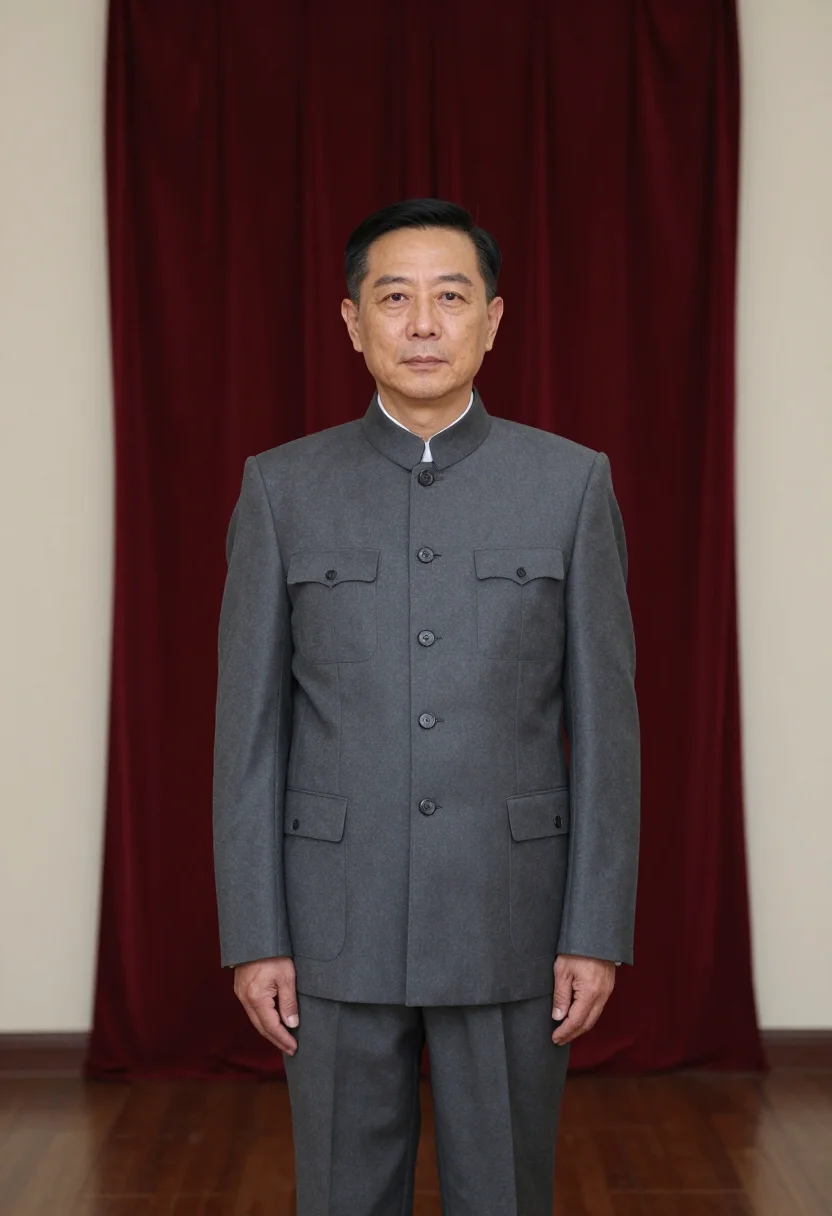
Nine photographs of you, staged in the mid-century Chinese party-congress register — the Zhongshan suit, a high closed stand collar, five covered buttons and four flapped patch pockets, carrying no medals, braid, epaulettes or insignia. The nine vary in crop, expression and light, so there are real choices, not nine identical files.
/mao-suit · lifestyle · 3 scenes
Mao Suit Portraits — The Zhongshan Suit
no account · ~15s · try it on with one selfie
More rooms where the light is flat
one model wears them all →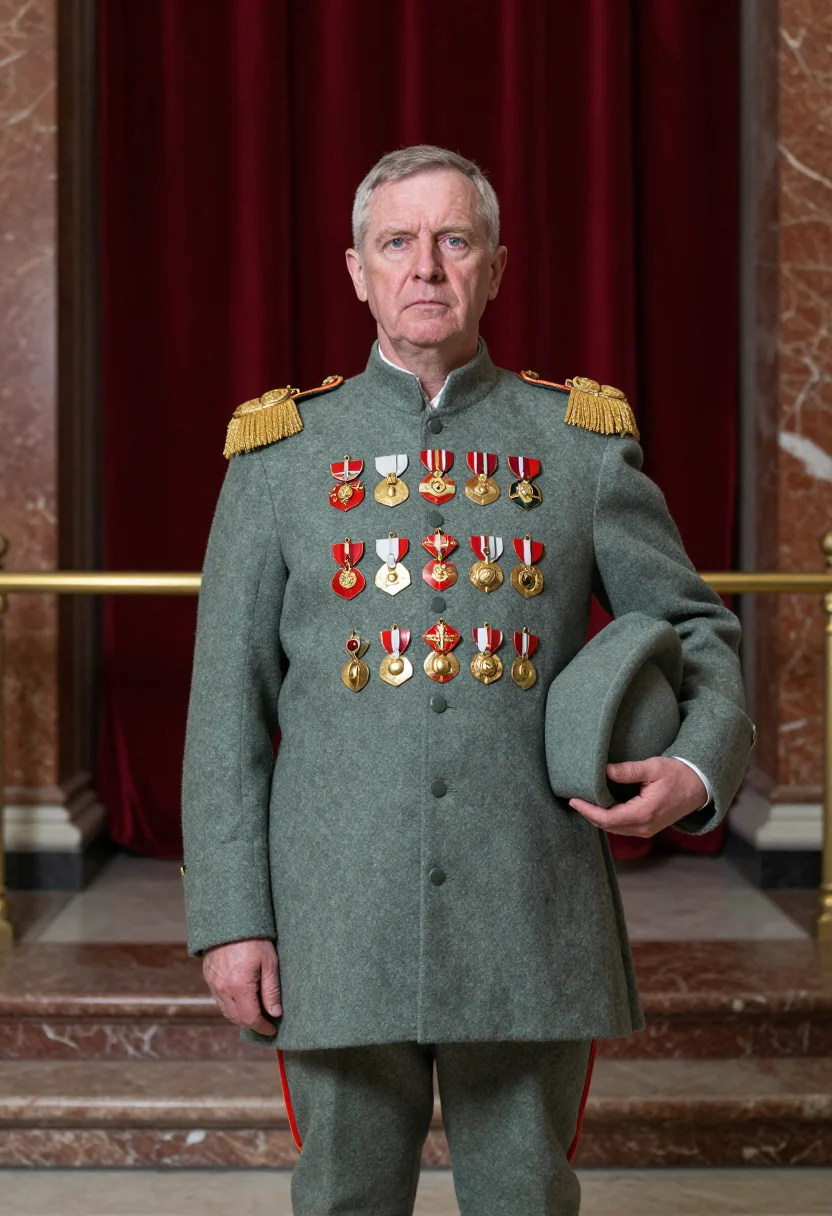


all 9 photos in this pack ↓


How it works
Three steps.
1
Add your photos
Add photos of yourself. We check each one when you add it.
2
We create your model
We create your AI model from your photos. Your photos are ready in a few hours.
3
Every pack, with your face
This pack and every other pack on Narcis can then be made with your face, and single photos too.
The Zhongshan suit register
Most uniforms of power argue by addition: braid, stars, epaulettes, a chest of ribbons earned or otherwise. The Zhongshan suit — the mao suit, in the name it travelled under — argues by subtraction. High stand collar closed at the throat, five plain covered buttons down a straight centre front, four patch pockets with buttoned flaps, three small buttons at each cuff, and after that nothing at all. No medals. No braid. No epaulettes. No insignia of any kind. It is the anti-uniform uniform, and the absence is doing the work: everyone in the hall already knows who is standing at the lectern, so the cloth has nothing left to prove.
The garment is named for Sun Yat-sen — Sun Zhongshan — and dates to the Republican years, when a generation of reformers wanted a national dress that was neither the imperial robe nor the European lounge suit. It outlived the republic that invented it. By the middle of the century it was the entire wardrobe of the Chinese communist leader portrait: the party congress photograph, the delegation handshake, the poster on the factory wall. This pack is that register specifically — the mid-century party-congress portrait as it was actually photographed — and not a generic idea of an Asian communist uniform.
Three worlds, three portraits each. The red drape — a plain hall with bare pale-plaster walls and one deep-red curtain hung floor to ceiling, the ground for the frontal official portrait. The lectern — plain oak against a flat unbroken wall of pale grey plaster, the hands set a shoulder-width apart, nothing in the frame but the man and the wood. The study — a wall of bound books ranked on dark shelves, oxblood cloth and ochre paper and dark green leather running behind the shoulder, the register that says scholar rather than soldier. The cloth changes with the setting: slate grey, deep navy, olive, charcoal, sand khaki, in gabardine, heavy wool and cotton drill.
The light is the giveaway, and it is deliberately unbeautiful. Broad, soft, frontal, from just above the lens: almost no shadow edge, almost no modelling, the face lit evenly and completely as official photography lit it, because the point was legibility rather than drama. That is the socialist realism convention translated to a camera — the same flat, even, unarguable light a propaganda poster gives its subject. Everything is bright and open; the red drape holds the only dark mass in the frame.
The output is a photograph. This is an AI costume photoshoot. The nine sample portraits are cast East-Asian-weighted — mostly Chinese, with one Vietnamese and one Western European frame — because that is where this particular register lived.
How to photograph yourself for mao suit portraits
Good input, sharp result.
- Flat, frontal lightFace a window with indirect daylight straight on you. This register is lit evenly from the front with almost no shadow, and a source photo lit the same way gives the pack the least to fight.
- Square to the lens, at eye levelCamera level with your eyes, shoulders straight on. The party congress portrait is frontal and dead level — no selfie up-angle, no tilt, no artful three-quarter turn.
- Plain wall behind youLet the pack build the red drape, the lectern and the study wall. A clean backdrop for your AI portrait input means the whole likeness budget goes to your face.
- Neck clear, collar lowThe tunic closes high and tight at the throat. A photo with an open or low neckline gives the pack a clean line to build that stand collar onto.
- Composed, not smilingMouth closed, brows relaxed, eyes on the lens. This portrait does not smile — and a still, unperformed source photo is what the pack reads best anyway.
Frequently asked questions
- Is a mao suit the same thing as a Zhongshan suit?
- Same garment, two names. Zhongshan suit is what it is called in Chinese, after Sun Yat-sen — Sun Zhongshan — who is credited with the design; mao suit is the name it acquired abroad, from the man most photographed in it. English also calls it the Chinese tunic suit. The pack renders the mid-century cut: high stand collar, five covered buttons, four flapped patch pockets.
- Why are there no medals or badges on it?
- Because there weren't any. That is the defining feature of this communist uniform, not an omission on our side: the whole rhetorical trick of the Zhongshan suit is that it declines every ornament a dress uniform normally uses to announce rank. Plain cloth, no braid, no epaulettes, nothing pinned to the chest.
- Can I use it as a costume-party or Halloween photo?
- Yes — it's an unusually efficient costume choice. A mao suit is difficult to source and easy to get wrong; the pack renders the collar and cut correctly. The portraits work well as party invitation images.
- Does it work as a profile picture?
- It works well anywhere the costume is understood as a costume — a group chat, a history or politics account, an avatar for something with a sense of humour. For a straight professional photo it obviously reads as period dress; the LinkedIn Headshots pack is the one for that.
- Can women use this pack?
- The nine sample frames are cast male, so the samples read that way. The garment itself is genuinely unisex — the Zhongshan suit was worn by women through the same decades, in the same cut. If you want a register cut to a feminine silhouette instead, the catalogue has packs built for exactly that.
- Is any real person depicted here?
- No real historical figure is portrayed, and no real party, state or organisation is represented on the garment, which carries no insignia at all. Narcis is for adults, 18 and over.
- Can I print these, or use them commercially?
- Yes. The portraits come out at print resolution with no watermark, no logo and no signature added, and they're yours to use — a poster, a book cover, a single sleeve, a framed print for someone with the right sense of humour.
- Will the photos look like me?
- Every photo looks like you, well photographed. If one is nearly right, say what to change, in your own words.
- Do I have to write a prompt?
- No. There is nothing to write: you pick a pack, and it is ready in seconds.
- How many photos of myself do I add?
- Between six and twenty, from different days and in different light, with your face clear. We check each one when you add it.
- What happens to the photos I add?
- They are used only to create your model, on our own servers in the European Union. They are not shared and not sold.
When the Mao Suit pack fits
- A mao suit costume portrait without sourcing the garment, the collar or the tailoring.
- A themed-party or Halloween photo — with the invitation image already shot.
- A profile picture for a history, politics or foreign-affairs account.
- An avatar for a podcast or newsletter that trades in twentieth-century politics.
- A costume reference for a stage or student-film production set mid-century.
- Cover art for an alternate-history novel, a tabletop campaign or a record sleeve.
- A socialist realism pastiche for a poster, a zine or a satirical illustration.
- A gift for the friend who reads three books at once and argues about all of them.
- A classroom or lecture image for a twentieth-century history unit.
- A print for a wall that already has the right kind of books behind it.
- Replacing a generic AI avatar with a portrait that has a register and holds it.
About narcis
Most AI photo tools put every pose, job, era, and style in one giant catalog. The photos all look like every other AI photo on the internet — a glaze over a stock face. Narcis goes the other way. One job: photos of you that look like photographs. You add at least 6 photos of yourself, and we create your AI model from them. Your photos are ready in a few hours, and we email you when they are. Then this pack and every other pack on Narcis can be made with your face. Each pack is curated against real references — paintings, photographers, places — and tested on real faces before it goes live. Built and run by one small team, on our own servers.
All images are AI-generated. By using this service, you confirm you are 18+, that any face photo you upload is your own or used with explicit consent. Full Terms