AI Soviet Marshal Generator — Free Preview, Then Train Your Model
See a Free Preview in Seconds, Before You Commit
Train Your Model Once, Render Soviet Marshal in About Ten Seconds
Studio-Quality Results Without a Studio Visit
Narcis generates a free preview of your soviet marshal from one uploaded photo. The preview streams in seconds — a quick sketch, close but not you yet. If you like it, train your model once — 12 to 20 photos, we email you when it's ready — and the full pack of nine is €9,99, rendered from your model in about ten seconds a portrait. No signup before the preview, and no waiting for an email until you choose to train.
The pack is nine professional soviet marshal rendered in portrait aspect ratio (2:3) — the shape LinkedIn banners, CVs, and print profiles actually use. Each image shows varied crops, expressions, and light angles so you have real choices, not nine identical files.
Photos are processed on European servers. We use your photo to generate your headshots; we do not share it with third parties.
/soviet-marshal · lifestyle · 3 scenes
The Marshal — Soviet Uniform Portraits
no account · ~15s · the first shot is free
More weight for the chest
one model wears them all →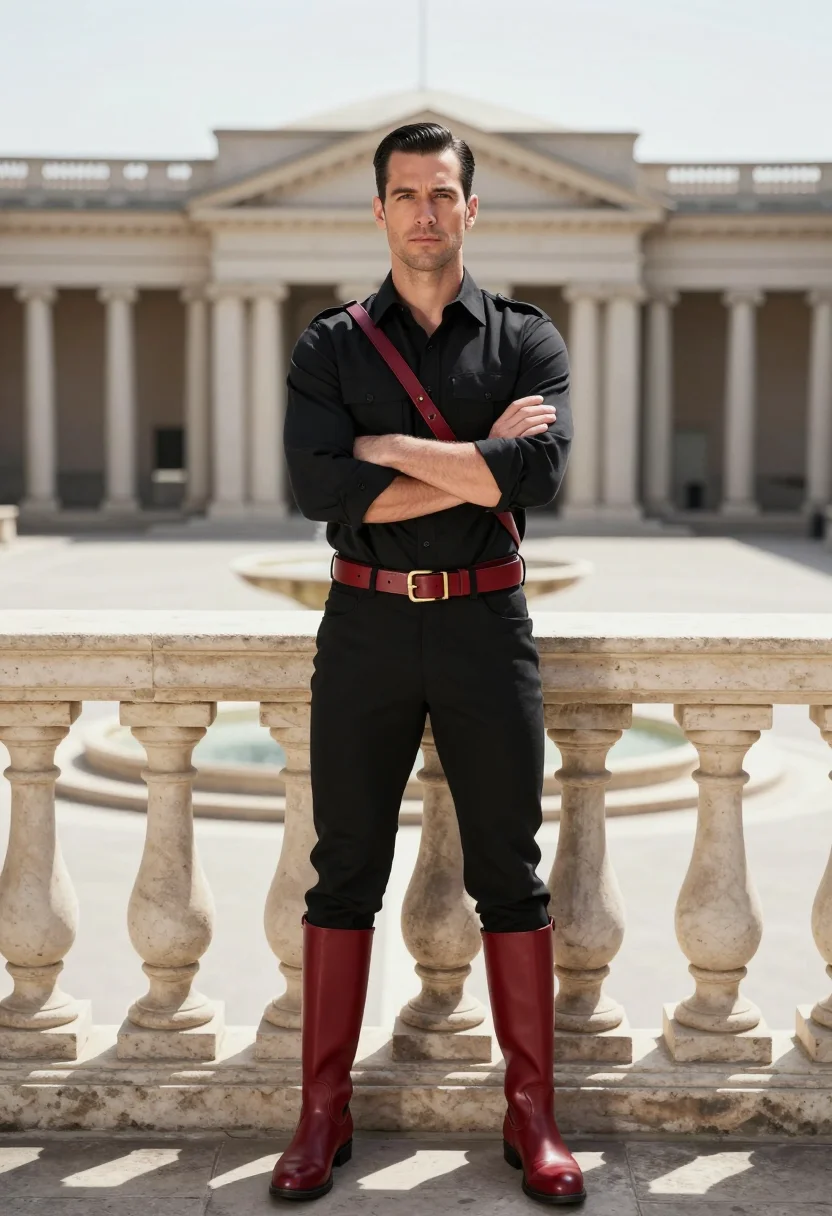
all 9 looks — from one photo ↓
How it works
Three steps. Upload, preview, deliver.
1
Upload 1 to 5 selfies
One is enough for the free preview. More angles sharpen the likeness.
2
See a free preview
A quick sketch of your likeness streams in seconds — close, not you yet, before you pay.
3
Train your model, then unlock 9
€9,99 one-time. Train your model once — 12 to 20 photos, we email you when it's ready — and all nine render in about ten seconds each. Every future pack and Studio portrait render the same way, no repeat training.
The marshal register
There is a particular way a state looks at a man it approves of. Frontal. Lit hard and flat from above so nothing is ambiguous. Shot from an inch below the eyeline so he stands a little taller than he is. Socialist realism worked that grammar out and then hung it in every hall, on every wall, at the top of every column of newsprint — the propaganda poster is simply the vanity portrait with a state budget behind it. This pack takes that grammar seriously and puts your face at the top of the column.
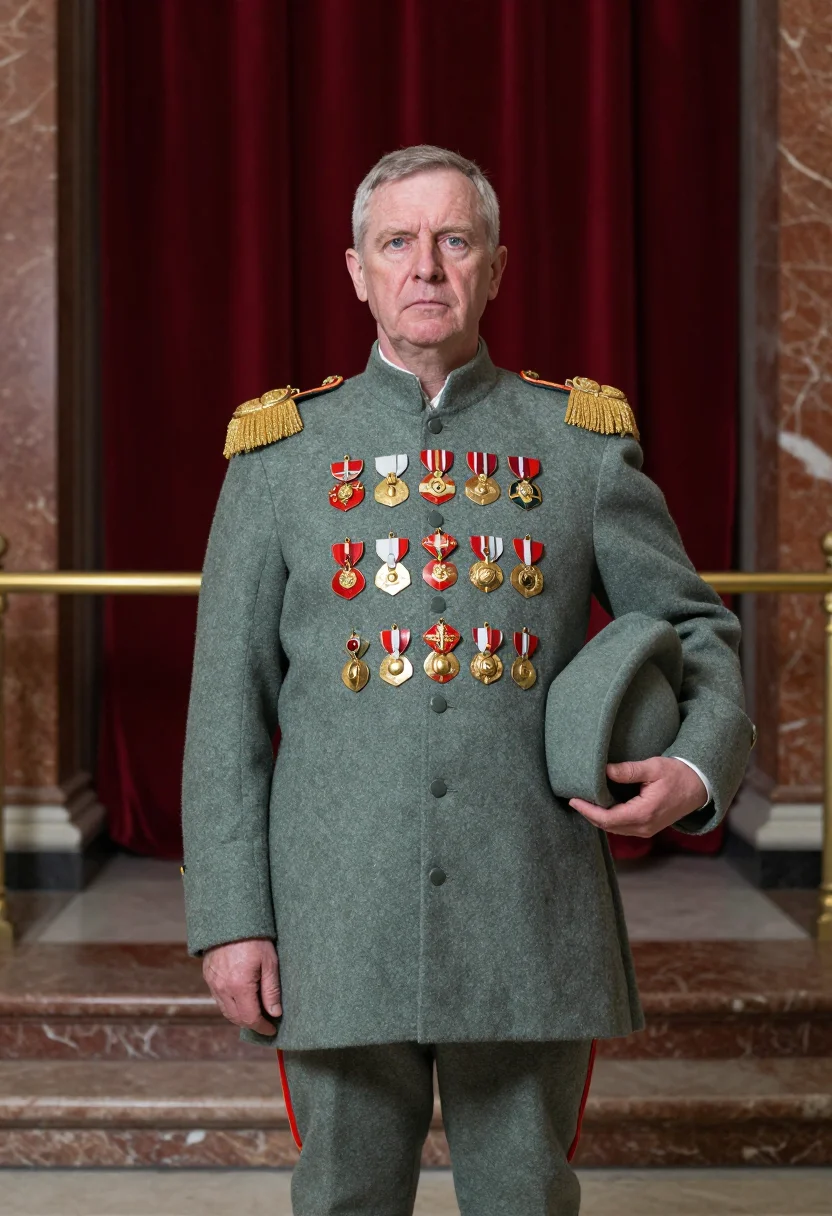
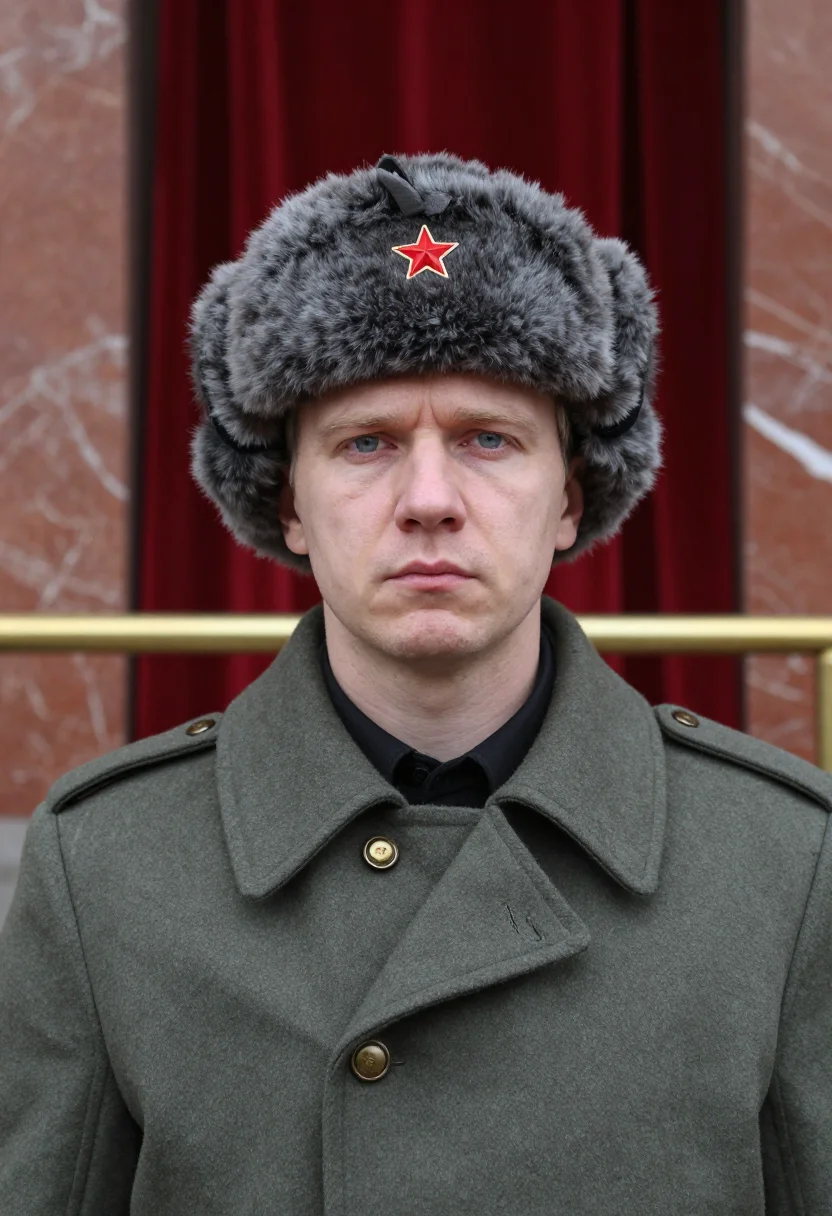
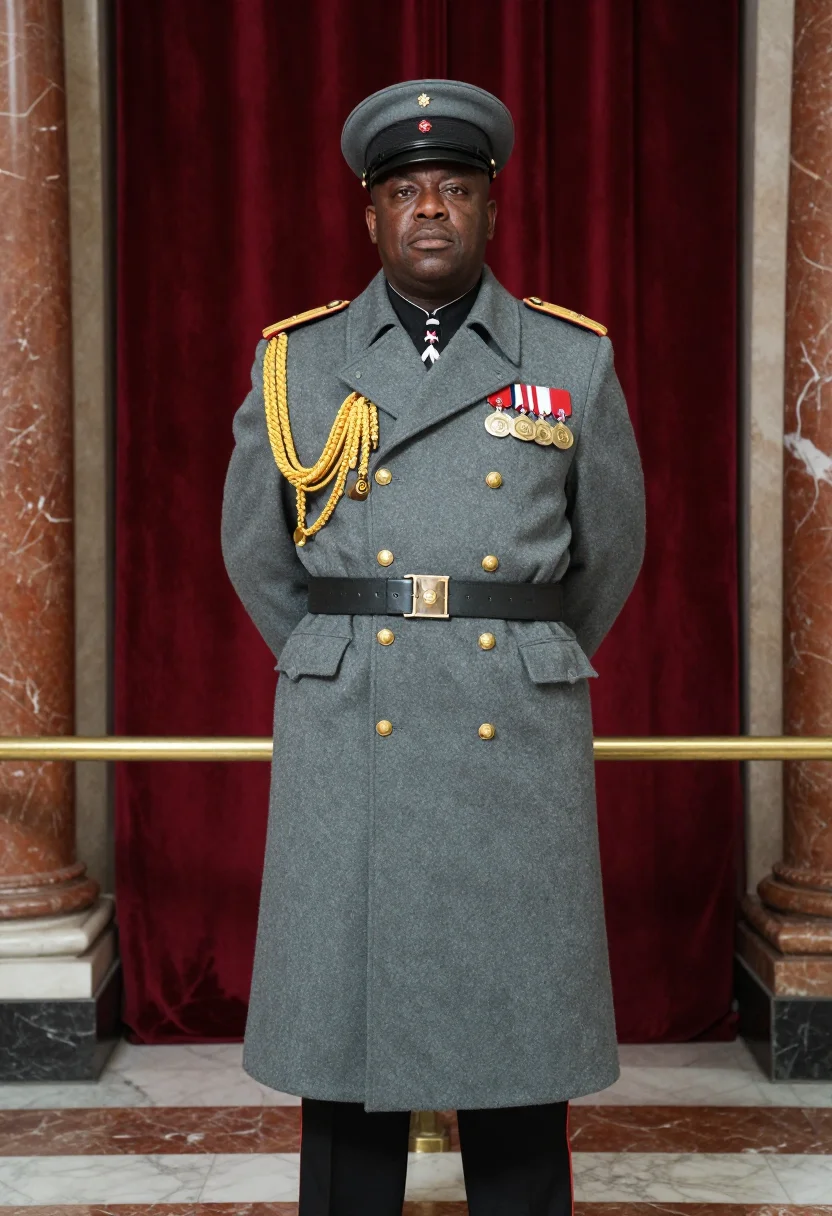
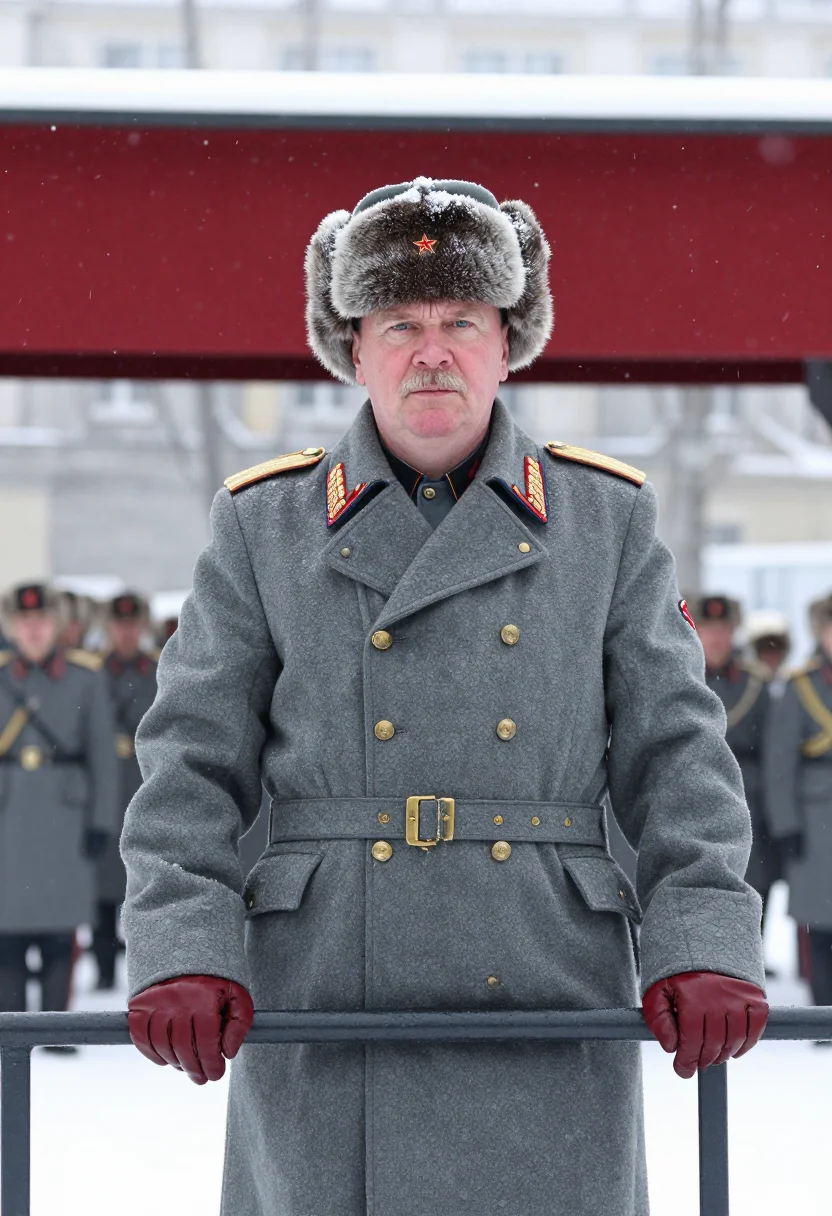
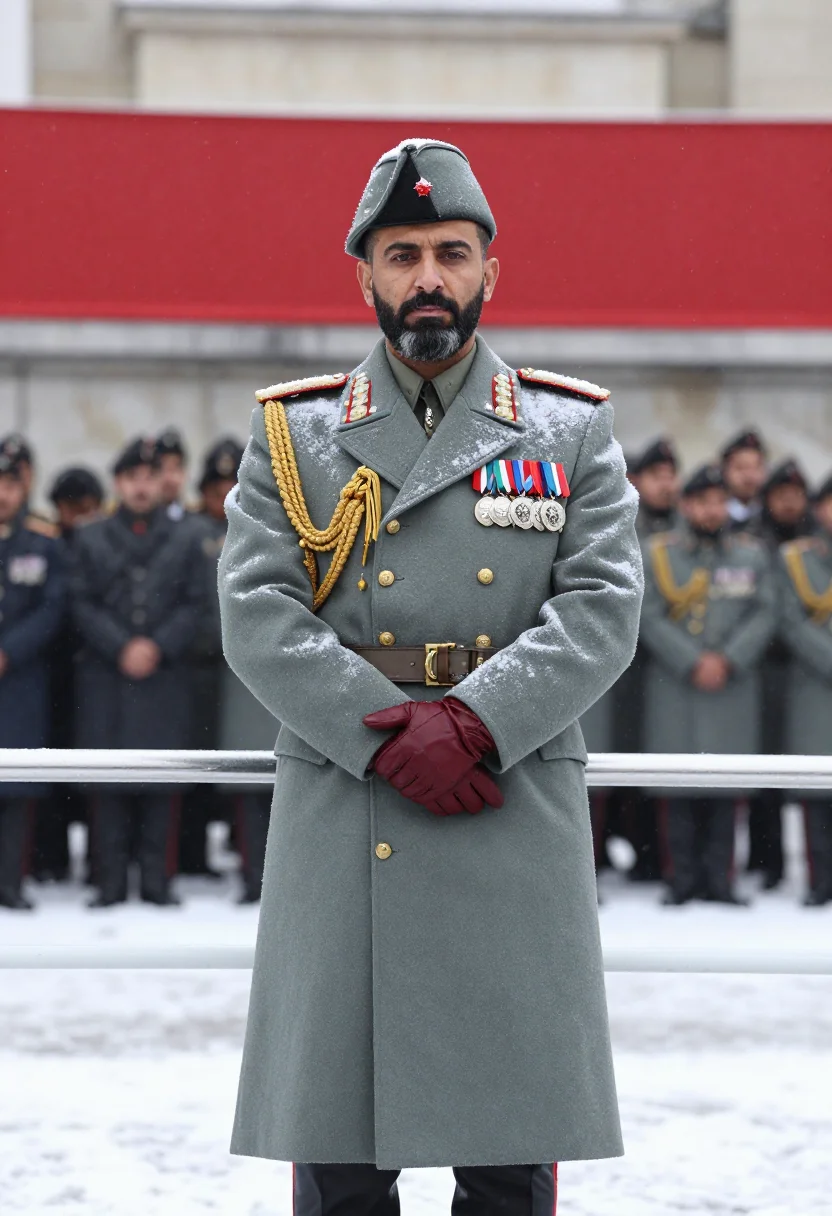
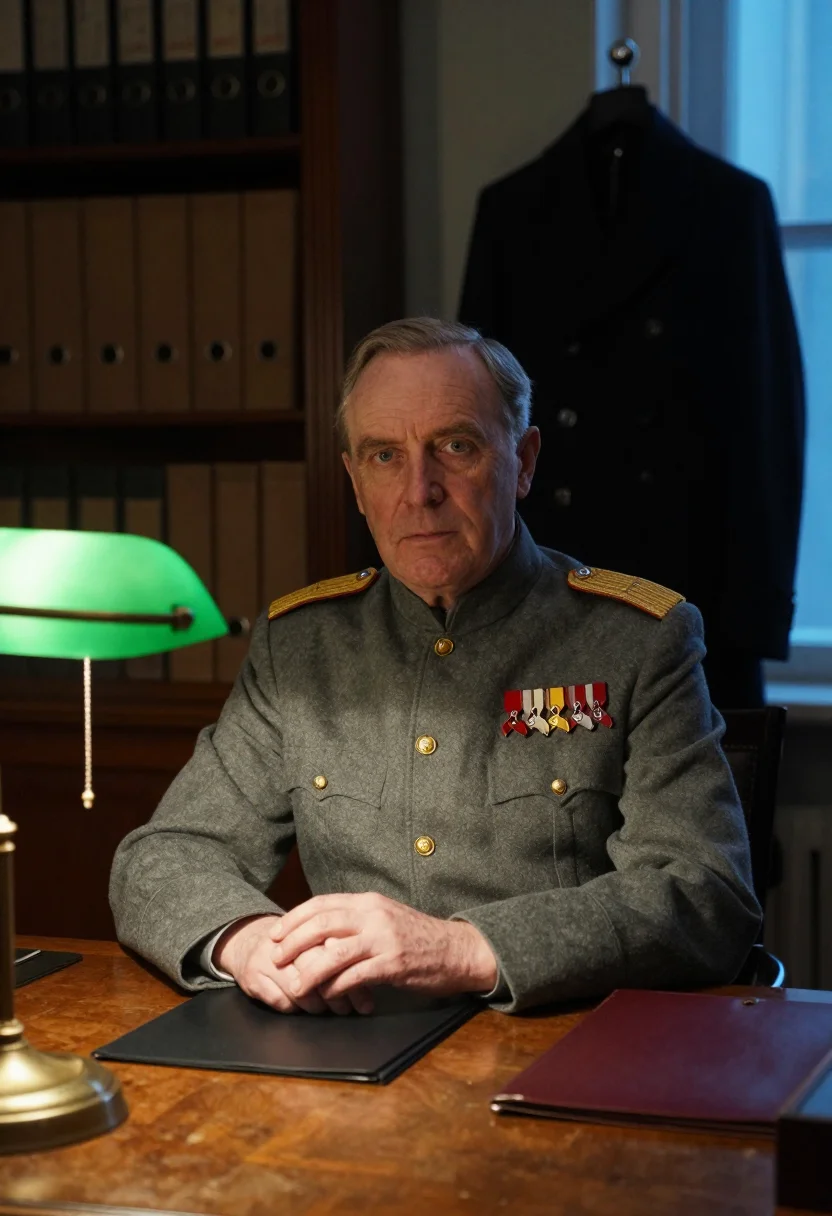
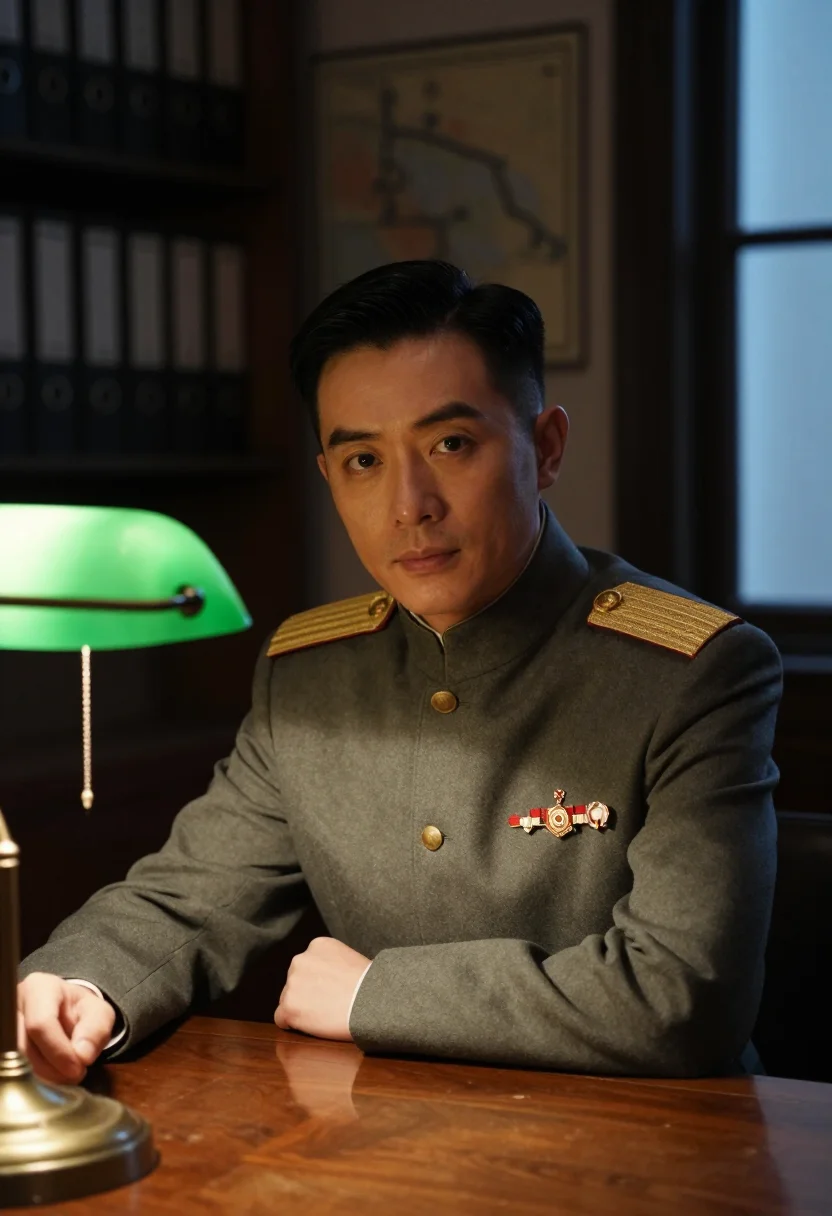
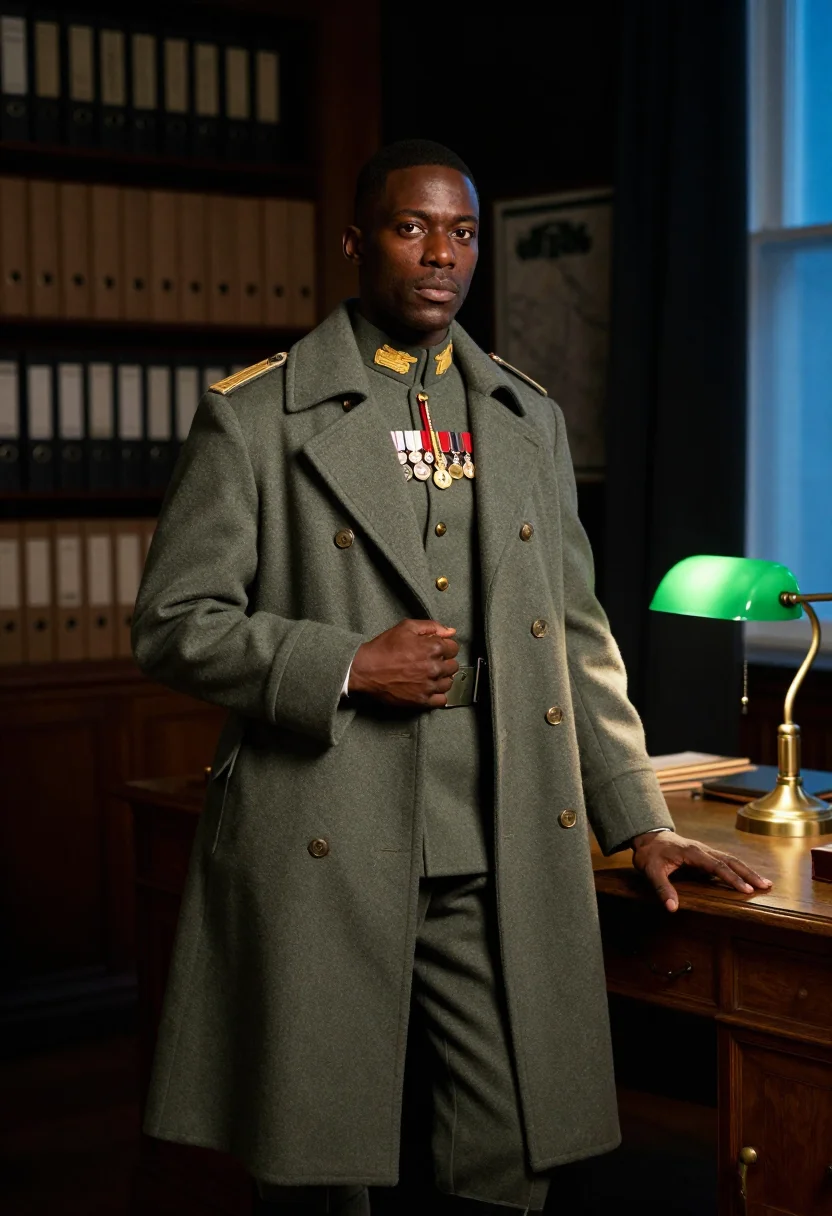
Three settings carry the nine frames. The hall of oxblood marble with crimson drapes falling behind and a brass rail drawing one bright line, the dress cap carried in the crook of an arm. The reviewing tribune in falling snow, gloved hands flat on the rail, snow melting in a wet line along both shoulders, breath showing at the lips. And the night study — a green glass desk lamp, a cold blue window behind, a greatcoat hung dark on a stand, fingers laced over a closed folder at an hour when nobody else is awake. Marble, snow, lamplight: the parade, the podium and the man who signs things.
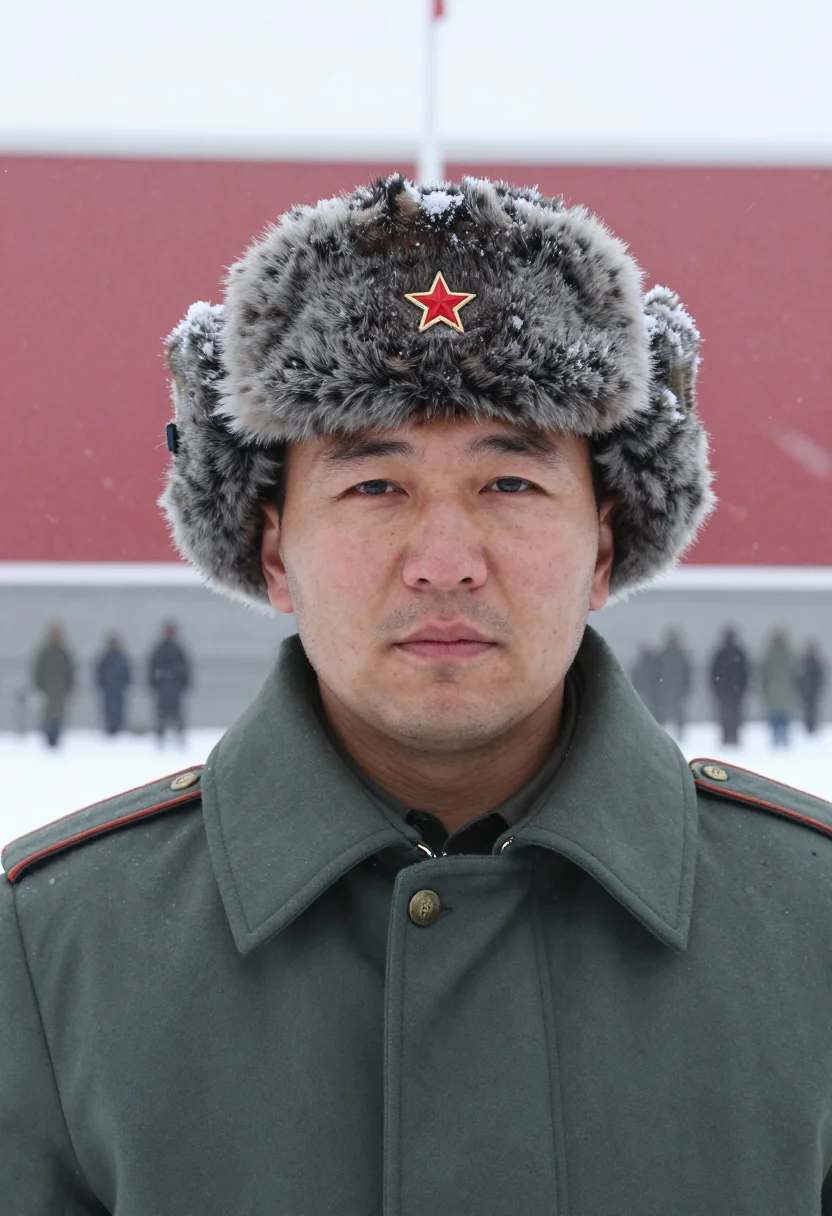
The kit is built out of specifics. Dense grey-green melton with a stand collar and a straight buttoned front; gold bullion boards stitched hard to the shoulder seam, which is where the epaulettes stop being decoration and start being architecture; three level rows of struck-and-enamelled orders in red, white and gold, heavy enough to crease the cloth under each bar; an officer greatcoat, double-breasted with dull brass buttons, the wide collar turned up and closed at the throat; an ushanka in dense fur with the flaps tied up across the crown, a small red enamel star at the band; stiff oxblood gloves cracked across the knuckles. The orders are invented, because a chest of medals is a composition, not a citation. Nothing in frame carries legible lettering — the banners hang plain and wet.
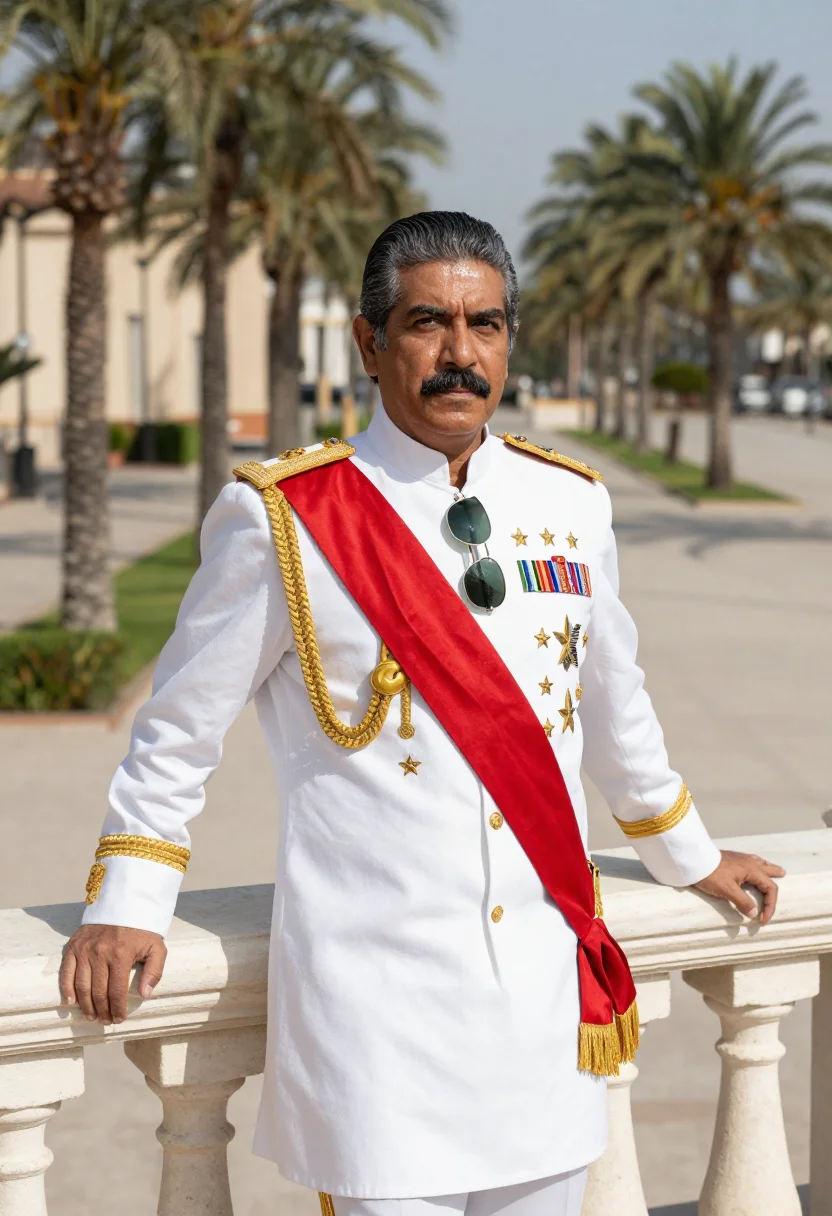
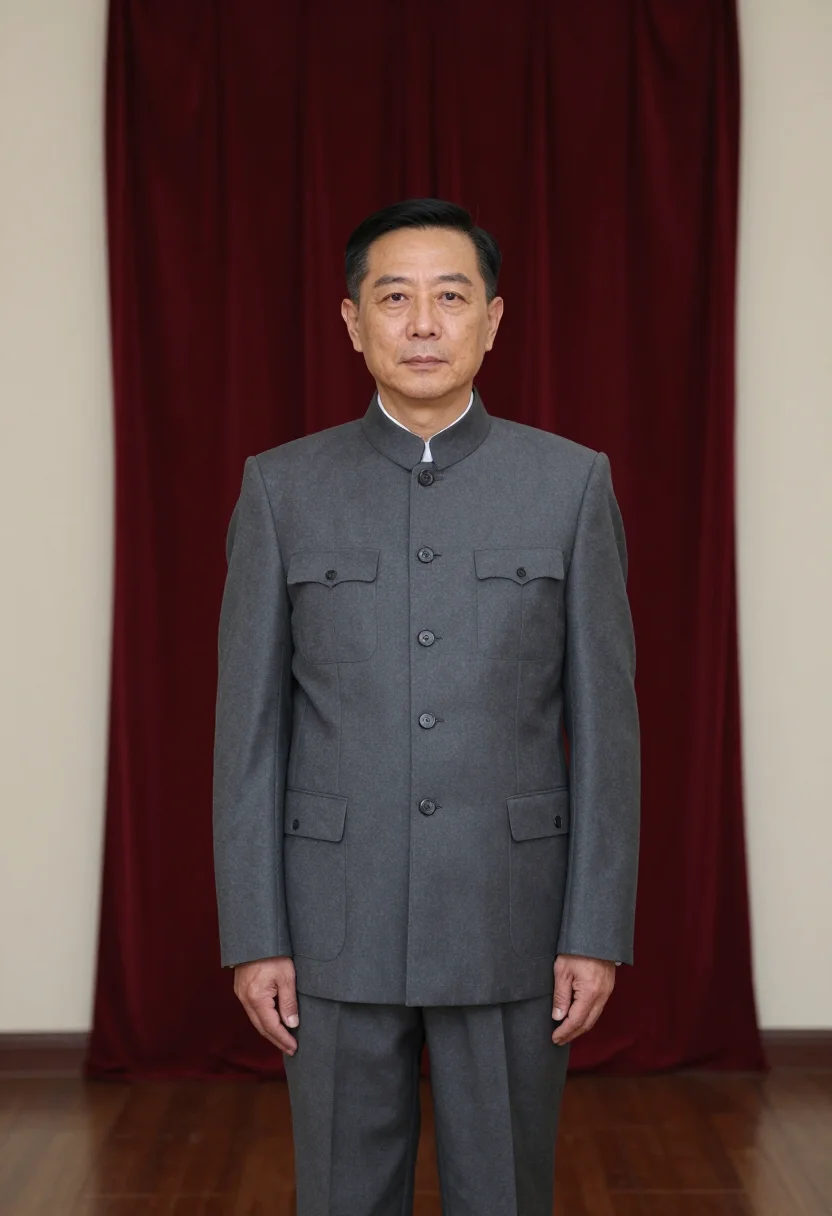
Two honest notes. Every sample frame casts a different man — White European, Slavic, Black, Kazakh, Middle Eastern, East Asian — because the red army uniform dressed a union of a hundred nationalities and casting it as one face would flatten the best thing about it. In your own pack, all nine are you. And the output is photoreal: photographs of you in a communist uniform, not painted canvases and not printed posters. Socialist realism is the composition here, not the medium.
How to photograph yourself for marshal portraits
Good input, sharp result. The pack forgives an ordinary photo — the free preview tells you where you stand in seconds — but five small things make the likeness carry.
- Soft, even lightFace a window with indirect daylight on you. Skip the overhead bulb and the hard midday sun; this pack builds its own hard frontal light and its own green desk lamp, and a flat source photo gives it the most to work with.
- Square to the lens, at eye levelHold the camera level with your eyes and face it straight on. The whole register is frontal and unblinking — a source photo taken at eye height carries into it far better than one shot from the lap.
- Plain wall behind youLet the pack build the marble hall, the snow and the night study. A clean backdrop for your AI portrait input sends the whole likeness budget to your face.
- Jaw and throat clearThe greatcoat collar folds high and the tunic hooks shut at the neck, so the pack needs a clean read on your jawline. A clear, front-facing shot is the best photo for an AI portrait.
- Come as you areMoustache, beard, glasses, hairline — the pack keeps what you upload. The ushanka sits low on the brow, so if you like the way your hair frames your face, note that in three of the nine frames it is under a hat.
Frequently asked questions
- What's the difference between the free preview and the paid pack?
- The preview is one portrait built from the photo you upload, back in seconds — a quick sketch, close but not quite you yet. To unlock the full pack you train your model: 12 to 20 photos, and we email you when it's ready. After that every portrait — three settings, three frames each — renders from your model in about ten seconds, for €4,99.
- Is the output a painted poster or a photograph?
- A photograph. The pack borrows the composition of socialist realism — frontal, flat hard light, the camera a little low — but the output is photoreal: wool that reads as wool, enamel that catches light like enamel, snow melting into the shoulders of the coat. If you want a stencilled propaganda poster look, that's a filter applied afterwards. This is the photograph such a poster would have been drawn from.
- Is this based on a real Soviet officer or leader?
- No. The rank is invented, the orders are invented, and the banners in frame hang blank — no real person, living or dead, is named or depicted. Every portrait is AI-generated from the photo you upload, of you. Narcis is for adults, 18 and over.
- Which settings does the pack cover?
- Three, three portraits each. A hall of oxblood marble with crimson drapes; a reviewing tribune in falling snow, gloves flat on the rail; and a night study lit by a green glass desk lamp with a cold window behind. Parade, podium and paperwork — the three states of the same man.
- Why is every sample image a different man?
- Because the uniform dressed a union of a hundred nationalities. The grid deliberately runs White European, Slavic, Black, Kazakh, Middle Eastern and East Asian castings — the same greatcoat, six different faces. Your own pack isn't cast like that: all nine frames are you.
- Is the uniform historically accurate?
- It's built from the real vocabulary, not from a fancy-dress catalogue. Grey-green melton, a stand collar, gold bullion shoulder boards, order rows on stiff ribbon bars, a double-breasted greatcoat, an ushanka with the flaps tied across the crown — the pieces are right, and searched as a russian military uniform they are what people mean. The specific rank insignia and orders are invented rather than copied, so it is the register that is accurate, not the paperwork.
- Can women use this pack?
- Honest answer: it's cast male. The tunic cut, the shoulder line and the greatcoat silhouette come from men's dress, so a woman's portrait would read as a woman in a man's uniform rather than as the register landing cleanly. If that is the picture you want, it works; if you want the register built for you from the start, this isn't yet that pack.
- Can I use it as a Halloween or costume-party photo, or as a costume reference?
- Both work. As an AI costume photoshoot it gives you the party picture without sourcing a single piece of wool, and as a reference it's specific enough to build from — board placement at the shoulder seam, the three-row order layout, how the collar closes with one dull brass button. An ushanka is the one piece worth buying for real; it costs almost nothing and it does most of the work.
- Does it work as a profile picture or as cover art?
- Yes — particularly the night-study frames, which make unusually good album, book or podcast artwork, and the snow frames, which make a winter profile picture that nobody else in the feed will have. For a professional headshot it is entirely the wrong instrument; the LinkedIn Headshots pack covers that ground.
- How is this different from Midjourney or Photo AI?
- Midjourney will render a magnificent marshal who isn't you — it invents a face from the prompt. Photo AI and the headshot generators keep your face but stay in business casual. This pack does both: your own face, and a nine-frame military costume shoot researched down to the ribbon bars and the melton weave, delivered as one set rather than a hundred prompt attempts.
- What if I only have an ordinary phone selfie?
- That's enough to start. The free preview shows you the likeness in seconds, and if it's off, the prep tips above are the quick fix — nine times out of ten it's the lighting. One good, clear photo beats five poor ones.
- What happens to the photo I upload?
- It's processed on European servers. If you train a model, those 12 to 20 photos train your model and nothing else — delete the model and they go with it. Never sold, never shared with third parties. The portraits are yours: print them, frame them, put one on a record sleeve.
When the Marshal pack fits
- A winter profile picture with snow on the shoulders instead of a holiday backdrop.
- Album, EP or book-cover artwork built around the night-study lamplight.
- A Halloween or costume-party photo without sourcing a single piece of wool.
- A reference for a costume build — shoulder boards, order rows, how the collar closes.
- A gag gift for the friend who runs meetings like a five-year plan.
- Poster or flyer art for a club night, a film season or a themed event.
- Cover art for a podcast or newsletter in a military costume register.
- Character art for a tabletop or Cold War campaign that needs a general, not a wizard.
- Set dressing or lookbook material for a short film or student project.
- A leaving present for the colleague whose desk had the most paperwork on it.
- A framed print for anyone who likes their portraits shot slightly from below.
About narcis
Most AI portrait tools ship every pose, profession, era, and aesthetic in one giant catalog. The output looks like every other AI photo on the internet — a glaze over a stock face. Narcis goes the other way. One tool, one job: turn photos of you into portraits worth keeping. Drop a selfie and your free preview streams in seconds — a quick sketch: close, not you yet. For portraits that are truly you, train your own model on 12 to 20 photos; it trains in the background, and we email you when it is ready. Train once, render everywhere — this pack, every other pack, and the Studio all come out of that one model, about ten seconds a portrait, and it stays yours to retrain or delete. Each pack is hand-curated against actual references — paintings, photographers, registers — and tested on real faces before it ships. See a free preview before you pay, not after. Packs are one-time — no subscription to buy one; Studio, the unlimited composer, is optional at €12/month and every pack includes 30 days of it. No template generator. Built and run by one team, on our own infrastructure.
All images are AI-generated. By using this service, you confirm you are 18+, that any face photo you upload is your own or used with explicit consent. Full Terms